news
Researchers test wearable robotic limbs for enhanced human function
Danish researchers are testing wearable robotic limbs that give users an extra arm or finger. The goal isn't just to assist disabled individuals, but to enhance capabilities for anyone, mapping robotic movement to existing human limb control.
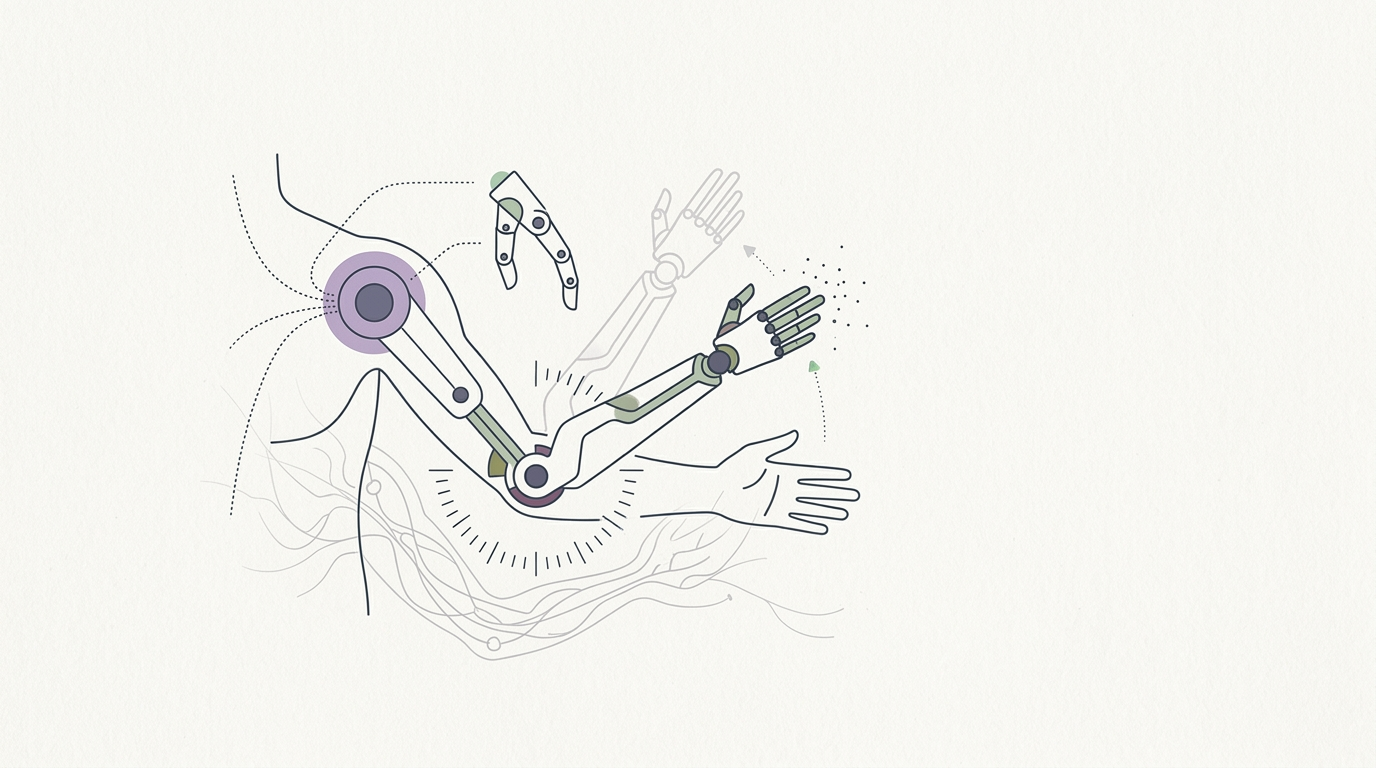
Danish researchers are testing wearable robotic limbs that give users an extra arm or finger. The goal isn't just to assist disabled individuals, but to enhance capabilities for anyone, mapping robotic movement to existing human limb control.
The architecture take
This isn't about sci-fi; it's about pushing the limits of our nervous system's capacity. Giving someone a "third arm" demands a total rethink of motor control, sensory input, and proprioception — how the brain maps the body in space. We're not just adding a tool; we're essentially integrating a new limb into the body schema, bypassing conscious thought to make it feel natural. That's a huge cognitive load to offload, and it opens up questions about brain plasticity and adaptation. If your brain can learn to control an extra appendage as intuitively as your own arm, what else can it learn to integrate? Watch for implications in rehabilitation, training for complex tasks, and how quickly we can expand our physical "hardware" by tapping into latent neural pathways.