news
Researchers Combine Heat, Vibration, and Current to Tune Vagus Stimulation
A study in Frontiers in Neuroscience introduces TEMPO-taVNS, a platform that pairs thermal, vibrotactile, and electrical pulses to stimulate the auricular vagus nerve. By tracking pupil size, gastric rhythms, and HRV, the system maps individual calm responses without requiring painful electrical current. It points toward ear-based recovery tech that soothes the body without feeling like an electrotherapy shock.
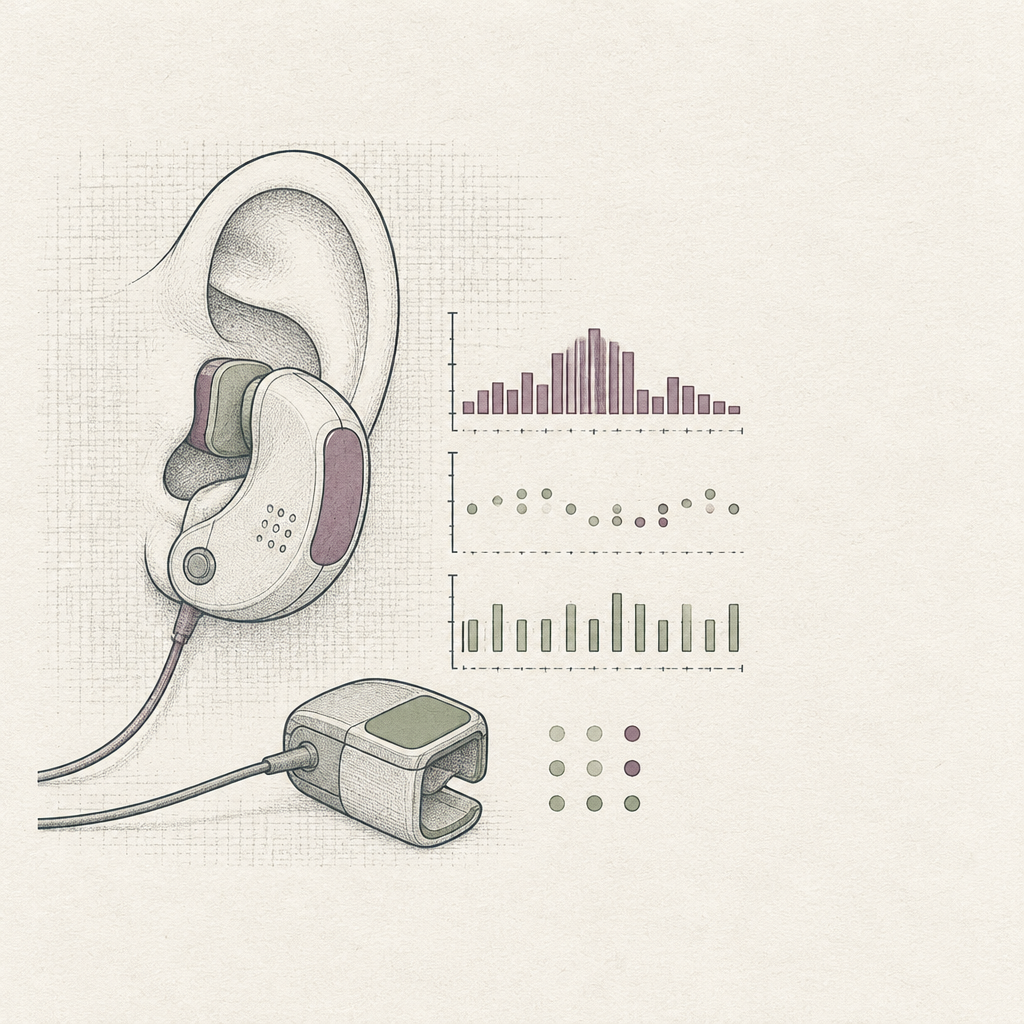
A study in Frontiers in Neuroscience introduces TEMPO-taVNS, a platform that pairs thermal, vibrotactile, and electrical pulses to stimulate the auricular vagus nerve. By tracking pupil size, gastric rhythms, and HRV, the system maps individual calm responses without requiring painful electrical current. It points toward ear-based recovery tech that soothes the body without feeling like an electrotherapy shock.
The architecture take
Zapping your earlobe with a sharp electrical prickle has been the standard way to prod the vagus nerve for a decade, and I have always found the experience slightly miserable. This new setup out of Frontiers in Neuroscience pairs low-voltage electricity with gentle thermal pulses and vibrotactile hums, tracking real-time shifts in heart rate variability, pupil diameter, and gastric slow-wave contractions. The physiological logic makes sense: the auricular branch of the vagus nerve does not just register current; it processes temperature and mechanical touch through distinct sensory receptors. Layering mild heat with micro-vibrations triggers vagal outflow without needing the high current intensities that spike your adrenaline just as you are trying to downshift. When commercial consumer devices license this multimodal setup, ear-clip recovery gadgets might actually become bearable to wear on a Tuesday evening instead of feeling like a punishment.