news
Regular Hearing Aid Use Cuts Mortality Risk by 24 Percent
A landmark Keck School of Medicine study tracking 10,000 adults found regular hearing aid users have a 24% lower all-cause mortality risk than non-users. Researchers linked untreated hearing loss directly to accelerated cognitive decline and severe social withdrawal. For anyone putting off an audiogram, the ear piece acts as essential preventive medicine.
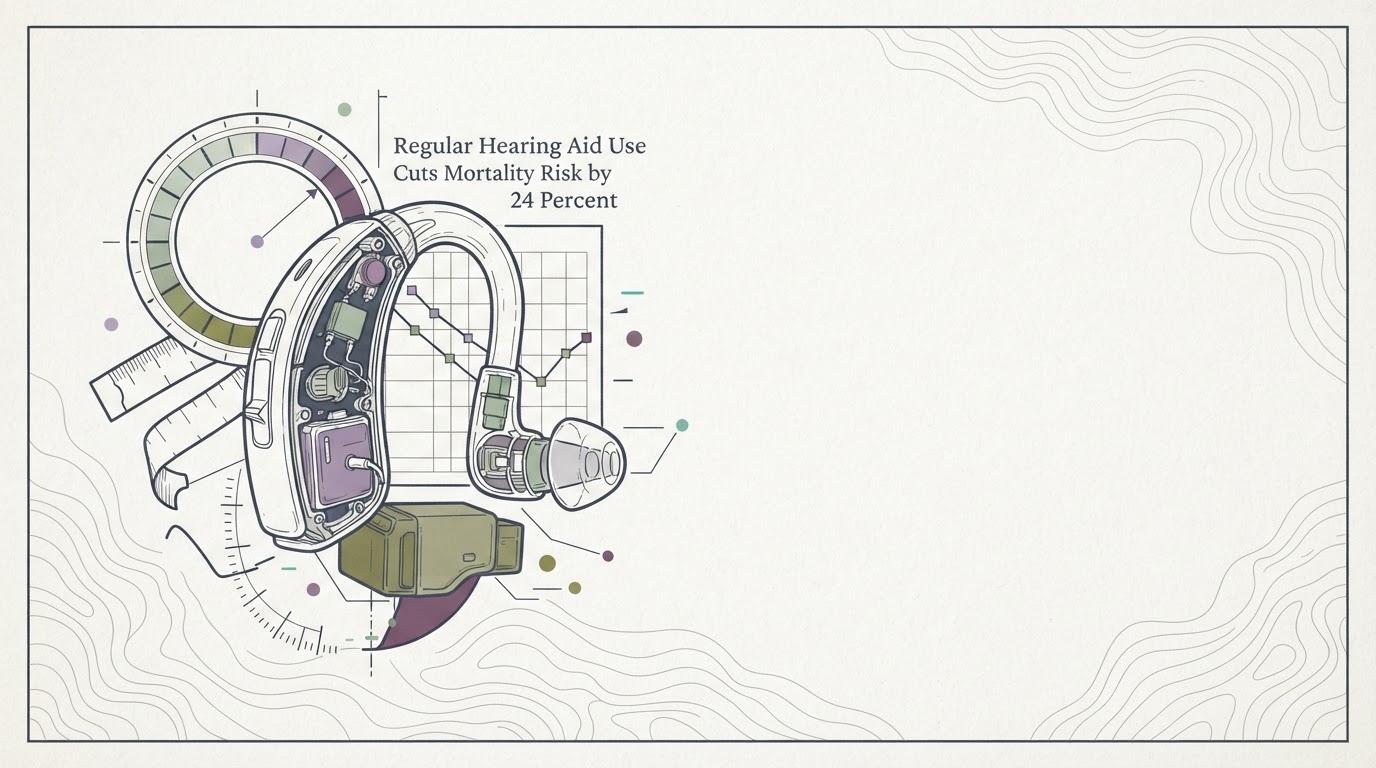
A landmark Keck School of Medicine study tracking 10,000 adults found regular hearing aid users have a 24% lower all-cause mortality risk than non-users. Researchers linked untreated hearing loss directly to accelerated cognitive decline and severe social withdrawal. For anyone putting off an audiogram, the ear piece acts as essential preventive medicine.
The architecture take
Treating sensory loss turns out to be one of the cheapest longevity interventions around. When the auditory cortex can't get a clean signal, the brain redirects enormous metabolic resources just to decode muffled syllables, which spikes daily cognitive load and accelerates grey matter atrophy. I spent years viewing hearing aids as clunky senior hardware rather than neurological gear. I was wrong about that. I now tell my own relatives that they shouldn't treat hearing checks as optional. When someone loses easy auditory input, their social world shrinks fast, dragging down baseline dopamine and vagal tone while cortisol quietly climbs. OTC hearing aids opened the door for affordable $300 devices, yet social stigma keeps adoption delayed by seven to ten years. (Pride's a terrible health strategy.) The takeaway's dead simple: protect the sensory pipeline before your brain compensates itself into exhaustion.