news
Randomized Balance Drills Fail to Beat Simple Repetition in Trial
A study in Frontiers in Sports and Active Living tested 32 young adults against trip perturbations using blocked versus randomized practice schedules. Contrary to decades of motor-learning theory, randomized training failed to produce better balance retention or transfer. For reactive stability, running identical reps works just as well as constantly changing the drill.
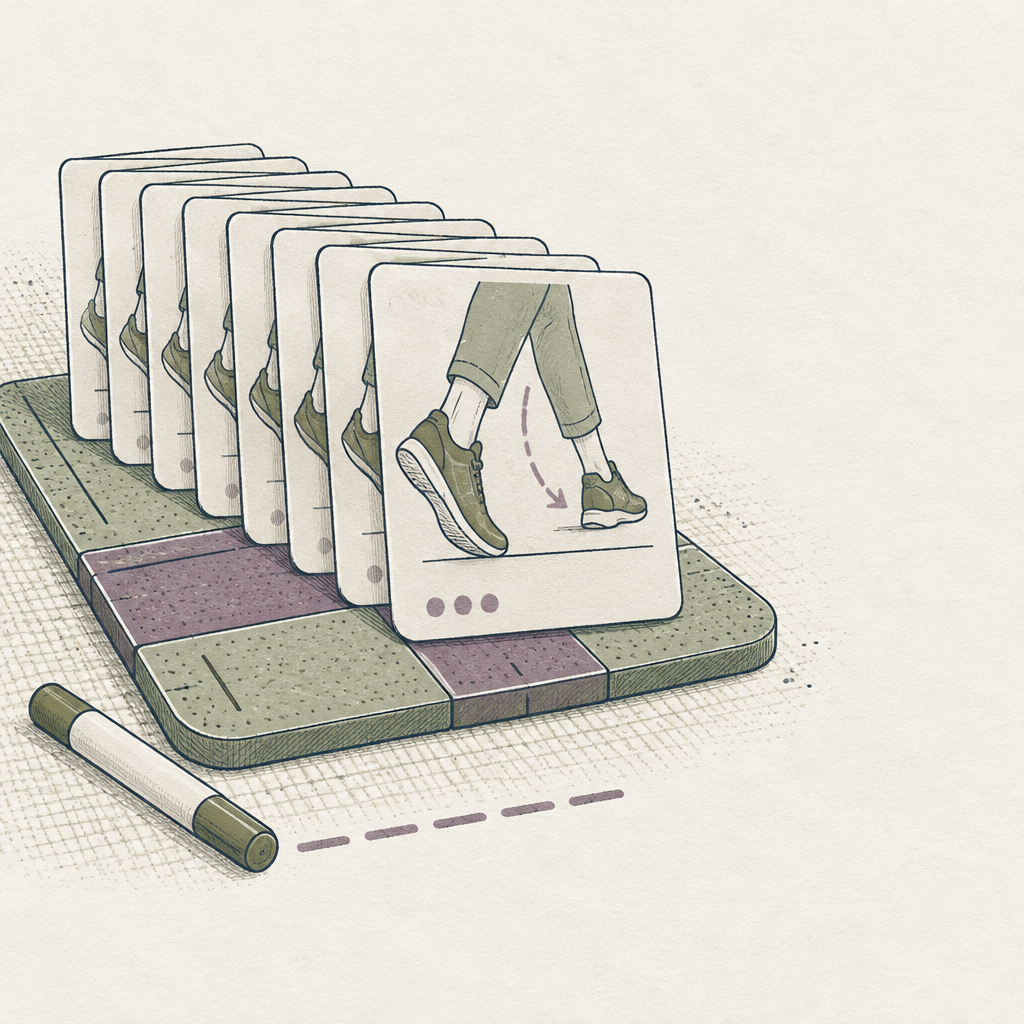
A study in Frontiers in Sports and Active Living tested 32 young adults against trip perturbations using blocked versus randomized practice schedules. Contrary to decades of motor-learning theory, randomized training failed to produce better balance retention or transfer. For reactive stability, running identical reps works just as well as constantly changing the drill.
The architecture take
Every movement coach I trusted spent a decade telling me to randomize my drills because rote sets supposedly make the nervous system lazy. I bought into that theory completely. But when researchers in Frontiers in Sports and Active Living tested 32 adults against sudden trip perturbations, throwing randomized chaos at them offered zero edge over predictable, blocked repetitions. When you trip, your brain stem and spinal reflex circuits take over within 100 milliseconds to adjust your margin of stability. That is not the time for intellectual problem-solving. It turns out motor learning for emergency reflexes thrives on simple repetition to groove kinematic synergies before you layer on novelty. I wasted months doing erratic balancing tricks on unstable pads thinking I was sharpening my ankles. Boring repetitions groove the baseline reaction faster. Perfect the exact recovery step ten times in a row before you ask your nervous system to improvise.