news
Plant Nitrates Protect Brain Aging While Meat Nitrates Harm It
A Danish cohort study following over 54,000 participants found that plant-sourced dietary nitrates correlated with lower dementia rates, while nitrates from processed meat and tap water correlated with higher incidence. The divergence hinges on whether the compounds arrive alongside protective antioxidants or convert into damaging nitrosamines during digestion. It gives clear biochemical rationale to stop treating all dietary nitrate sources the same.
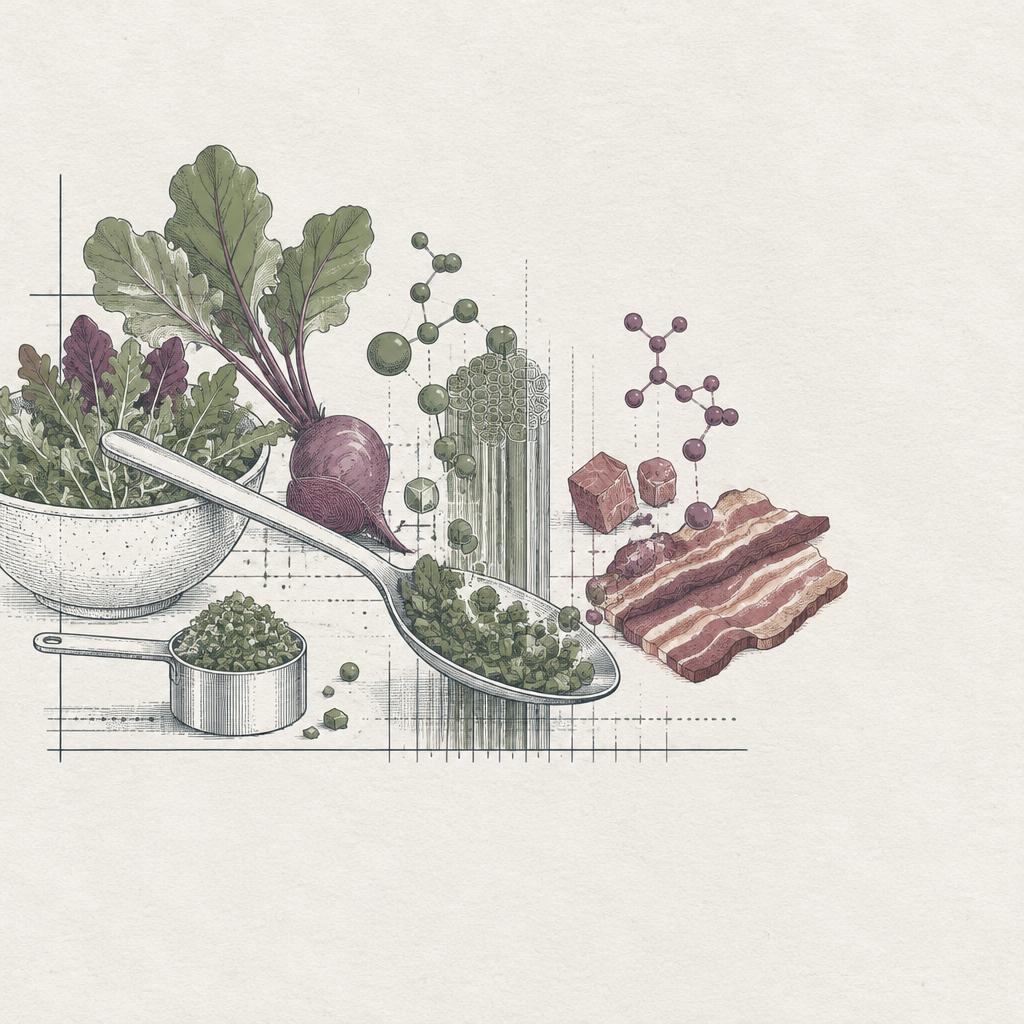
A Danish cohort study following over 54,000 participants found that plant-sourced dietary nitrates correlated with lower dementia rates, while nitrates from processed meat and tap water correlated with higher incidence. The divergence hinges on whether the compounds arrive alongside protective antioxidants or convert into damaging nitrosamines during digestion. It gives clear biochemical rationale to stop treating all dietary nitrate sources the same.
The architecture take
I spent years lumping all nitrates into one bucket because I didn't care to separate cured bacon from raw arugula once they hit the mouth. The Danish cohort tracked 54,000 people over two decades and split that assumption wide open. When you eat nitrates packaged with vitamin C and polyphenols in beet greens, oral bacteria convert them to nitrite, which turns into nitric oxide. Nitric oxide relaxes cerebral blood vessels, improves microvascular perfusion, and keeps blood flow steady to the hippocampus. Run the exact same compound through high-heat frying with animal amines, and your stomach churns out carcinogenic N-nitrosamines instead, fueling neuroinflammation. The chemical name is identical. The biological destination isn't. I still eat bacon on Sundays (I like the smoke), but I stopped pretending it feeds my vascular brain health the way a bowl of arugula does.