news
Pink noise bursts during deep sleep trigger brain-cleansing fluid pulses
Auditory neuroscientists found that playing brief pulses of pink noise precisely synced to slow-wave sleep boosts delta oscillations and triggers cerebrospinal fluid surges through the brain. The acoustic intervention accelerates glymphatic clearance to flush metabolic waste linked to neurodegeneration. It offers a non-invasive path to deepen restorative sleep without pharmaceuticals.
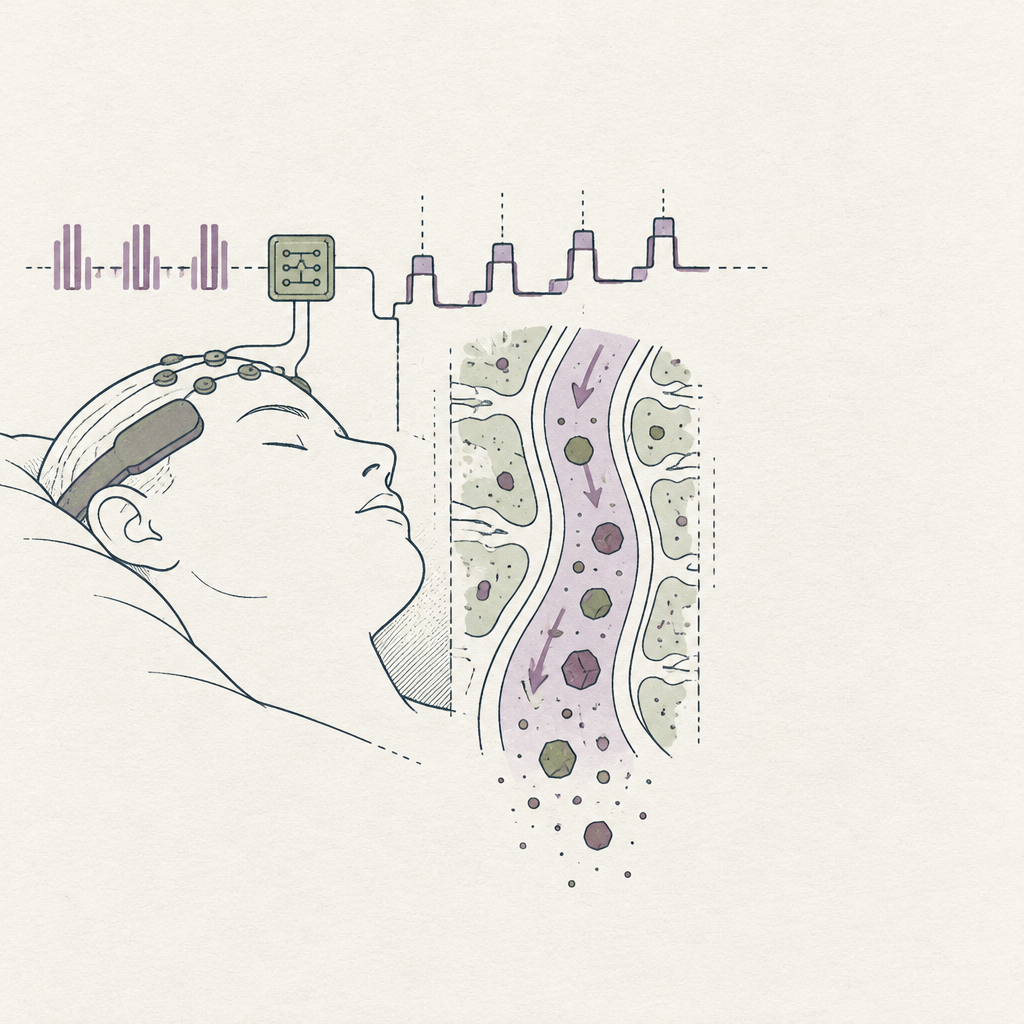
Auditory neuroscientists found that playing brief pulses of pink noise precisely synced to slow-wave sleep boosts delta oscillations and triggers cerebrospinal fluid surges through the brain. The acoustic intervention accelerates glymphatic clearance to flush metabolic waste linked to neurodegeneration. It offers a non-invasive path to deepen restorative sleep without pharmaceuticals.
The architecture take
I used to think sleep tracks playing looping pink noise were just white noise with warmer PR. This trial changed my mind on the mechanism. When scientists pulse pink noise in tight bursts timed to slow-wave peaks, slow oscillations amplify. Delta waves surge. That electrical rhythm physically pulls pulses of cerebrospinal fluid through brain tissue like a rinse cycle. The glymphatic system flushes out metabolic waste and amyloid while you are out cold. You cannot get this result by running a generic speaker all night on your nightstand. I tried continuous noise playlists last winter, and my morning clarity actually took a hit. The difference is phase-locking: lab sensors detect the brain wave in real time and fire the tone right on the crest. Consumer sleep wearables are already moving to license closed-loop audio algorithms for their next headsets. Until then, continuous sound in your bedroom just keeps the auditory cortex on low alert.