news
Permanent daylight saving creates one billion dark morning school commutes
A Current Biology study modeled the physical cost of permanent daylight saving time across the United States: over 1.2 billion school commutes each year would occur in pitch darkness. The researchers show that delaying dawn light severely disrupts developing circadian rhythms by blocking morning melatonin suppression. For teenagers whose biological clocks are naturally shifted later, losing morning sunlight accelerates chronic sleep debt.
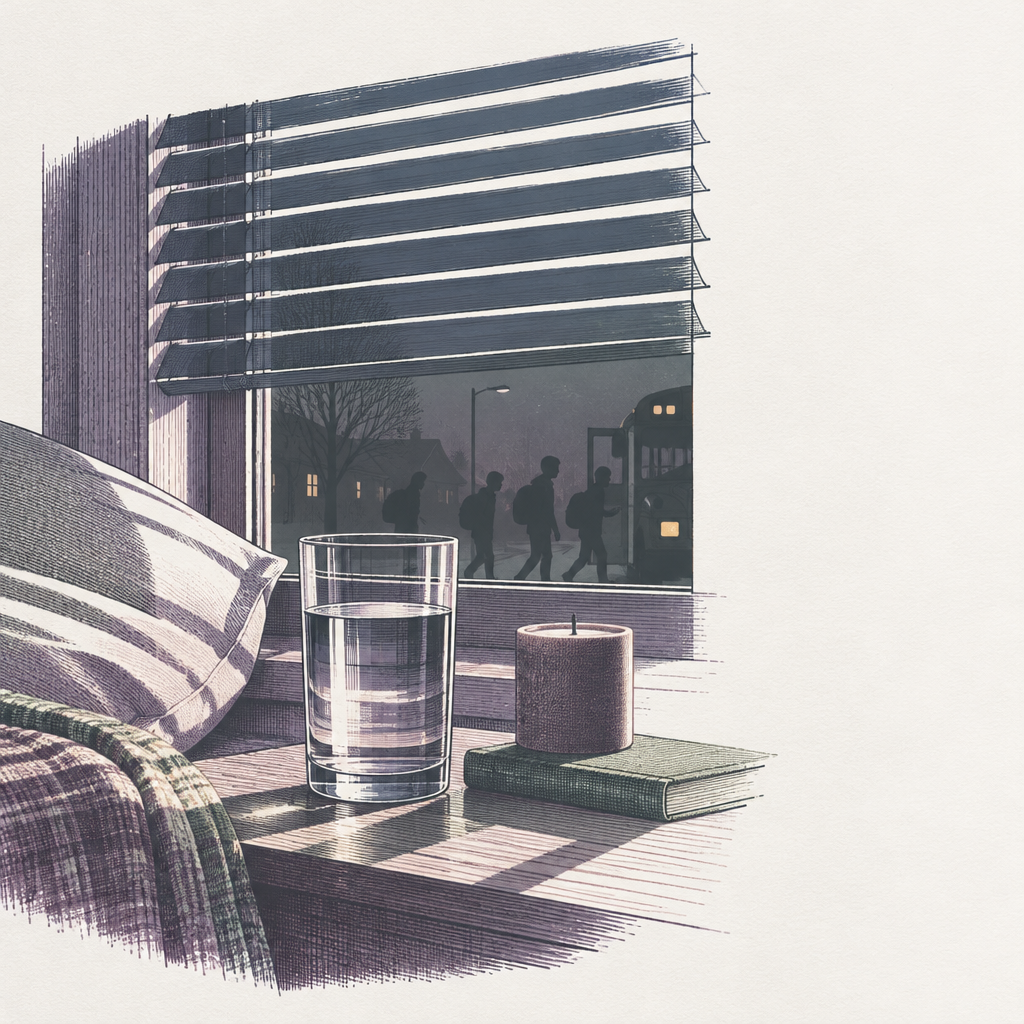
A Current Biology study modeled the physical cost of permanent daylight saving time across the United States: over 1.2 billion school commutes each year would occur in pitch darkness. The researchers show that delaying dawn light severely disrupts developing circadian rhythms by blocking morning melatonin suppression. For teenagers whose biological clocks are naturally shifted later, losing morning sunlight accelerates chronic sleep debt.
The architecture take
I used to think daylight saving time was harmless until winter wake times caught up with me. Shifting clocks forward sounds romantic for summer evenings, but forcing kids into dark streets wrecks circadian biology. Morning light hitting retinal ganglion cells is the trigger that shuts down melatonin and cues cortisol. When dawn gets pushed back an hour, a teenager's suprachiasmatic nucleus simply doesn't wake up before second period. The math in this paper is brutal: over a billion commutes taken before sunrise, driving chronic social jetlag and anxiety. I changed my mind about the Sunshine Protection Act after seeing the data on teenage sleep debt. Now I view early winter bells as plain biological neglect. Lawmakers love evening golf. Biology doesn't care. The nervous system runs on morning photons. If school boards want alert students, permanent standard time is the only rational call.