news
Oral Alzheimer's drug cuts cognitive decline by 50% in early study
A new oral drug, LM11A-31, reduced cognitive decline by 50% in people with mild-to-moderate Alzheimer's during a Phase 2a study. Indiana University and Pharmatrophix presented the data, showing the drug may protect brain network connectivity. This could be big news for how we approach neurodegenerative conditions.
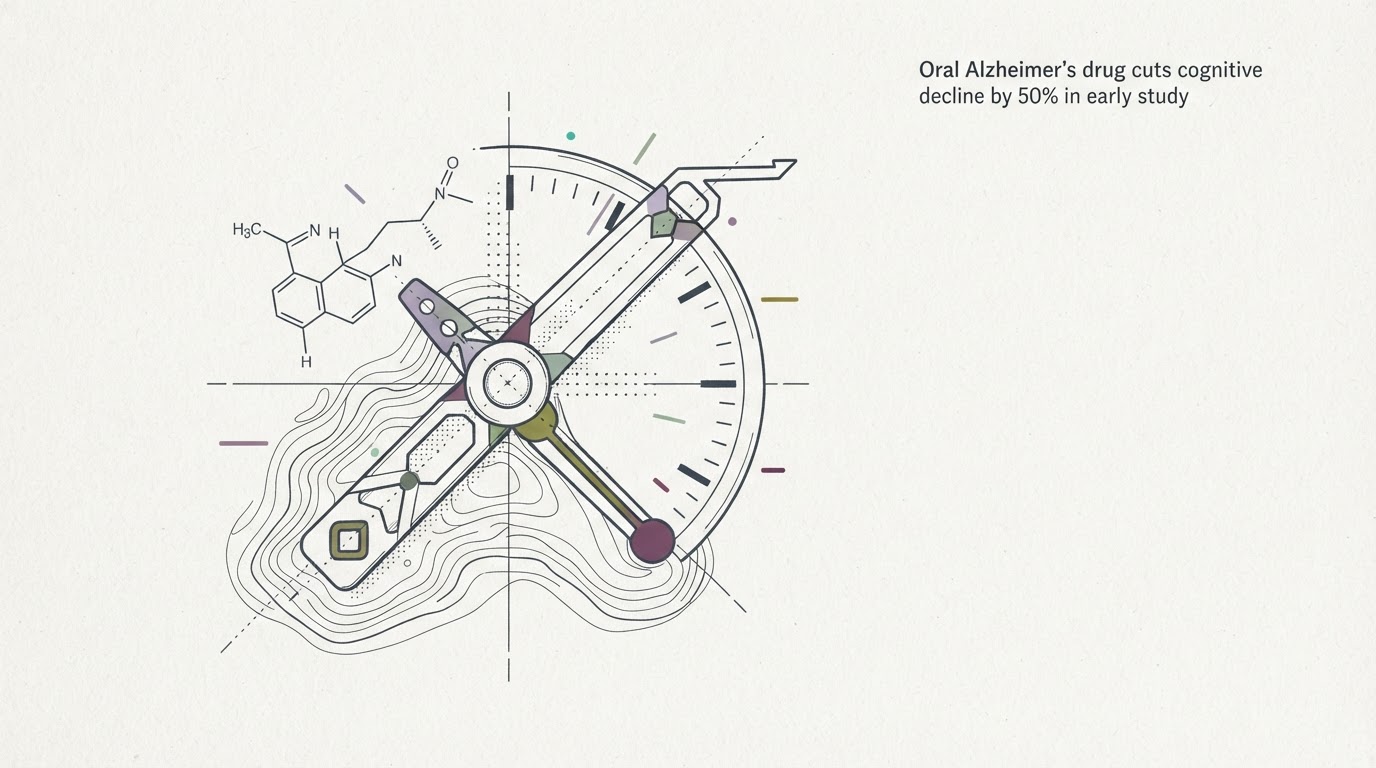
A new oral drug, LM11A-31, reduced cognitive decline by 50% in people with mild-to-moderate Alzheimer's during a Phase 2a study. Indiana University and Pharmatrophix presented the data, showing the drug may protect brain network connectivity. This could be big news for how we approach neurodegenerative conditions.
The architecture take
Okay, so a pill that halves cognitive decline in early Alzheimer's? That's a headline grabber for anyone paying attention to brain health. This LM11A-31 thing isn't just about slowing down memory loss, it specifically targets and protects functional-network connectivity in the brain. Think of it less as a band-aid and more like shoring up the electrical grid before a blackout. The mechanism involves p75NTR modulation, which basically means it's helping nerve cells stay connected and communicate better. It's still early days – Phase 2a focused on safety and biomarkers – but seeing a 50% reduction at this stage suggests a potent move in the right direction. If this holds up, it's not just a treatment; it's a recalibration of what's possible for brain aging and the nervous system. Keep an eye on this space; the ripple effects for longevity and mental health could be huge, shifting the conversation from managing symptoms to preserving cognitive function.