news
Noise-Cancelling Headphones During Surgery Prevent Post-Op Nausea and Vomiting
Clinical trial data reveals that placing active noise-cancelling headphones on patients under general anaesthesia significantly curbs postoperative nausea and vomiting. Operating rooms frequently hover between 65 and 85 decibels, creating constant acoustic input that reaches the brainstem even while unconscious. Muting that sound floor protects autonomic tone before recovery starts.
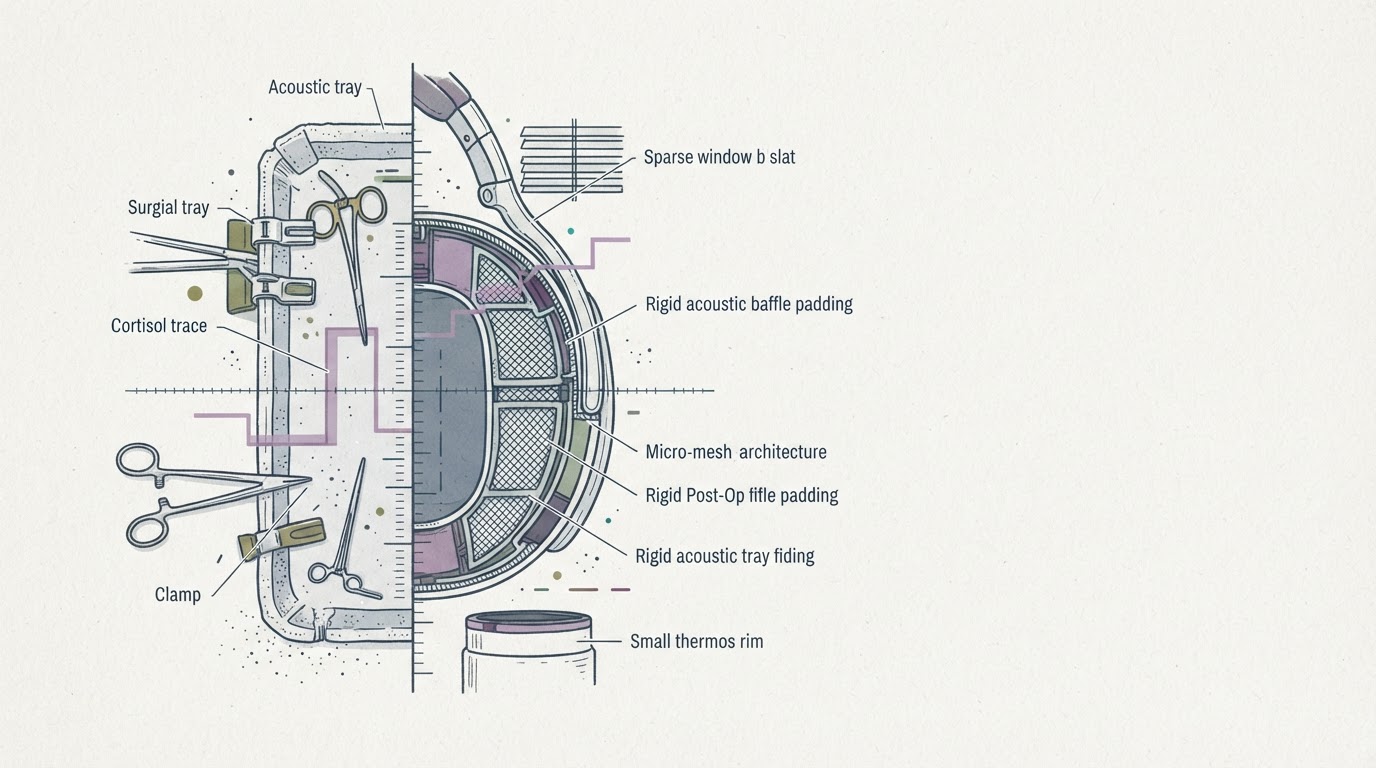
Clinical trial data reveals that placing active noise-cancelling headphones on patients under general anaesthesia significantly curbs postoperative nausea and vomiting. Operating rooms frequently hover between 65 and 85 decibels, creating constant acoustic input that reaches the brainstem even while unconscious. Muting that sound floor protects autonomic tone before recovery starts.
The architecture take
Your brain keeps listening even when anaesthesia knocks you out. I used to assume surgical unconsciousness meant total sensory shutdown, but the auditory nerve doesn't clock off. Operating theatres run loud (often above 70 decibels from bone saws, alarms, and clattering trays), and that static keeps sympathetic nervous tone dialed up while you're under. The brainstem registers sudden sound spikes as threat signals. That barrage spikes cortisol, irritates vagal pathways, and leaves your stomach primed to heave the second consciousness returns. Slapping a pair of ordinary noise-cancelling headphones over a patient's ears costs pennies and blunts that autonomic overload at the source. I expect surgical wards will treat acoustic shielding as standard protocol within three years. I'll bring my own to any hospital stay from here on out. Quiet protects the gut.