news
New microchip tech could shrink wearables, advance health trackers
Researchers at the Chinese Academy of Sciences developed reconfigurable millimeter-wave microchips that cut device size by 90% using hBN switches on GaN. This could mean much smaller, more powerful health tech. Think less bulk, more data on your wrist.
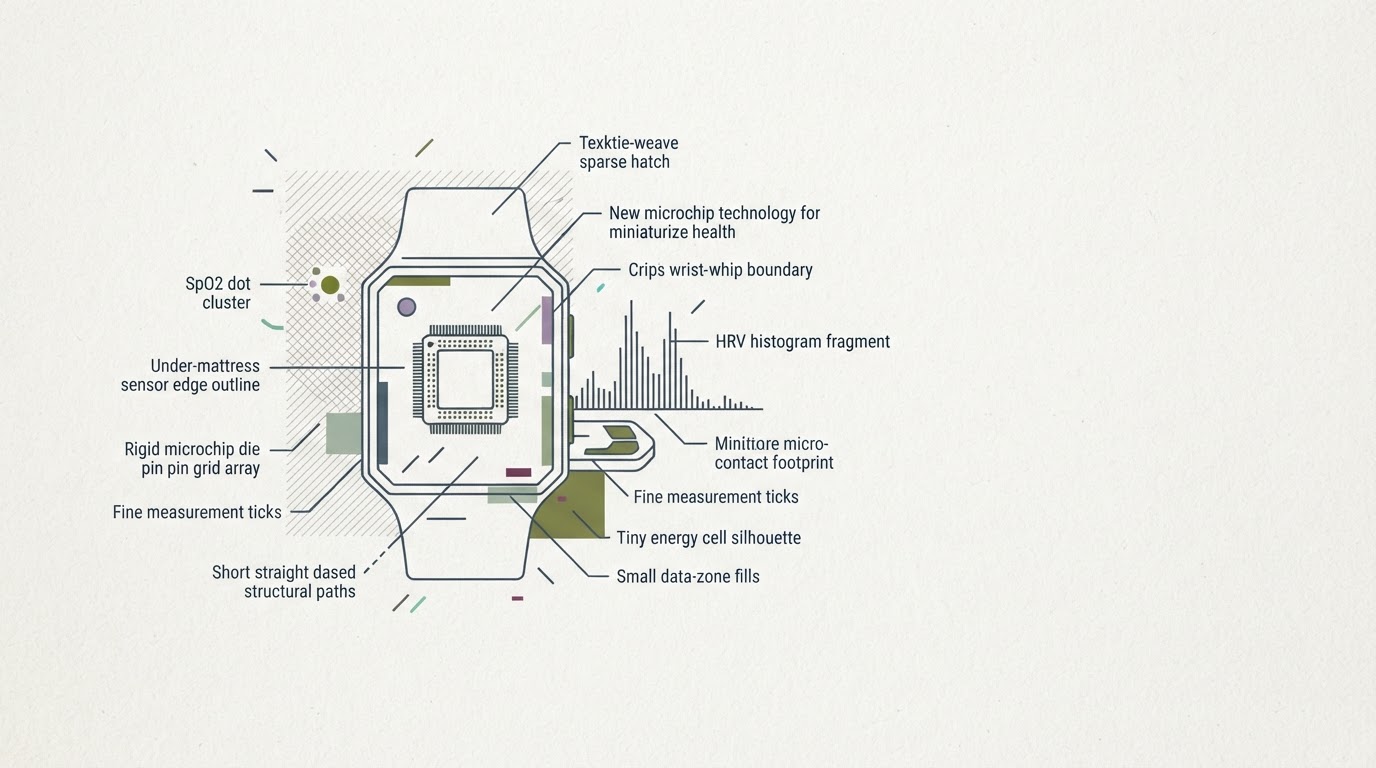
Researchers at the Chinese Academy of Sciences developed reconfigurable millimeter-wave microchips that cut device size by 90% using hBN switches on GaN. This could mean much smaller, more powerful health tech. Think less bulk, more data on your wrist.
The architecture take
This isn't about some incremental bump in CPU speed; it's about fundamentally shrinking the hardware that powers our favorite health gizmos. Right now, wearables have size and power limits — there's only so much you can cram into a ring or a watch before it's clunky and drains its battery in hours. But if you can shrink the actual components by 90% (which is what this hBN-on-GaN tech promises), suddenly you have a ton more real estate for sensors, better antennas, and more battery. What does that mean for your body? Higher-fidelity, continuous tracking. Imagine a sensor that measures multiple biomarkers with clinical-grade accuracy, fits in a tiny patch, and lasts for days. This is the kind of stuff that moves health tech from 'cool gadget' to 'essential diagnostic tool.' Keep an eye on who licenses this first – it's a stepping stone to the next generation of smart health devices, especially for things like continuous glucose monitors or even subtle neural activity tracking.