news
New chemical method boosts ketone molecule size for pharma
Researchers in Nature have developed a new palladium-catalyzed method to extend ketone molecular chains, a process called homologation. This chemical advance allows for more precise and efficient creation of larger ketone bodies, which could impact future drug development and nutritional supplement formulation. It offers a new pathway for synthesizing complex molecules related to metabolic health.
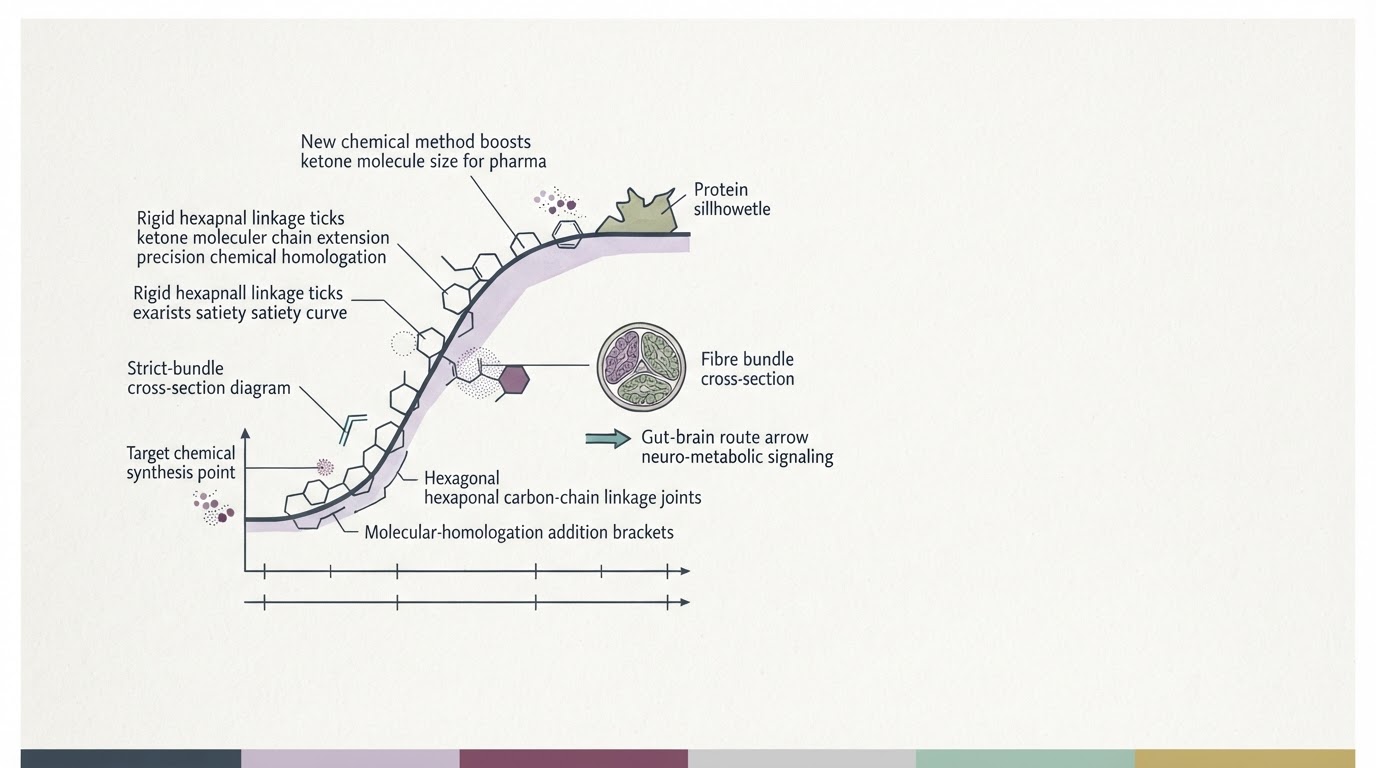
Researchers in Nature have developed a new palladium-catalyzed method to extend ketone molecular chains, a process called homologation. This chemical advance allows for more precise and efficient creation of larger ketone bodies, which could impact future drug development and nutritional supplement formulation. It offers a new pathway for synthesizing complex molecules related to metabolic health.
The architecture take
Okay, so this isn't about your keto diet hitting a new gear, but it definitely matters for how new health products might get made. Scientists figured out a way to stitch more carbon atoms onto ketone molecules, essentially making them bigger and more complex. Think of it like adding extra links to a chain, really cleanly. This kind of precise chemical engineering is crucial because our bodies respond differently to various ketone structures, not just 'ketones' as a monolithic thing. This method, detailed in Nature, means future therapeutics — maybe even new GLP-1 analogues or other metabolic regulators — could be built with more specific biological activity, and perhaps fewer side effects. What to watch for: labs trying to use this to synthesize harder-to-get metabolic compounds, making them cheaper or more bioavailable. I'm keeping an eye on who patents specific applications of this chemistry.