news
New Alzheimer's drug targets communication networks, not just plaques
A new drug candidate, LM11A-31, shows promise in early data by focusing on preserving brain communication networks in Alzheimer's. This moves beyond the long-standing approach of solely targeting amyloid plaques, offering a new pathway in disease treatment.
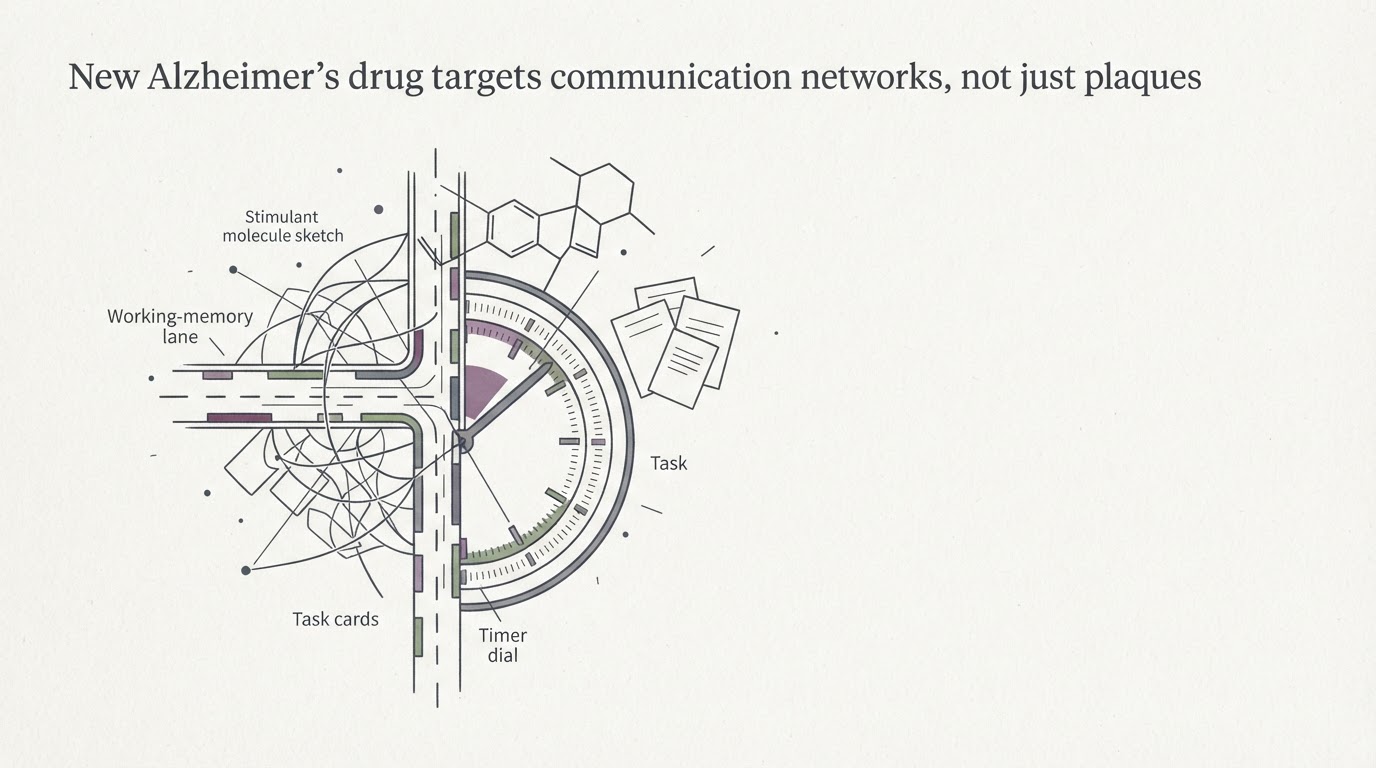
A new drug candidate, LM11A-31, shows promise in early data by focusing on preserving brain communication networks in Alzheimer's. This moves beyond the long-standing approach of solely targeting amyloid plaques, offering a new pathway in disease treatment.
The architecture take
Everyone's been so obsessed with amyloid plaques for Alzheimer's for so long, it's almost like we forgot brains have other moving parts. This drug, LM11A-31, coming from pilot data focused on communication networks instead of just plaques, is a refreshing pivot. It's a reminder that complex diseases often don't have single targets, and sometimes you have to look past the obvious villain (plaques) to see the actual dysfunction (network breakdown). For you, it means more avenues for future interventions, moving beyond the current plaque-clearing drugs which have had mixed results. Watch for more research that broadens the scope of what we're targeting beyond just removing sticky bits, and into how the brain actually works, or fails to. This shifts the focus from 'cleaning up' to 'keeping the lights on.'