news
New AI identifies genetic links in diverse health records
Researchers at the Max Planck Institute of Psychiatry developed a new AI called "GeneMachine" that uses Bayesian modeling to uncover genetic associations within electronic health records (EHRs). The system analyzed data from 300,000 individuals, identifying novel genetic markers for conditions like depression and metabolic syndrome by linking diagnoses and treatments over time. This approach allows for deeper insights into how genes influence health trajectories, even with incomplete data.
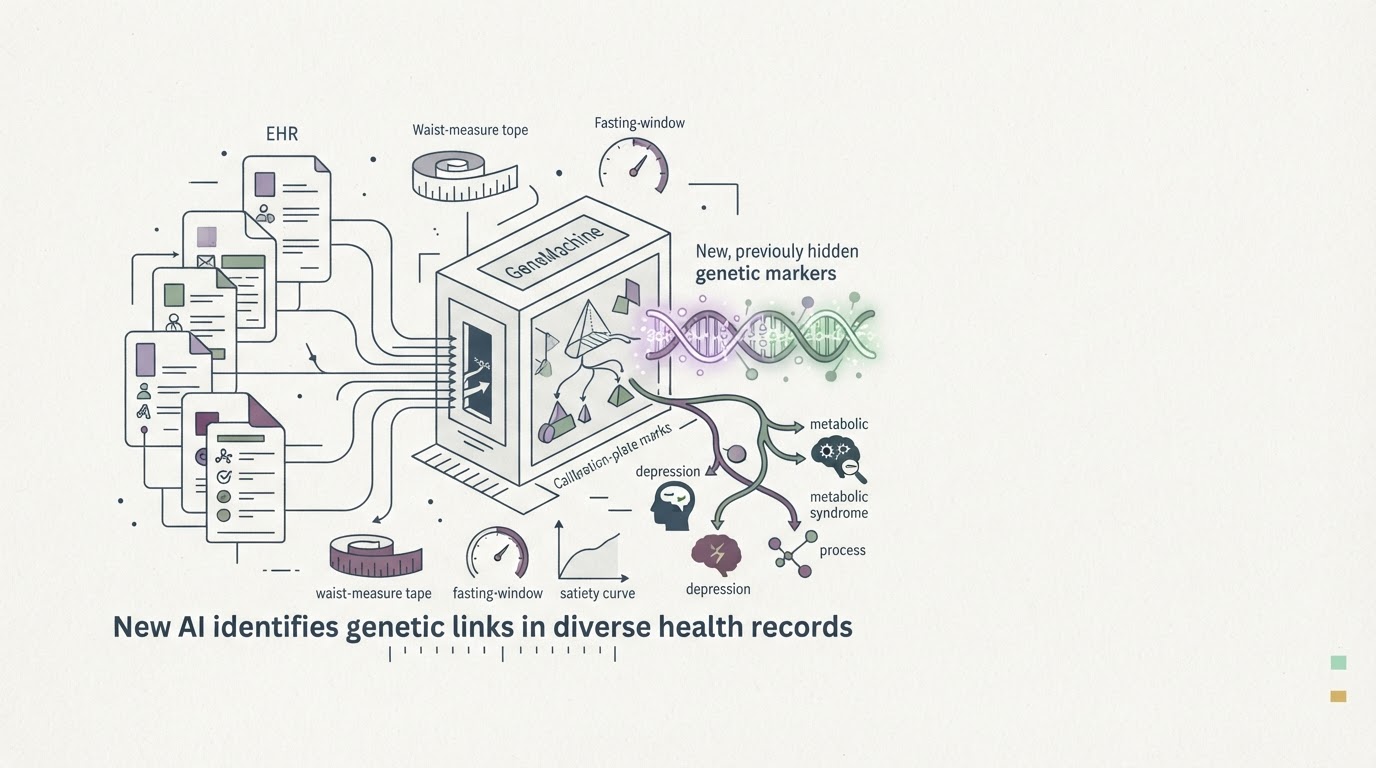
Researchers at the Max Planck Institute of Psychiatry developed a new AI called "GeneMachine" that uses Bayesian modeling to uncover genetic associations within electronic health records (EHRs). The system analyzed data from 300,000 individuals, identifying novel genetic markers for conditions like depression and metabolic syndrome by linking diagnoses and treatments over time. This approach allows for deeper insights into how genes influence health trajectories, even with incomplete data.
The architecture take
So, instead of waiting for perfect, pristine datasets that basically don't exist, these smartypants built an AI that looks for genetic signals even when the health records are a hot mess. The big deal? It's pulling out novel genetic markers for things like depression and metabolic syndrome, showing how our genes actually play out in our bodies over time. This isn't just about spotting a gene for a disease; it's about seeing the path that gene takes through your health journey, connecting the dots between your initial symptoms, later diagnoses, and treatments. For you, it means science gets closer to figuring out why some people get certain conditions and others don't, opening the door for more personalized interventions that actually hit the right biological target, rather than just guessing. Watch this space for a total rethink on how we map out complex health conditions, from mood to metabolism.