news
Neuromorphic Chip Decodes Brain Emotion Waves in 18 Microseconds
Researchers at Beijing Institute of Technology engineered an asynchronous neuromorphic chip that reads emotional states from EEG signals in 18 microseconds. The system consumes 97.5% less power than conventional neural networks by firing only when signal spikes occur. That drop in energy draw makes all-day continuous brain tracking on consumer wearables technically feasible.
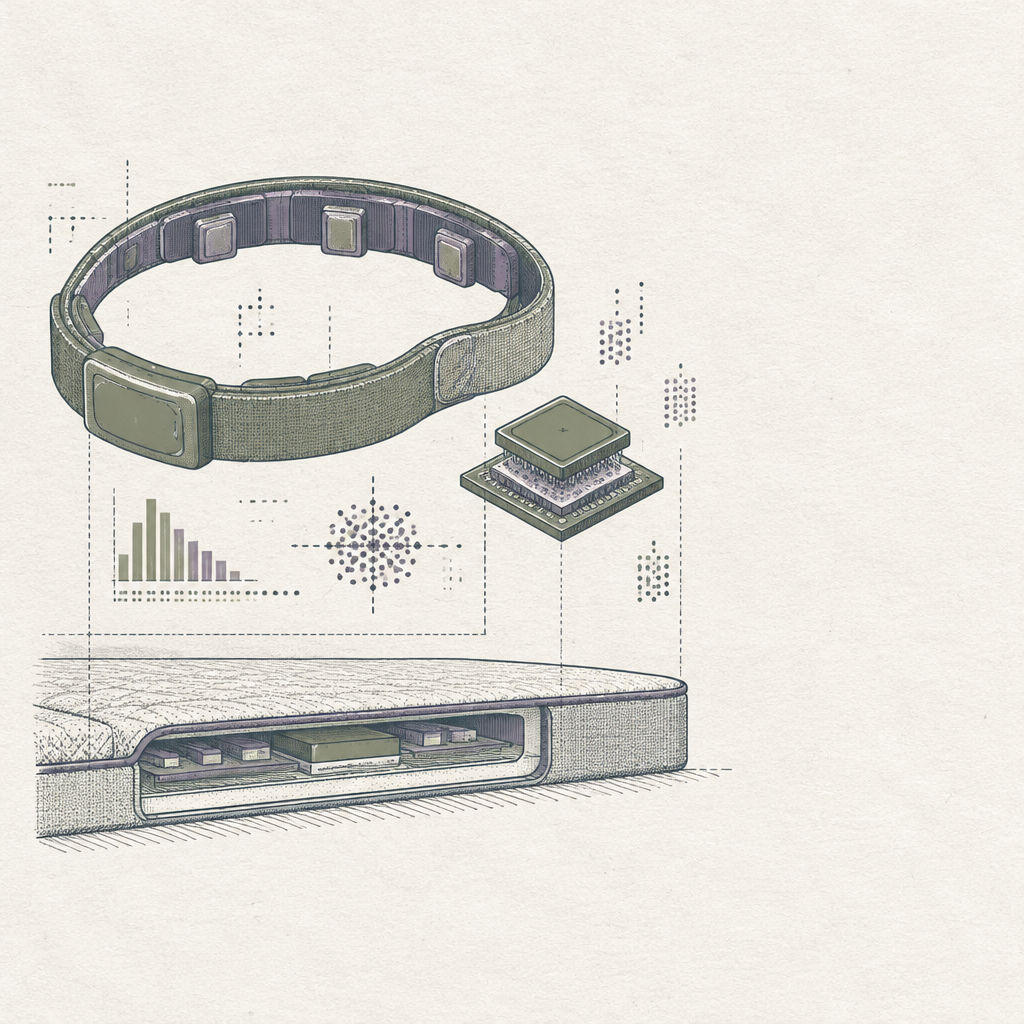
Researchers at Beijing Institute of Technology engineered an asynchronous neuromorphic chip that reads emotional states from EEG signals in 18 microseconds. The system consumes 97.5% less power than conventional neural networks by firing only when signal spikes occur. That drop in energy draw makes all-day continuous brain tracking on consumer wearables technically feasible.
The architecture take
Every consumer EEG headband I have tested eventually ends up in a bedside drawer because continuous tracking kills the battery before lunchtime. Running machine learning models on raw brain waves takes serious computing juice, which is why commercial headsets sample sparingly or push heavy data processing to your phone. By using a spiking neural network that mimics how neurons fire in bursts, this chip processes EEG signals in 18 microseconds while slashing energy consumption by 97.5%. That math completely shifts what ambient neurotechnology can do. Instead of clunky twenty-minute guided meditation check-ins, you get continuous passive tracking of autonomic baseline and emotional arousal right on the sensor. I used to think always-on neuro-wearables were a decade out. This proves the real hurdle was never the electrodes; it was the microchips baking your forehead while trying to classify alpha waves. Once hardware stays alive for days on milliwatts, your smartwatch tracking HRV will start looking like an antique.