news
MRJP1 Labs launches scar care using bioengineered bee protein
Former Supergoop executive Lindy Firstenberg launched MRJP1 Labs to treat surgical and trauma scars using lab-synthesized Major Royal Jelly Protein 1. The formulation targets cell migration and collagen deposition without harvesting physical honeybees. It represents a pivot from passive silicone barrier sheets toward active biochemical tissue repair.
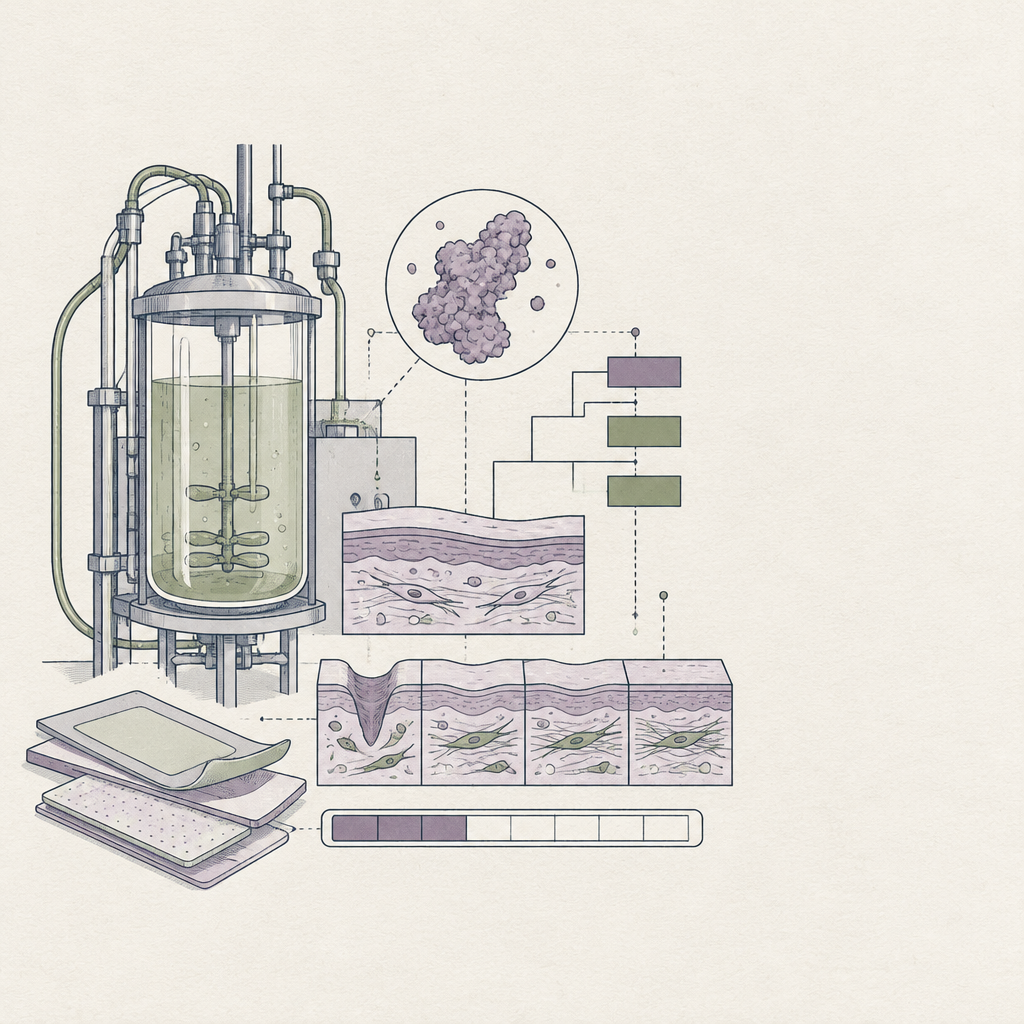
Former Supergoop executive Lindy Firstenberg launched MRJP1 Labs to treat surgical and trauma scars using lab-synthesized Major Royal Jelly Protein 1. The formulation targets cell migration and collagen deposition without harvesting physical honeybees. It represents a pivot from passive silicone barrier sheets toward active biochemical tissue repair.
The architecture take
Scar treatment has been stuck on medical-grade silicone sheets and petrolatum for twenty years. I spent years assuming silicone was the only reliable option because heavy occlusion keeps transepidermal water loss down. I changed my mind once recombinant peptides started showing real efficacy in tissue repair. MRJP1 Labs is taking that route by synthesizing Major Royal Jelly Protein 1 in a bioreactor. Honeybee royal jelly accelerates keratinocyte migration and collagen deposition, but scraping it from hives wasn't scalable or kind. Recreating it sidesteps the hive. The formula targets fibroblast signaling and local tissue inflammation rather than just sealing the surface. I'm usually skeptical of insect-adjacent biotech claims, but cellular signaling is where post-op care is headed. If their trial data on scar elevation holds up against standard silicone, expect bioengineered proteins to move rapidly into clinical surgical recovery.