news
MRI Scans Link Heavy Teen Screen Time to Delayed Brain Pruning
Brain scans of adolescents reveal heavy leisure screen time tracks with smaller grey matter volume in memory centers and stalls normal synaptic pruning in the prefrontal cortex. Meanwhile, higher aerobic fitness showed the opposite pattern, preserving tissue volume. The data maps how digital habits physically alter developing neural circuits.
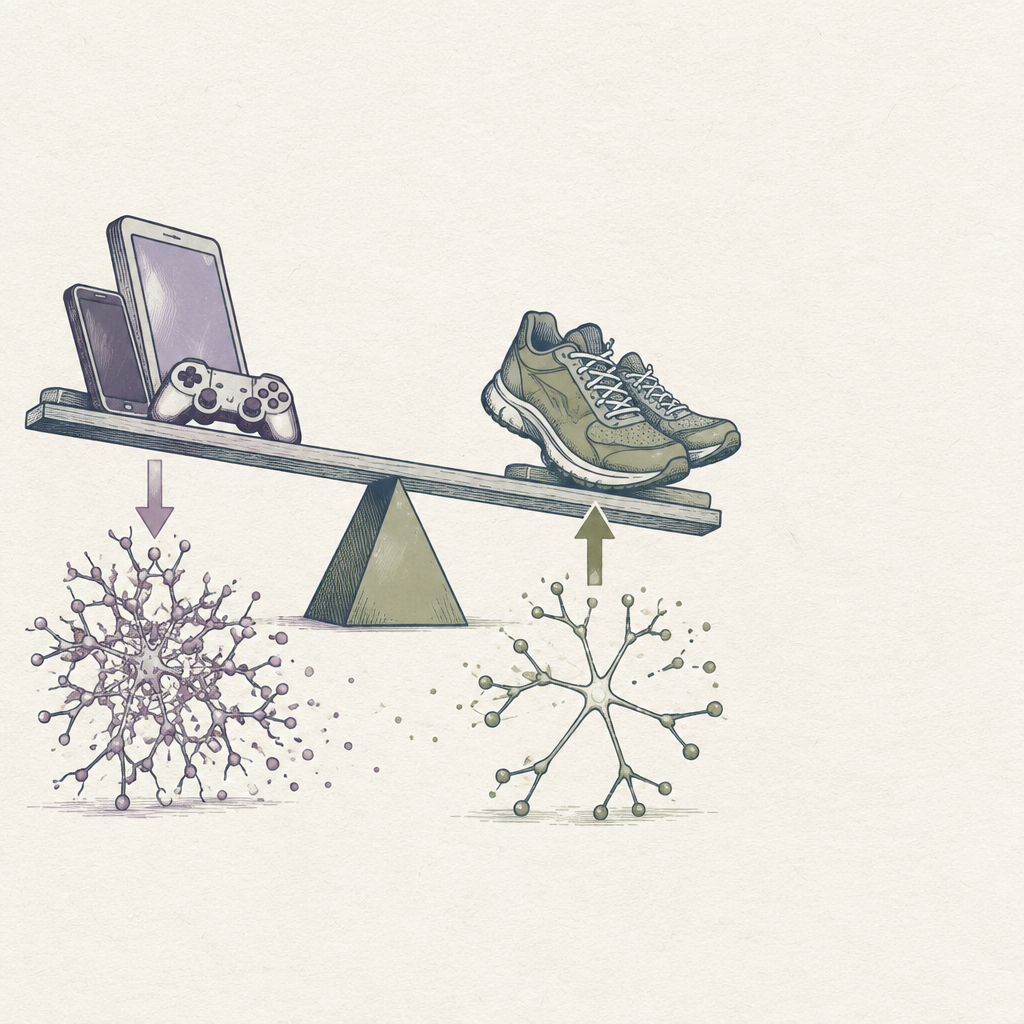
Brain scans of adolescents reveal heavy leisure screen time tracks with smaller grey matter volume in memory centers and stalls normal synaptic pruning in the prefrontal cortex. Meanwhile, higher aerobic fitness showed the opposite pattern, preserving tissue volume. The data maps how digital habits physically alter developing neural circuits.
The architecture take
I used to think the panic over teenage screen time was mostly moral hysteria dressed up as neurology. I was wrong. The imaging shows that leisure screen use actually stalls synaptic pruning in frontal decision-making hubs while shrinking volume across memory circuits. Pruning is how an adolescent brain gets fast and selective; when you delay it, the brain hangs onto noisy, inefficient connections instead of trimming down. Aerobic capacity pushes in the exact opposite direction. Pumping blood through a teenager's calves and heart preserves hippocampal grey matter and keeps neural maturation on track. You do not need to confiscate every iPad in a fit of rage, but you do need to understand the baseline math. If four hours of doomscrolling replaces four hours of soccer or walking, the brain simply misses its physical pruning cues. Movement gives the nervous system a clear metabolic signal to mature. The glass rectangle keeps it idling in neutral.