news
Mindfulness and Biofeedback Ease Migraine Pain Without Preventing Attacks
A meta-analysis of seven clinical trials with 535 migraine patients in Frontiers in Neuroscience found that mindfulness and biofeedback fail to reduce attack frequency. They do, however, reliably decrease pain intensity and functional disability on the HIT-6 scale.
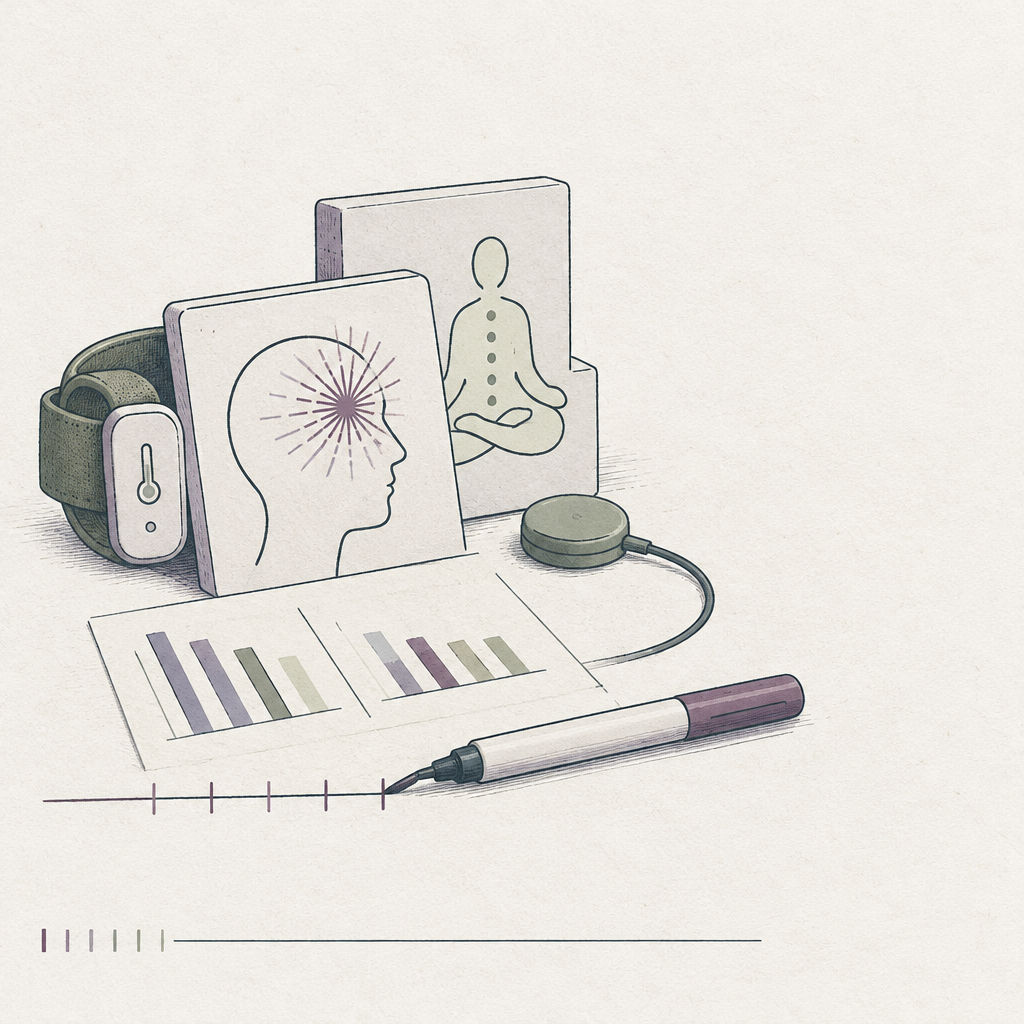
A meta-analysis of seven clinical trials with 535 migraine patients in Frontiers in Neuroscience found that mindfulness and biofeedback fail to reduce attack frequency. They do, however, reliably decrease pain intensity and functional disability on the HIT-6 scale.
The architecture take
I spent years hoping breathwork would stop headaches before they started. A new meta-analysis in Frontiers in Neuroscience looking at 535 migraine patients confirms what many of us suspected: biofeedback and mindfulness do not cut migraine attack frequency at all (p = 0.34). They do drop pain intensity (SMD = -0.39) and lower daily disability scores. That distinction matters. Biofeedback trains voluntary parasympathetic tone and vascular control, but migraine onset often traces back to deep cortical spreading depression or hormonal drops that meditation cannot magically intercept. What these tools actually alter is central sensitization. You quiet sympathetic arousal and dial down the brainstem's volume knob on trigeminal pain signaling once the attack starts. I used to feel frustrated when twenty minutes of breathing failed to prevent an aura. Now I view these tools as rescue gear for sensory processing rather than preventative shields. Use peripheral temperature biofeedback to ease the pain cascade, but don't drop your medical protocol expecting meditation to keep attacks away.