news
Low Back Pain Slows Reaction Time After Fatigue
A new study in *Frontiers in Sports & Active Living* found that people with chronic low back pain (cLBP) have significantly prolonged reaction times after muscle fatigue, compared to healthy individuals. Researchers measured total reaction time (TRT) and premotor time (PMT) in 24 cLBP patients and 22 healthy controls, linking pain to slower neuromuscular response. The lead author was Dr. Dong-Hui Yang.
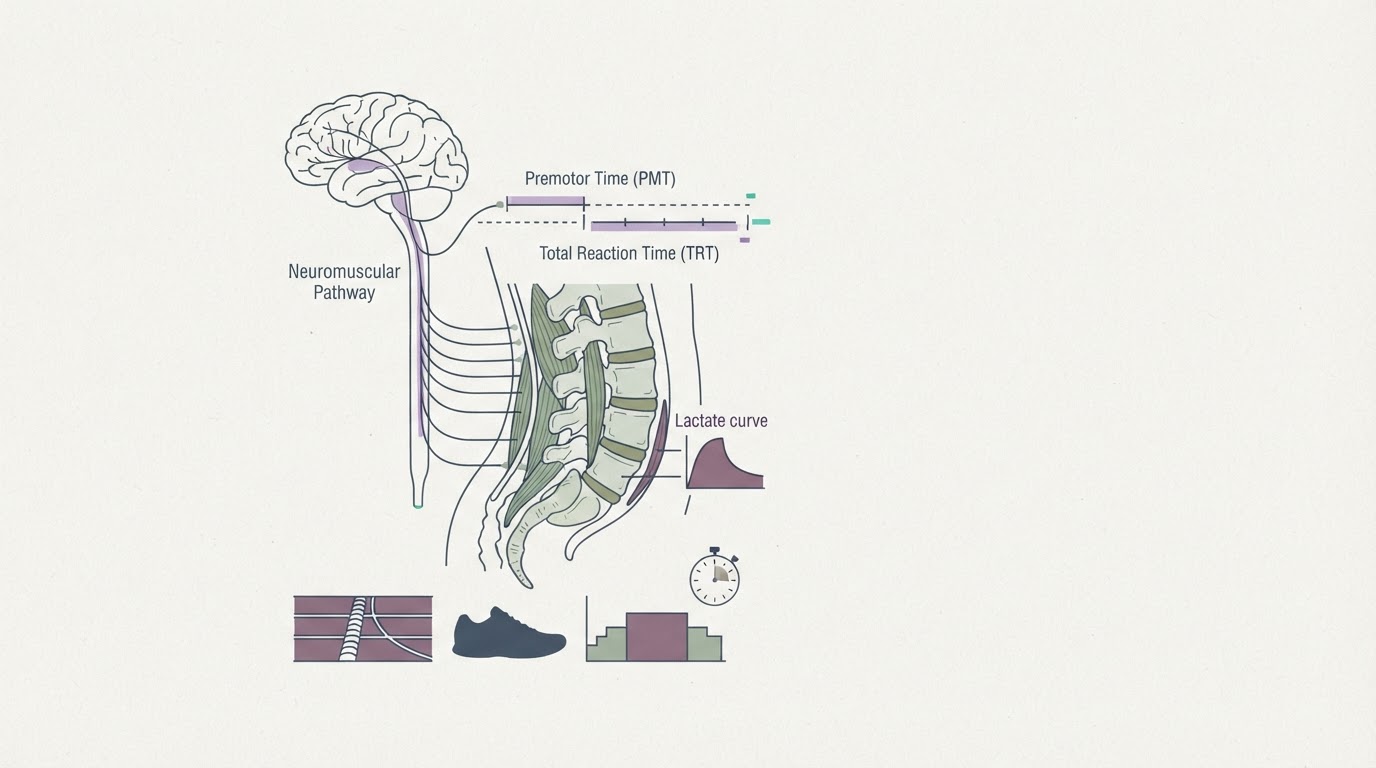
A new study in Frontiers in Sports & Active Living found that people with chronic low back pain (cLBP) have significantly prolonged reaction times after muscle fatigue, compared to healthy individuals. Researchers measured total reaction time (TRT) and premotor time (PMT) in 24 cLBP patients and 22 healthy controls, linking pain to slower neuromuscular response. The lead author was Dr. Dong-Hui Yang.
The architecture take
Your back doesn't just hurt; it changes how your brain talks to your body when you're tired. This study found that if you've got chronic low back pain, your reaction time slows down way more after muscle fatigue than someone without pain. It's not just a localized ache, it's a nervous system hiccup, specifically in the premotor time – that's the brain's internal processing before the muscle even fires. It suggests that your brain is having to work harder, or differently, to keep you stable once your core muscles are toast. I see this play out in how clients manage daily load; an extra long day of walking or standing doesn't just make the pain worse, it slows down your ability to catch yourself if you trip. So, fatigue management becomes a non-negotiable part of pain management, especially if you want to avoid a cascade of other injuries from being too slow to react.