news
Lehigh creates digital twin for gut-brain neurostimulation
Researchers at Lehigh University built a digital twin of the gut-brain axis to model neurostimulation therapies. This AI-powered simulation helps predict how vagus nerve stimulation impacts complex gut-brain interactions, aiming to optimize treatments without trial and error in humans.
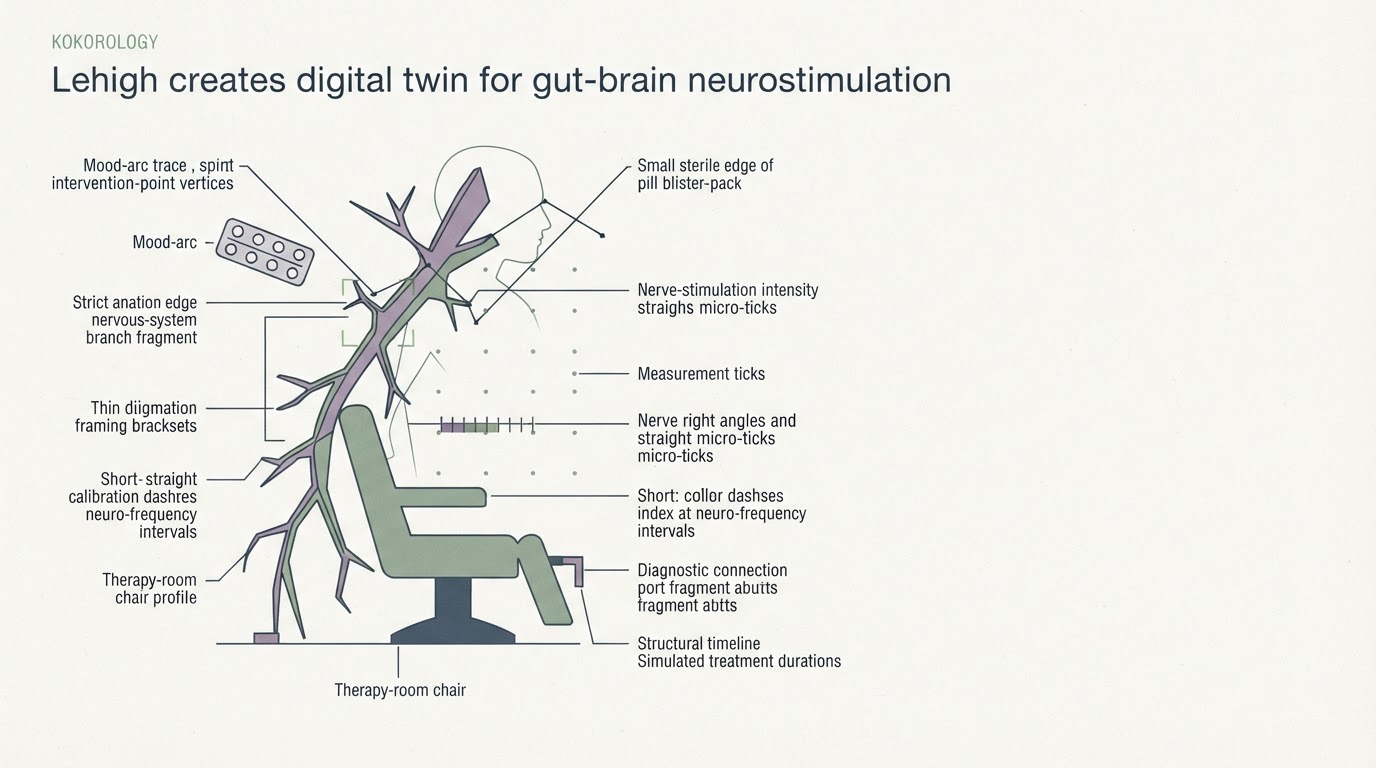
Researchers at Lehigh University built a digital twin of the gut-brain axis to model neurostimulation therapies. This AI-powered simulation helps predict how vagus nerve stimulation impacts complex gut-brain interactions, aiming to optimize treatments without trial and error in humans.
The architecture take
I see a lot of AI chatter, but this actually hits different. Lehigh's team used AI to create a 'digital twin' of the gut-brain axis, essentially a sophisticated model that predicts how different neurostimulation approaches might work. That means instead of guessing, or slow human trials, they can run simulations to see how stimulating the vagus nerve impacts everything from gut motility to neurotransmitter release in the brain. They're trying to figure out the right frequency, intensity, and duration for interventions that target, say, chronic gut issues or mental health conditions. It's a smart way to map the cause-and-effect of vagal tone without having to constantly poke and prod a living system. This kind of tech gets us closer to personalized bio-electronic medicine, tuning our nervous system with less guesswork.