news
In-Ear EEG Wearables Missed Half of Alpha Brainwaves in Clinical Trial
Researchers in Frontiers in Neuroscience tested a fully integrated in-ear EEG against clinical scalp electrodes in 29 adults. The ear device caught resting alpha activity in only 15 of 29 participants, missing nearly half the room despite tracking group-level trends. For anyone waiting on smart earbuds to read their nervous system during sleep or deep work, the signal still struggles with the anatomy.
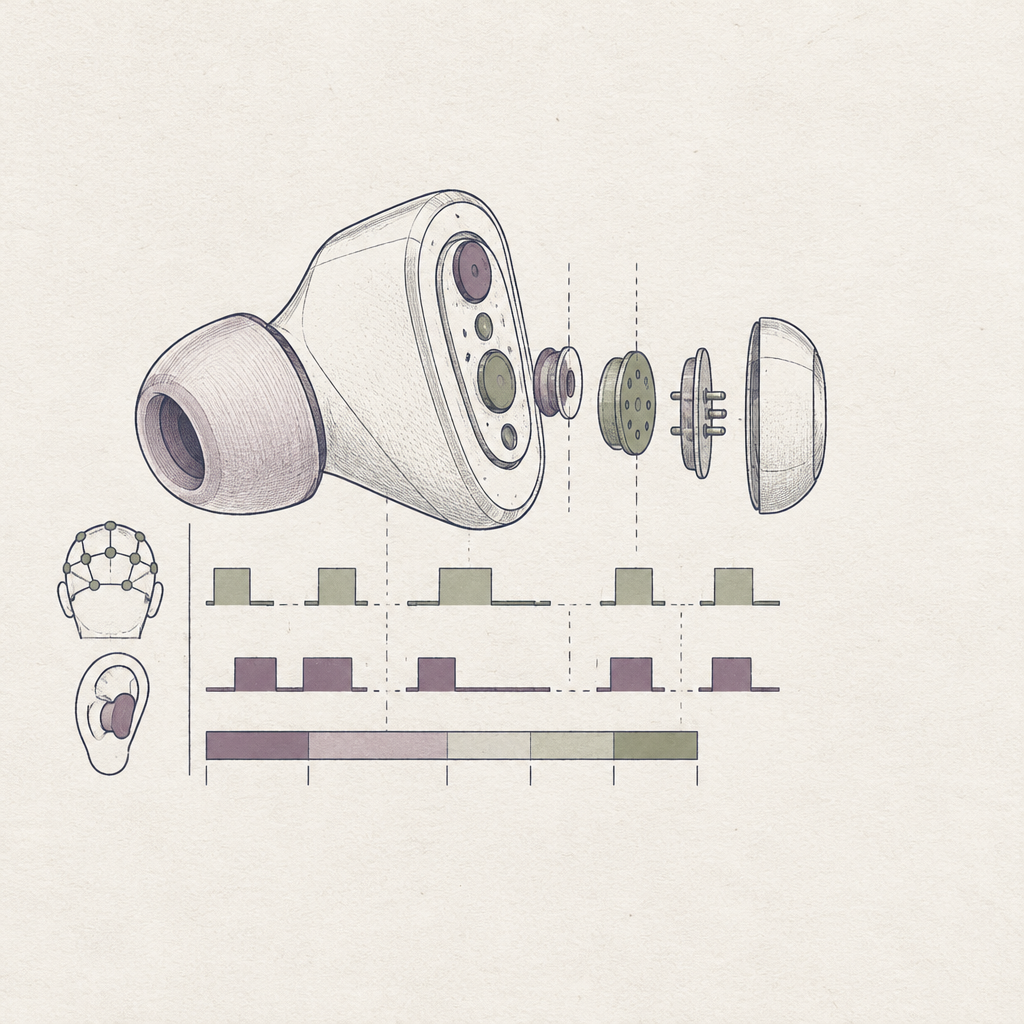
Researchers in Frontiers in Neuroscience tested a fully integrated in-ear EEG against clinical scalp electrodes in 29 adults. The ear device caught resting alpha activity in only 15 of 29 participants, missing nearly half the room despite tracking group-level trends. For anyone waiting on smart earbuds to read their nervous system during sleep or deep work, the signal still struggles with the anatomy.
The architecture take
I spent months hoping in-ear EEG would replace clumsy forehead straps for sleep tracking. Earbuds feel convenient. I assumed the engineering was already solved, offering a painless way to read resting alpha waves (8 to 12 Hz) for nervous system recovery. Then researchers in Frontiers in Neuroscience put an in-ear device on 29 adults alongside clinical scalp electrodes. Scalp arrays picked up alpha peaks in up to 100% of participants. The in-ear sensors caught them in just 52%.
When the ear device caught a rhythm, signal power correlated with scalp data. Precision still dropped when identifying a person's individual alpha frequency. Ear canal anatomy explains the gap. Electrodes shift, skin impedance fluctuates, and the ear canal sits far from the occipital cortex where alpha waves generate. Audio brands keep teasing neuro-tracking buds, but I won't trust their recovery metrics anytime soon. The hardware can't beat basic biology.