news
Impatience is an emotion, not a fixed trait
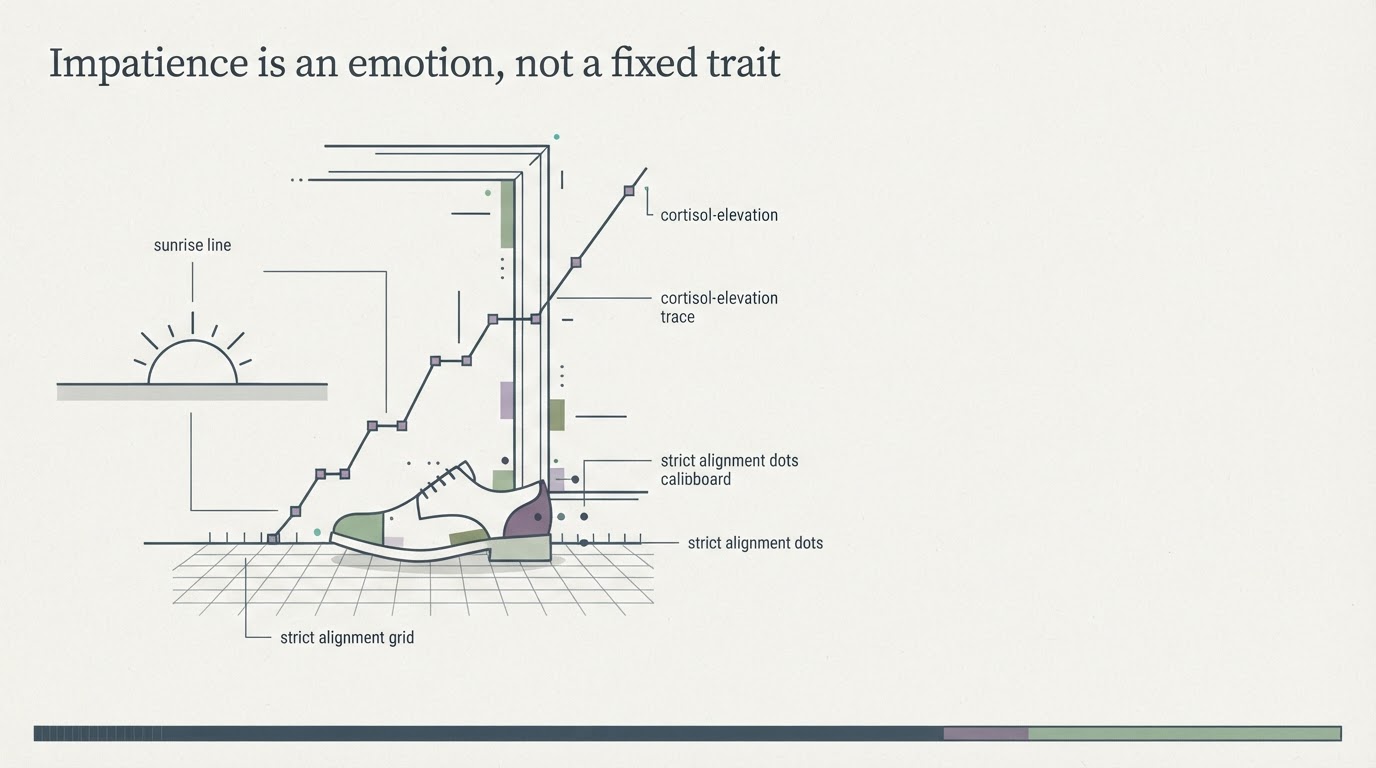
The article from Psyche suggests viewing impatience as a temporary emotional state rather than an inherent personality trait. This reframing can help manage the physiological stress response tied to feeling impatient. It's about changing how you relate to the feeling, not trying to suppress it.
The article from Psyche suggests viewing impatience as a temporary emotional state rather than an inherent personality trait. This reframing can help manage the physiological stress response tied to feeling impatient. It's about changing how you relate to the feeling, not trying to suppress it.
The architecture take
I used to think my impatience was just… me. A personality flaw, maybe. But the idea that impatience is an emotion, not a fixed trait, feels like a key to unwinding that tight knot in my chest. When I frame it as a state, it’s less about being a 'patient person' or 'impatient person' and more about recognizing a temporary surge of stress hormones — cortisol, adrenaline — when my brain senses a delay. It's that immediate fight-or-flight response to a perceived threat, even if it's just a slow WiFi connection. Naming it an emotion gives me distance; I can observe it, rather than being it. It's a signal to pause, take a breath, and regulate my nervous system, instead of spiraling into frustration. That shift helps dial down the static and keep me grounded.