news
Gut Bacteria Produce a Fatty Acid That Lowers Cholesterol Like Statins
A study in Nature shows that pentadecanoic acid, produced by human gut bacteria, inhibits HMG-CoA reductase in the liver to reduce LDL cholesterol. The mechanism directly mirrors how commercial statin medications block arterial plaque formation. It offers a clear metabolic target for using microbiome biology to protect cardiovascular health.
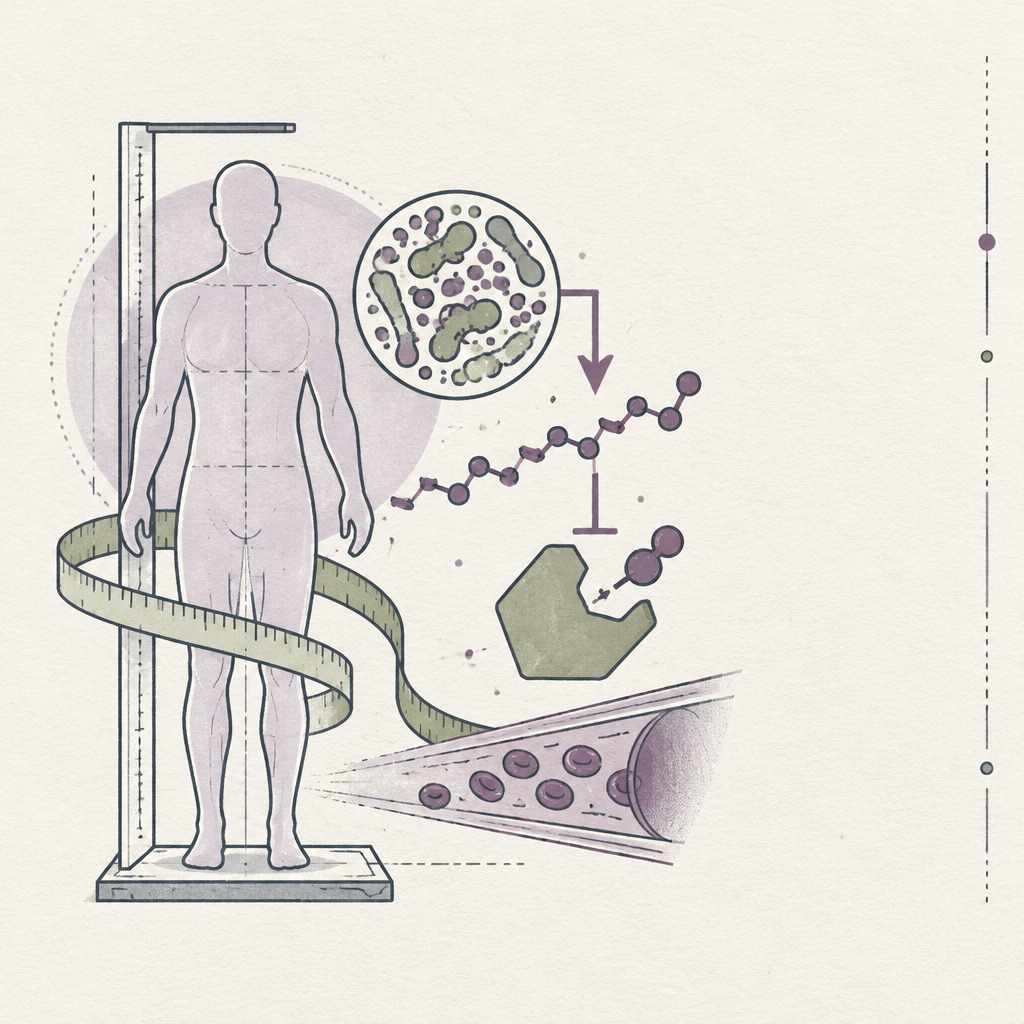
A study in Nature shows that pentadecanoic acid, produced by human gut bacteria, inhibits HMG-CoA reductase in the liver to reduce LDL cholesterol. The mechanism directly mirrors how commercial statin medications block arterial plaque formation. It offers a clear metabolic target for using microbiome biology to protect cardiovascular health.
The architecture take
Your gut bacteria are running their own compounding pharmacy, churning out a fatty acid that dials down liver cholesterol through the exact pathway as Lipitor. The study in Nature found that pentadecanoic acid, an odd-chain saturated fatty acid made by specific gut microbes, inhibits HMG-CoA reductase directly. That enzyme dictates how much LDL cholesterol your liver dumps into your bloodstream. I used to roll my eyes whenever someone pitched gut health as a fix for clogged arteries. That was lazy of me. I changed my mind because this paper names a clean enzymatic target instead of hand-waving about systemic inflammation. I track my own ApoB and lipid panels every six months, and watching biotech race to patent microbial metabolites rather than synthetic statins tells you where cardiovascular care is heading. Supplement brands will push C15:0 pills by next month, but the harder job is keeping the bugs that actually make it alive.