news
Gut and Vaginal Bacteria Regulate How Menopausal Hormone Therapy Works
A Nature Medicine study reveals gut and urogenital microbiomes dictate how effectively women metabolize menopausal hormone therapy. Variations in bacterial estrogen processing explain why identical hormone doses produce relief in some patients and zero symptom change in others.
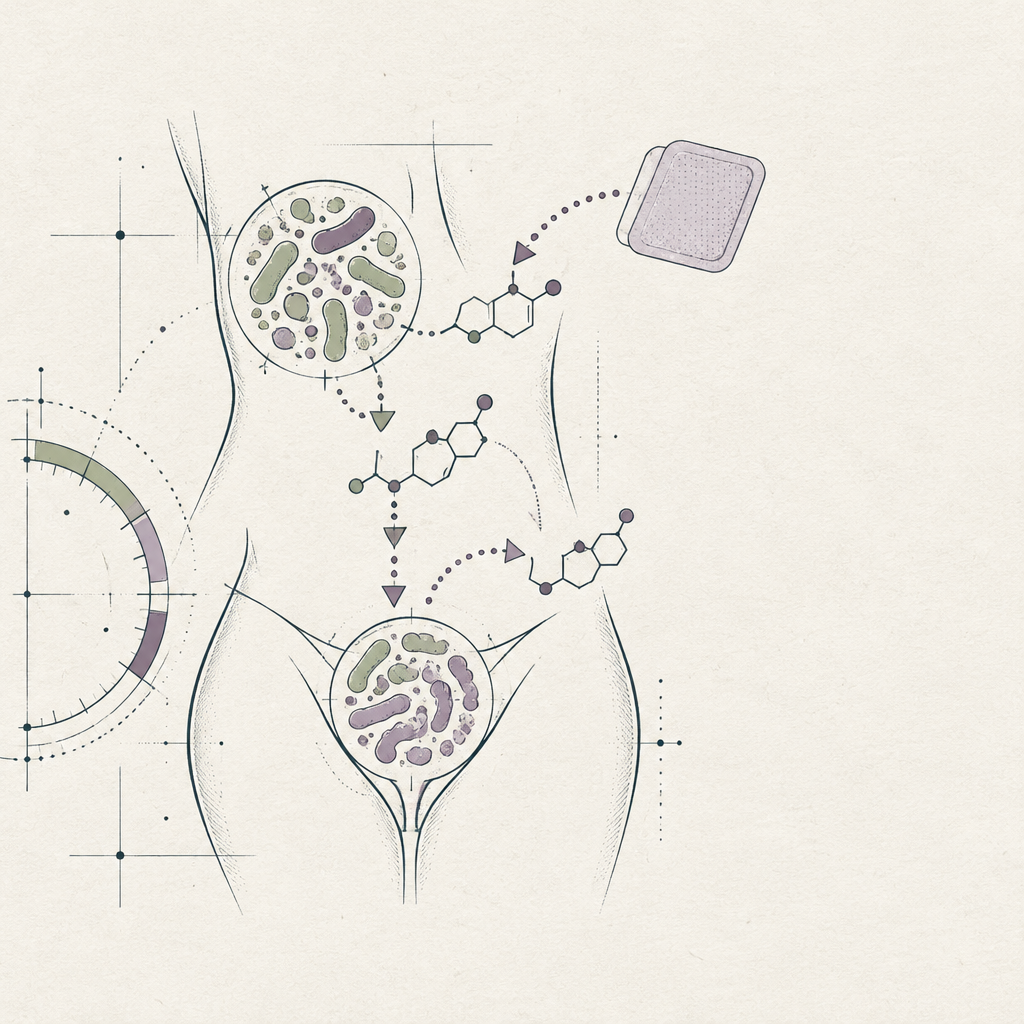
A Nature Medicine study reveals gut and urogenital microbiomes dictate how effectively women metabolize menopausal hormone therapy. Variations in bacterial estrogen processing explain why identical hormone doses produce relief in some patients and zero symptom change in others.
The architecture take
I spent years assuming hormone replacement therapy dosage was mostly about blood serum targets and liver clearance. A new trial in Nature Medicine shows your resident bacteria get first dibs on whether that transdermal patch or oral estradiol actually changes your symptoms. Specific gut microbes—the estrobolome—produce beta-glucuronidase, an enzyme that deconjugates estrogen so your body can reabsorb it instead of flushing it out in waste. Meanwhile, distinct vaginal bacterial profiles dictate local tissue receptor sensitivity and inflammation. A stubborn symptom like recurring night sweats often traces back to bacterial enzymes dismantling the hormone too quickly or letting it pass straight through unactivated. I suspect the next round of menopause clinics will stop fiddling with compounding dosages blind. They'll test your stool and vaginal flora before adjusting a single milligram of progesterone. I find that deeply sensible. If your internal bugs aren't cooperating, extra hormones just create expensive metabolic static.