news
FDA finalizes safety and identity rules for new dietary ingredients
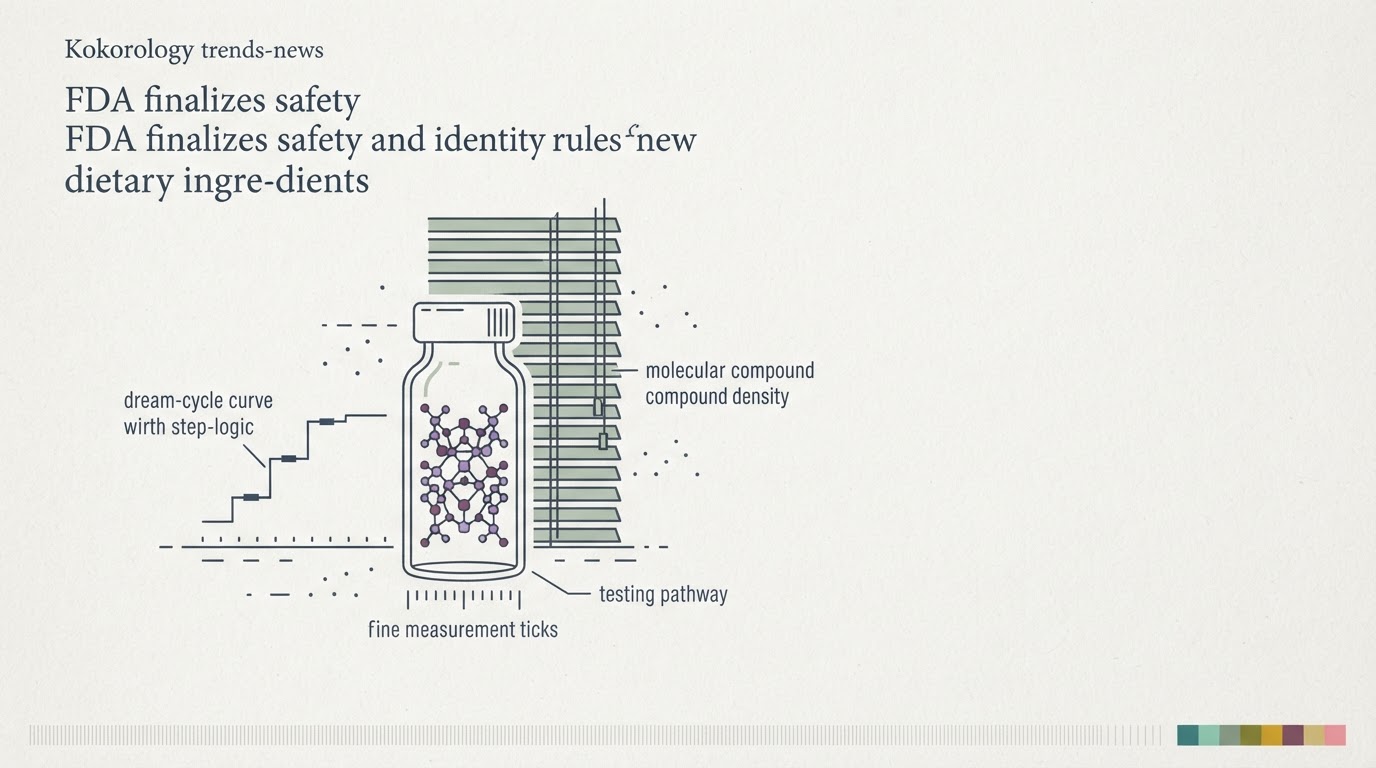
The FDA finalized long-delayed guidance on how supplement makers must document the identity and safety of new dietary ingredients before selling them. The document clarifies testing standards for novel compounds, but leaves master file protections and enforcement thresholds vague. It sets a higher testing bar for synthetic botanicals, fermented metabolites, and modified bioactives heading into consumer capsules.
The FDA finalized long-delayed guidance on how supplement makers must document the identity and safety of new dietary ingredients before selling them. The document clarifies testing standards for novel compounds, but leaves master file protections and enforcement thresholds vague. It sets a higher testing bar for synthetic botanicals, fermented metabolites, and modified bioactives heading into consumer capsules.
The architecture take
I used to assume every weird novel compound showing up in my sleep stack had actually passed a federal toxicology check. That was naive of me. The FDA finally wrapped section five and six of its New Dietary Ingredient guidance after a decade of stalling, telling brands how to prove an ingredient matches its chemical spec and does not wreck your liver. But the agency punted on master files, meaning the first brand spending 300,000 dollars on safety trials still risks copycats lifting their data. I track novel bioactives like urolithin A and synthetic postbiotics closely, and this guidance pushes real pressure onto gut and mitochondrial startups. Testing for toxic impurities and cellular uptake will get more expensive. Cheap white-label blends that sprinkle unvetted lab molecules into pre-workouts will feel the squeeze first. I expect smaller formulators to ditch exotic compounds and retreat to old botanicals with grandfathered status. Clean records win.