news
Experimental glaucoma treatment shows promise in small trial
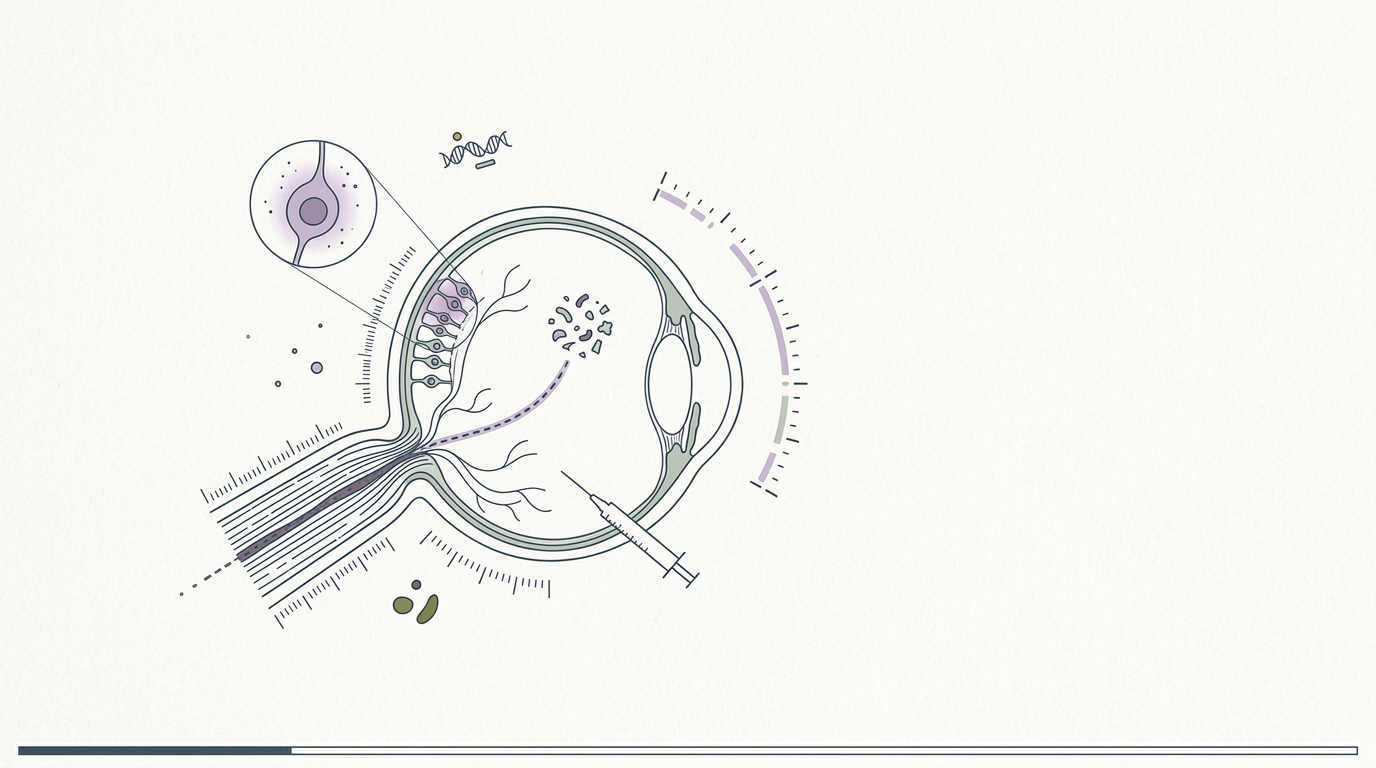
Life Biosciences just released early Phase 1 data for ER-100, an experimental gene therapy for open-angle glaucoma, in three adults. The treatment, which involves an intravitreal injection plus oral doxycycline, was well-tolerated over 56 days. It's meant to induce OSK gene expression to slow optic nerve damage.
Life Biosciences just released early Phase 1 data for ER-100, an experimental gene therapy for open-angle glaucoma, in three adults. The treatment, which involves an intravitreal injection plus oral doxycycline, was well-tolerated over 56 days. It's meant to induce OSK gene expression to slow optic nerve damage.
The architecture take
Treating the eye is a direct play for protecting the brain's data input. Glaucoma isn't just about eye pressure; it's a slow degeneration of the optic nerve, which is literally part of your central nervous system. This gene therapy aims to activate a 'youth' gene cocktail (OSK for Oct4, Sox2, Klf4) to reverse cellular aging in those retinal ganglion cells. The idea is to make those nerve cells act younger, keeping them from dying off. The catch is the small sample size — just three people — but the safety data here is good enough for me to keep watching. If this works, it's not just about saving sight; it's a proof of concept for using gene therapy to hit specific parts of the nervous system and turn back the clock on cellular aging. The industry is watching this one for bigger implications beyond vision.