news
Evening Screen Time Linked to 47% Higher Risk of Eye Disease
Sitting in front of screens at night could increase your risk for major eye diseases, according to a large new study in *BMJ Open*. Researchers found that staring at devices after dark was linked to up to a 47% higher chance of developing conditions like glaucoma and diabetic retinopathy. This isn't just about eye strain; it's about what blue light does to your whole system, even if you can't feel it.
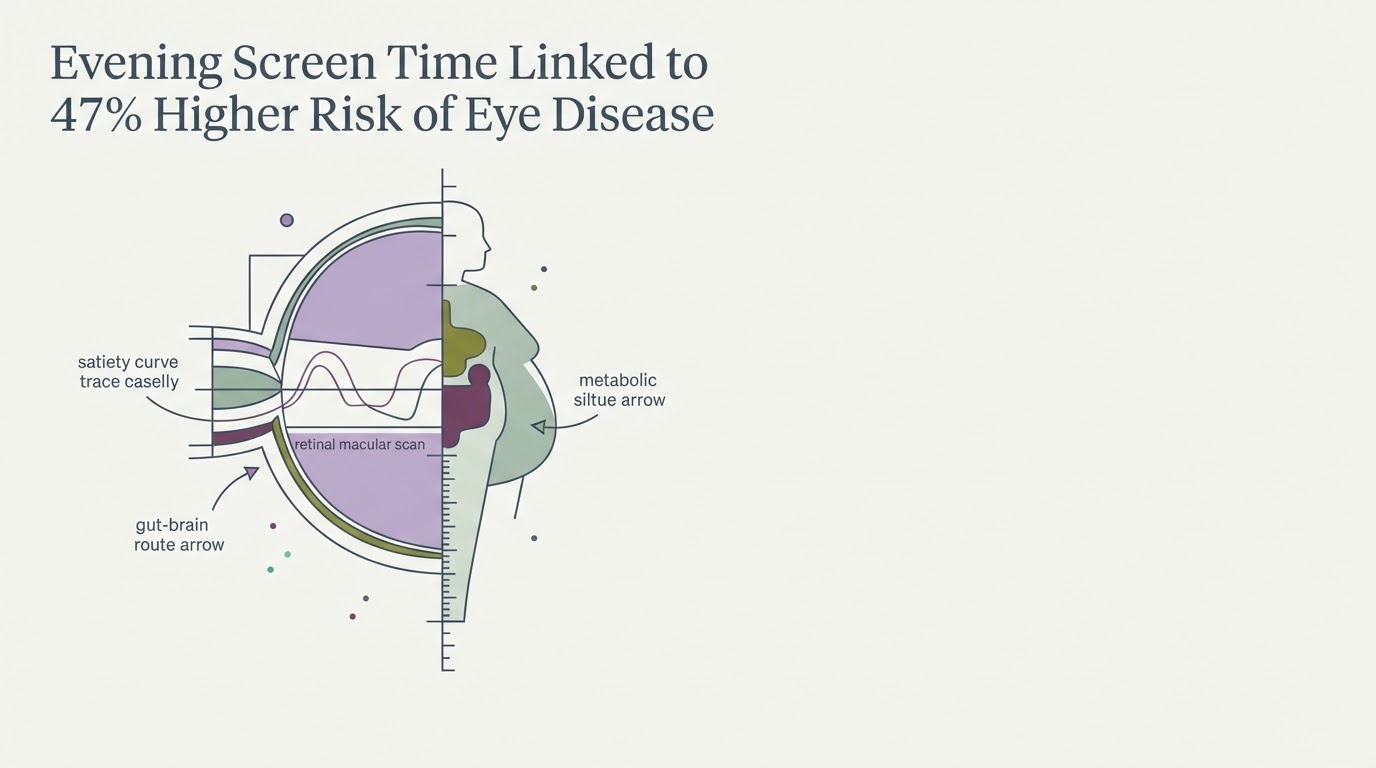
Sitting in front of screens at night could increase your risk for major eye diseases, according to a large new study in BMJ Open. Researchers found that staring at devices after dark was linked to up to a 47% higher chance of developing conditions like glaucoma and diabetic retinopathy. This isn't just about eye strain; it's about what blue light does to your whole system, even if you can't feel it.
The architecture take
Yeah, yeah, we know blue light's bad for sleep. But this study shifts the focus from 'sleep hygiene' to 'actual disease risk.' We're talking glaucoma and diabetic retinopathy here, not just 'tired eyes.' The real mechanism is likely how blue light at night messes with your circadian rhythm, which isn't just about sleep-wake cycles; it impacts metabolic health and inflammation throughout the body. Your eyes are getting a direct hit, but the systemic dysregulation probably isn't helping. If you're looking for another reason to put down the phone before bed that isn't just 'because I said so,' this is it. Consider this a public health warning that looks suspiciously like your mom telling you to get off the iPad. Or, you know, wear those dorky orange glasses. Your call, literally.