news
Estrogen-only HRT linked to fewer Alzheimer signs in brain tissue
A large analysis combining clinical records with post-mortem brain tissue data found that women who used estrogen-only hormone replacement therapy had significantly lower markers of Alzheimer's pathology. The link was strongest in women who initiated treatment around the onset of menopause. It provides rare physical tissue evidence in a debate often clouded by contradictory observational questionnaires.
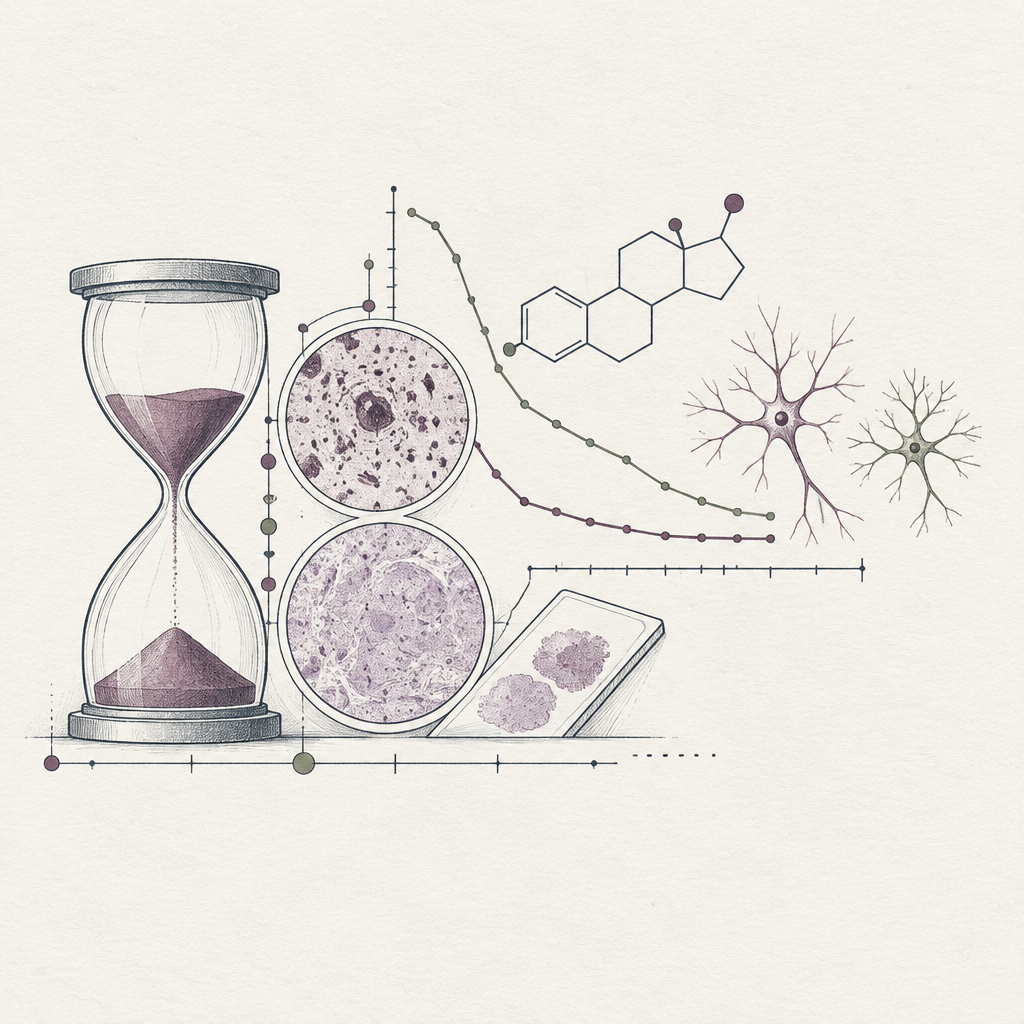
A large analysis combining clinical records with post-mortem brain tissue data found that women who used estrogen-only hormone replacement therapy had significantly lower markers of Alzheimer's pathology. The link was strongest in women who initiated treatment around the onset of menopause. It provides rare physical tissue evidence in a debate often clouded by contradictory observational questionnaires.
The architecture take
For years I treated the HRT debate like an insoluble family argument where everyone shouts past each other with twenty-year-old WHI data. Looking at actual post-mortem brain tissue cuts right through that noise. When ovarian estrogen drops off during perimenopause, cerebral glucose metabolism plunges; neurons essentially starve for fuel until they adapt, leaving them vulnerable to amyloid accumulation and tau pathology. Exogenous estradiol preserves those metabolic pathways if you supply it before the damage settles. Timing dictates everything here. I changed my mind. I used to think the critical-window hypothesis was defensive hedging from private clinics, but brain tissue does not lie. Start estrogen within five to ten years of your final period, and you protect neuronal bioenergetics. Wait until sixty-five when plaques already crowd the cortex, and adding estrogen does very little to halt the cascade. This gives women solid backing to discuss hormone timing as neurological preservation, not merely hot-flash relief.