news
Epigenetic editing clears hepatitis B virus from cells
Scientists, led by Professor Haitao Li at Tsinghua University, have developed an 'epigenetic editing' technique that effectively silences the hepatitis B virus (HBV) in human liver cells in mice. The CRISPR-based method, published in *Nature*, adds an epigenetic tag to the viral DNA, preventing it from replicating without cutting the genome. This could offer a new path to functional cures for chronic HBV infections affecting 296 million people globally.
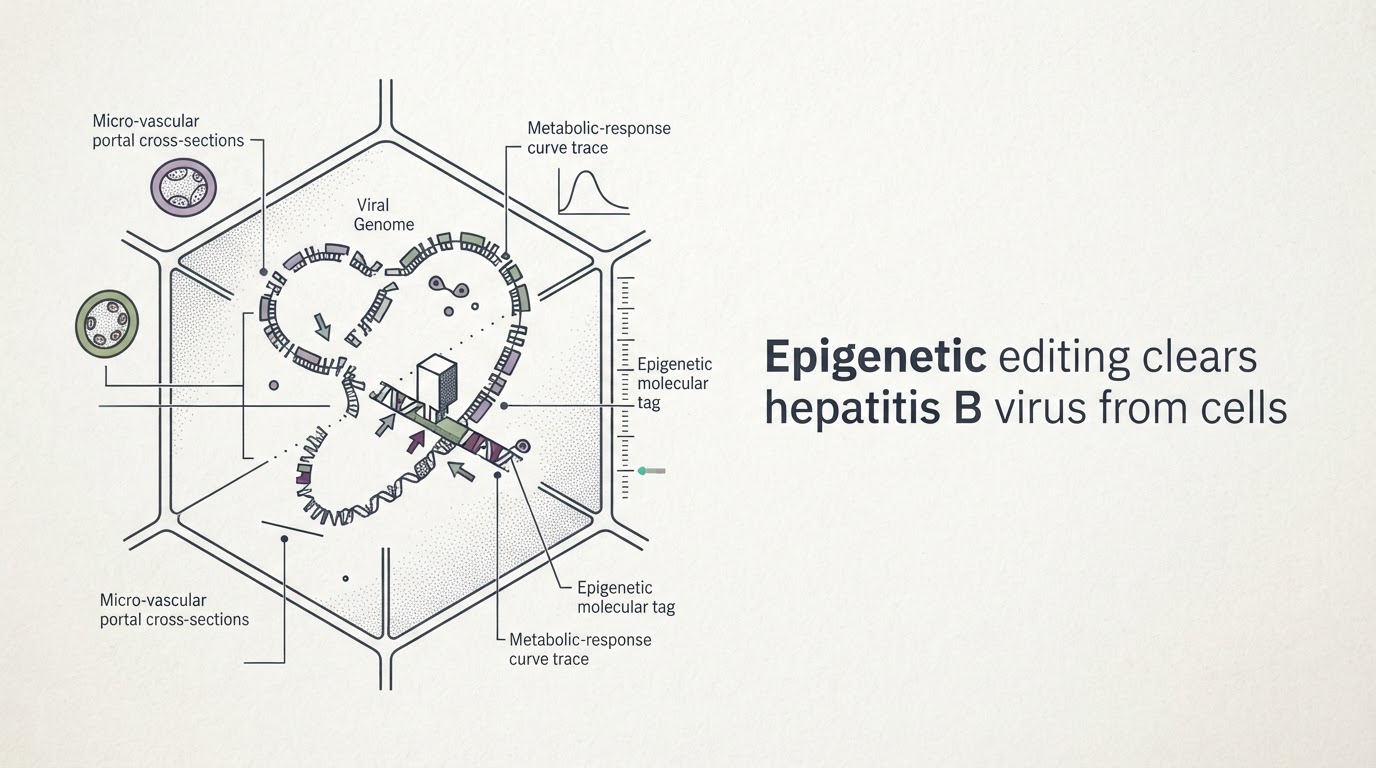
Scientists, led by Professor Haitao Li at Tsinghua University, have developed an 'epigenetic editing' technique that effectively silences the hepatitis B virus (HBV) in human liver cells in mice. The CRISPR-based method, published in Nature, adds an epigenetic tag to the viral DNA, preventing it from replicating without cutting the genome. This could offer a new path to functional cures for chronic HBV infections affecting 296 million people globally.
The architecture take
Epigenetic editing just brought us closer to a functional cure for hepatitis B, and that's a big deal. Instead of chopping up DNA with CRISPR, this method silences the virus by adding an epigenetic tag, basically telling the viral genome to shut down. Think of it as a dimmer switch, not an off switch. This is good news because it avoids the potential collateral damage of cutting human DNA, which is always a concern with gene editing. What I'm watching is how quickly this moves into human trials. If it works, it means a huge chronic infection load could come off millions of bodies, freeing up metabolic and immune resources. That's a direct nervous system benefit, even if it feels far off right now. It's a precise way to hit a widespread problem.