trend
Earables Emerge to Track Core Temperature, Sleep, and HRV
Hardware designers are moving biometric sensors into the ear canal to capture core body temperature, sleep stages, and heart rate variability across monthly hormonal shifts. The ear provides a direct line to core temperature and arterial pulse, avoiding the noise of peripheral wrist tracking. The format aims to give women more reliable data for cycle mapping and autonomic recovery.
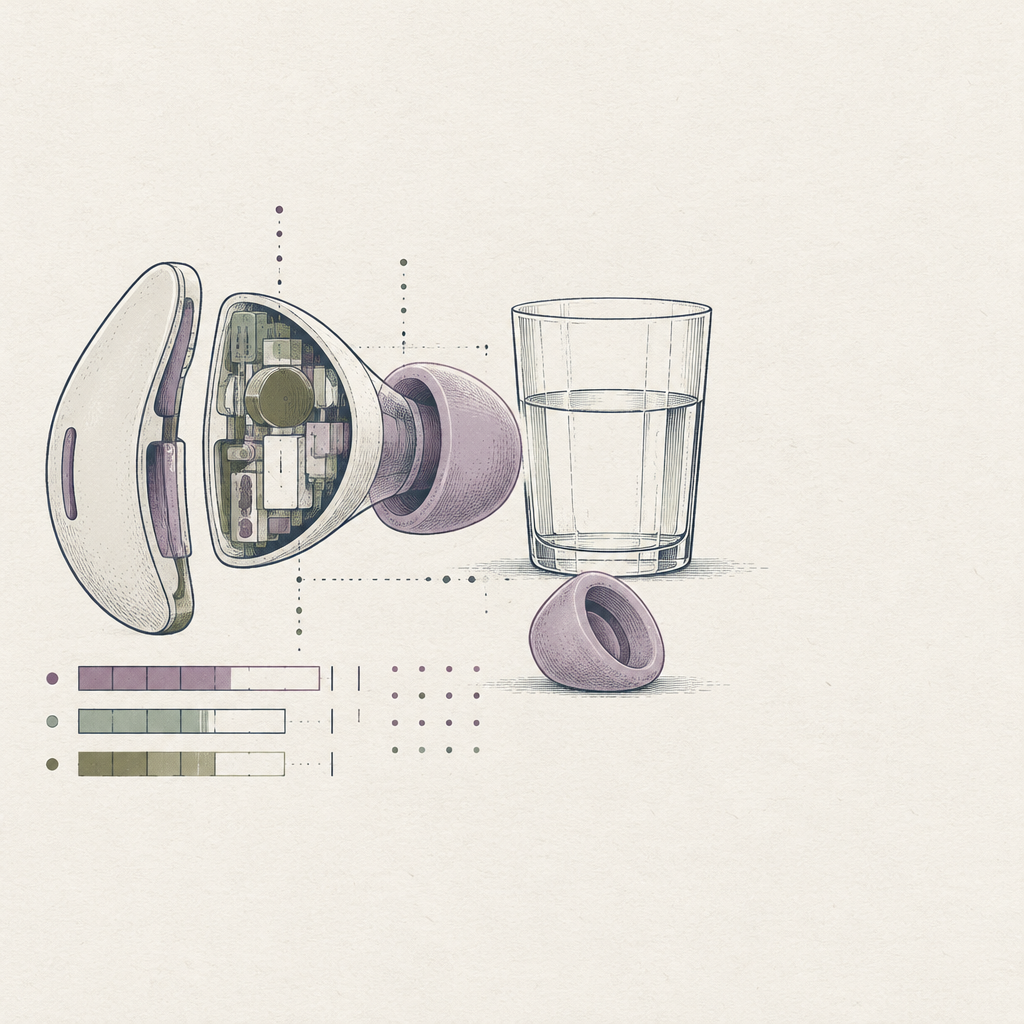
Hardware designers are moving biometric sensors into the ear canal to capture core body temperature, sleep stages, and heart rate variability across monthly hormonal shifts. The ear provides a direct line to core temperature and arterial pulse, avoiding the noise of peripheral wrist tracking. The format aims to give women more reliable data for cycle mapping and autonomic recovery.
The architecture take
I spent two years squinting at wrist sensor graphs and pretending optical noise from my morning coffee didn't throw off my recovery scores. The wrist is convenient, but for tracking hormonal shifts, it's a noisy compromise. Skin temperature at the extremities drops the minute your bedroom gets chilly, whereas the ear canal stays close to your core and your brain's thermal control center. That proximity gives you cleaner autonomic signals, from vagal tone reflected in high-frequency HRV to micro-shifts in basal temperature during the luteal phase. I used to think smart rings were the final stop for passive tracking, but anyone who lifts weights or deals with swollen fingers in July knows their limits. I still doubt most hardware teams test these prototypes on actual side sleepers. If designers can solve ear fatigue by 3 a.m., wrist wearables will quickly look like artifacts. Mechanical comfort remains the bottleneck.