news
Doubling THC Dose Only Increases Perceived High by 15 Percent
A large clinical trial found that doubling THC concentration produced only a 15 percent increase in subjective intoxication. The findings overturn the consumer assumption that higher-potency cannabis delivers a linearly stronger effect in the brain. For anyone managing evening stress or pain, higher percentages mostly pile on physiological strain rather than deeper relief.
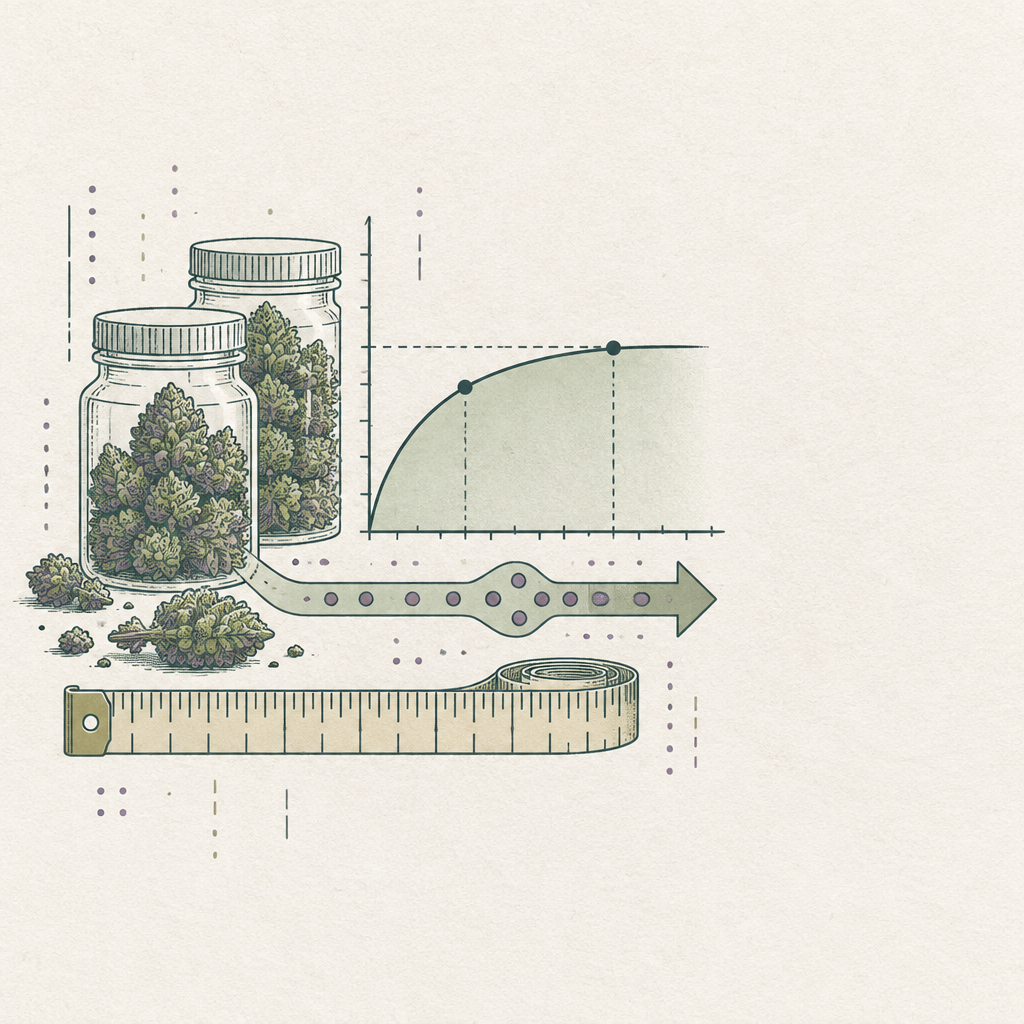
A large clinical trial found that doubling THC concentration produced only a 15 percent increase in subjective intoxication. The findings overturn the consumer assumption that higher-potency cannabis delivers a linearly stronger effect in the brain. For anyone managing evening stress or pain, higher percentages mostly pile on physiological strain rather than deeper relief.
The architecture take
I used to assume that buying twenty-percent flower instead of ten-percent meant twice the impact on my evening baseline. It turns out the brain does not work on simple multiplication. When THC hits your CB1 receptors in the endocannabinoid system, receptor saturation happens much faster than dispensary marketing suggests. You double the chemical load, but your nervous system only reports a fifteen percent bump in subjective high. What actually increases is the metabolic work: your liver processes more compounds, next-day brain fog lingers longer, and your heart rate spikes without delivering any deeper relaxation. It exposes the potency race in retail cannabis as mostly theater. If you use cannabis to dial down sympathetic tone before bed or soothe baseline pain, chasing astronomical THC percentages gives you diminishing returns and higher tolerance. Sticking to lower, consistent doses keeps your receptors responsive and spares your resting heart rate.