news
Danish Study Explains Why Humans Don't Have a Mating Season
Videnskab.dk reports on research explaining the biological shifts that allow human sexuality to be year-round, unlike most mammals. This evolution involved hormonal changes, specifically the reduced influence of female estrogen peaks, and behavioral adaptations that prioritized pair-bonding. The article highlights how our unique reproductive biology connects to societal structures.
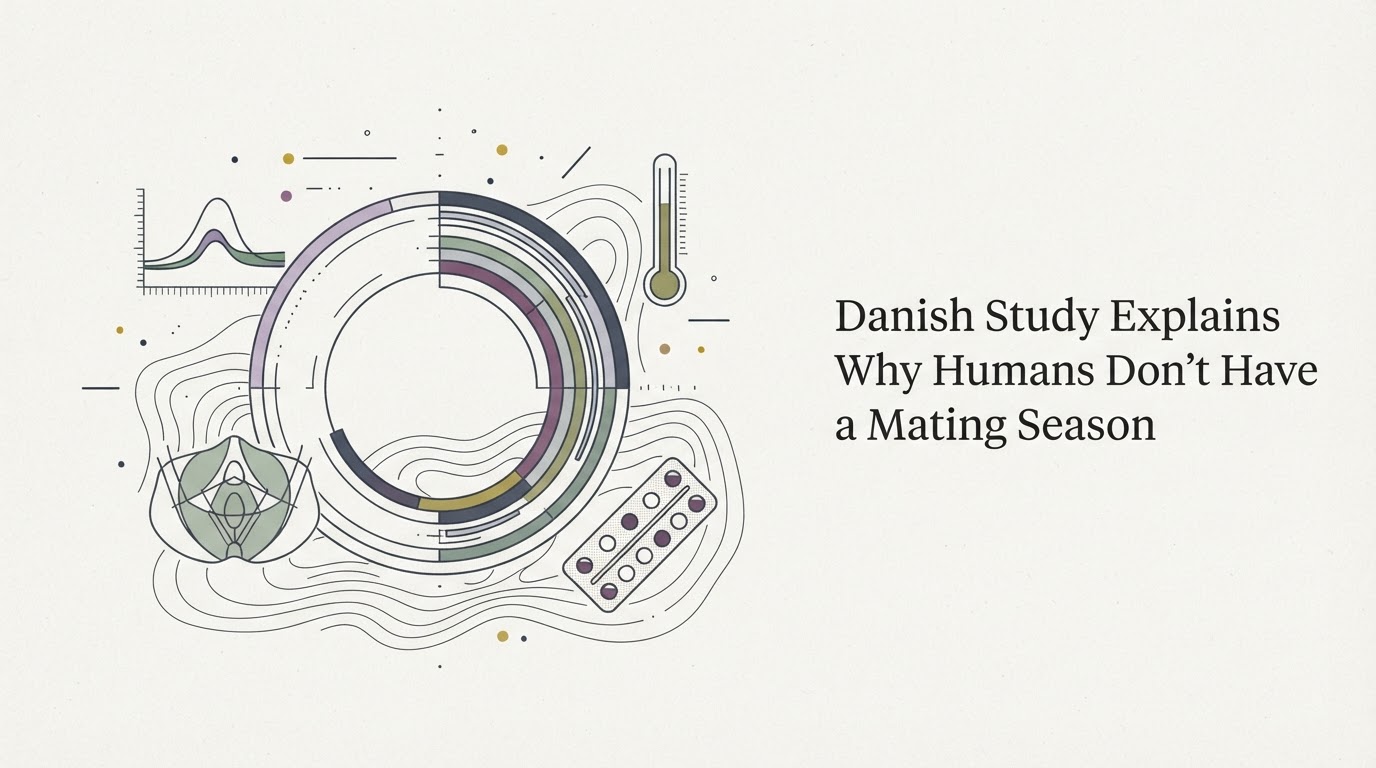
Videnskab.dk reports on research explaining the biological shifts that allow human sexuality to be year-round, unlike most mammals. This evolution involved hormonal changes, specifically the reduced influence of female estrogen peaks, and behavioral adaptations that prioritized pair-bonding. The article highlights how our unique reproductive biology connects to societal structures.
The architecture take
I read this and immediately thought about the quiet hum of our hormones, always on, always signaling something. We don't go into 'heat' like a lot of other mammals, and it's not some weird evolutionary oversight. It’s a deliberate biological strategy that swapped short, intense mating windows for year-round receptivity. That shift changed everything for us. Think about it: a continuous hormonal dialogue meant more complex social structures, more reasons to stick around, and deeper pair-bonding. It's not just about sex; it’s about how our steady-state hormones shaped our relationships, our families, even how our brains are wired for connection. It underlines how much our nervous system is always responding to internal cues, even the ones we barely notice. I used to think of our hormones as dramatic swings, but this reminds me of their subtle, constant hum.