Daily read · 18:00
GLP-1 Fallout and Passive Screening Reshape Clinical Care
Data showing up to 40% of GLP-1 weight loss comes from skeletal muscle pushed retail shelves and clinical protocols toward aggressive preservation strategies.
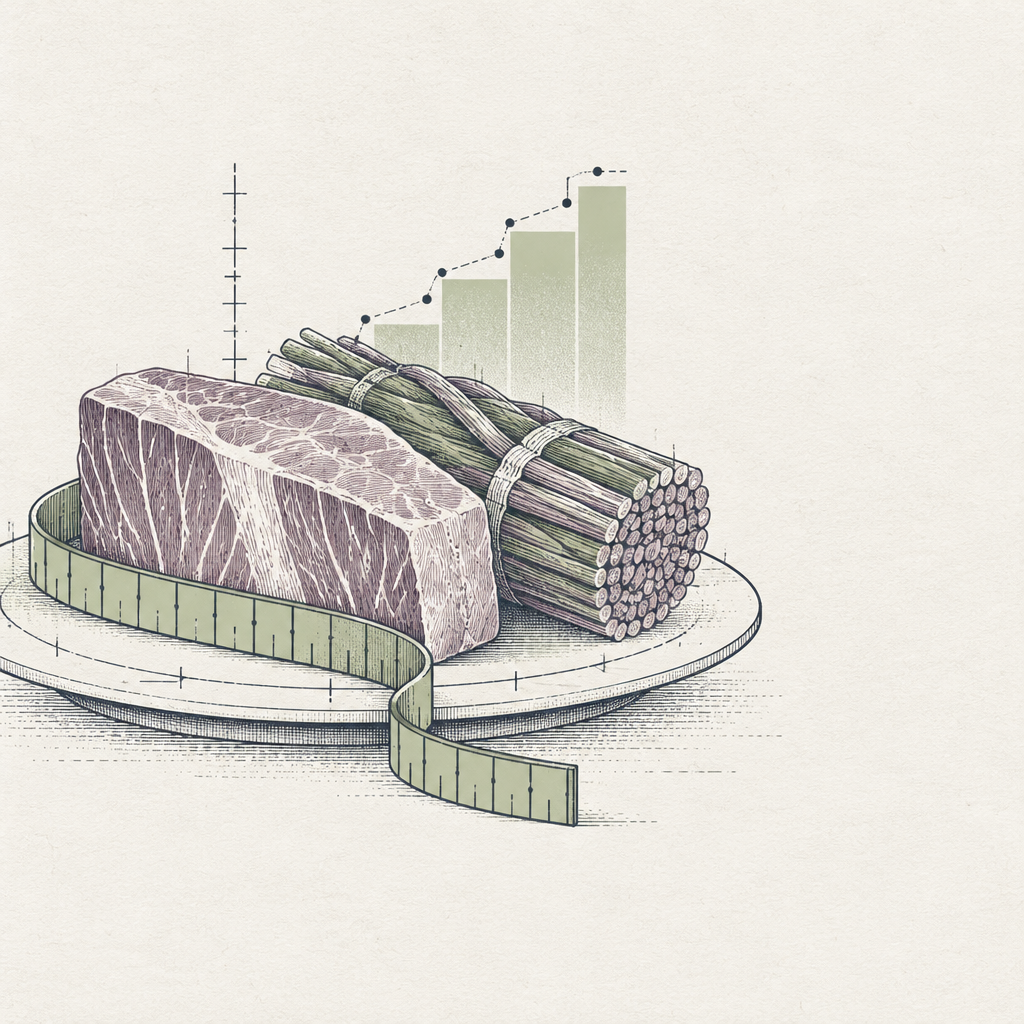
Data showing up to 40% of GLP-1 weight loss comes from skeletal muscle pushed retail shelves and clinical protocols toward aggressive preservation strategies.
In today's read: 1. GLP-1 Companion Economy Takes Shape · 2. Passive Diagnostics Move Outside Clinics · 3. Alternative Nightlife Meets Federal Friction · 4. Objective Biomarkers Clarify Chronic Fatigue
1. GLP-1 Companion Economy Takes Shape
Rapid gastric slowing slashes daily caloric intake, forcing up to 40% of lost weight to come directly from skeletal muscle alongside sharp micronutrient deficits. Retailers like Holland & Barrett and fitness brands are stepping in with targeted protein, prebiotics, and resistance training to stop patient deconditioning.
I used to dismiss companion supplement stacks as pure margin capture, but severe muscle wasting forces prescribers to treat nutrition as an immediate clinical risk. Muscle loss changes the math. Gym operators and targeted nutrition formulators win while solo GLP-1 telehealth providers face churn from unmanaged side effects.
Evidence from today:
- Weight training prevents lean muscle loss on GLP-1 medications — Nature News — Clinical trial data reviewed in Nature reveals that pairing resistance training with GLP-1 agonists prevents the severe lean tissue wasting typical of rapid weight loss. Without heavy lifting, patients routinely drop up to 40% of their total lost weight as skeletal muscle rather than fat. Regular progressive loading preserves metabolic burn and protects joint stability throughout treatment.
- Wegovy and Mounjaro Linked to Nutrient Deficits in New Study — Nutrition Insight — A UK study tracking 14 patients on Wegovy and Mounjaro found sharp drops in daily intake of essential micronutrients and total energy. Most participants reported zero nutritional guidance from prescribing clinicians while their appetite shut down. The findings highlight how quickly aggressive gastric slowing cuts off vital minerals alongside calories.
- Holland & Barrett Bets Big on GLP-1 Companion Supplements — NutraIngredients Europe — Holland & Barrett is retooling its retail shelves around GLP-1 users, forecasting surging demand for targeted protein, gut fiber, and digestive micronutrients. The UK health retailer says shoppers on semaglutide need direct nutritional protocols to protect lean muscle and digestion as caloric intake drops.
- Wegovy Shows Efficacy for Children Aged 6 to 12 — Le Figaro Santé — Clinical trial data reported in France confirms semaglutide reduces BMI in children aged 6 to 12, clearing a technical path for pediatric authorization. The findings show GLP-1 receptor agonists alter childhood metabolic markers far earlier than previously tested cohorts. Regulators in Europe and North America are now reviewing safety profiles for long-term childhood use.
2. Passive Diagnostics Move Outside Clinics
Optical pulse sensors and community AI retinal cameras identify nocturnal hypertension spikes and neurodegenerative patterns long before traditional clinic visits catch symptoms. Continuous physiological tracking turns consumer hardware into passive diagnostic screening tools.
Primary care clinics lose their monopoly on early triage as neighborhood hubs and dedicated wearables deliver clinical-grade risk data straight to patients. Device manufacturers that pair passive tracking with direct medical referral networks will capture the next wave of insurer reimbursement.
Evidence from today:
- Nature Medicine Study Shows Smartwatches Can Screen for Undiagnosed Hypertension — Nature Medicine RSS — Researchers in Nature Medicine report that optical smartwatch sensors can accurately detect undiagnosed hypertension using continuous pulse wave analysis. Nearly 46% of hypertensive adults do not know their numbers are elevated until complications appear. Passive wrist tracking spots nocturnal blood pressure spikes that standard daytime clinic cuffs miss entirely.
- Community AI retinal imaging screens 2,700 seniors for early Alzheimer's — TrendWatching — A new decentralized screening initiative is rolling out AI-assisted retinal scans to 2,700 older adults over two years to identify early Alzheimer's risk. The program pairs rapid retinal imaging with cognitive follow-up in local community hubs rather than specialist hospital wings. It brings neurodegenerative risk screening straight to the neighborhood level.
- Natural Cycles launches NC Band 2 with daytime tracking — The Verge - Science & Health Tech — Natural Cycles introduced the NC Band 2, updating its dedicated fertility wearable with daytime activity tracking, a thinner profile, and improved battery life. The band pairs with the company's FDA-cleared birth control app to log nocturnal skin temperature without requiring a smartwatch or ring. It offers women an isolated hardware option dedicated entirely to hormone and cycle monitoring.
3. Alternative Nightlife Meets Federal Friction
Falling alcohol consumption among younger demographics opened high-margin hospitality and retail channels for low-dose THC seltzers and adaptogenic mocktails priced up to $18 per pour. That retail distribution now hangs on a December 11 congressional deadline that could eliminate non-dispensary hemp sales overnight.
Beverage startups that rely on mainstream supermarket shelf space face immediate inventory write-offs if federal definitions tighten. Bars and venues will lean toward non-cannabinoid adaptogen menus to avoid legal headaches.
Evidence from today:
- Gen Z Drinking Drop Pushes Bars Toward Weed and Adaptogen Drinks — The Food Institute — Bar operators are overhauling drink menus as Gen Z cuts alcohol consumption in favor of non-alcoholic cocktails and cannabis-infused beverages. The shift is turning late-night hospitality toward low-dose social tonics priced around $12 to $18 per pour. For anyone tracking next-day recovery, socializing no longer requires sacrificing sleep.
- Federal hemp deadline threatens grocery shelves of low-dose THC drinks — New Hope Network (Natural Products Expo) — A federal deadline on Dec. 11 could wipe hemp-derived THC drinks from grocery shelves unless Congress steps in to extend current Farm Bill definitions. The category has quietly become grocery's top-margin beverage line, largely fueled by shoppers swapping alcohol for 2mg to 5mg canned seltzers. If the total-THC cap takes effect, mainstream retail access to non-dispensary cannabinoids closes almost overnight.
4. Objective Biomarkers Clarify Chronic Fatigue
Tau accumulation in the locus coeruleus triggers noradrenergic hyperfiring that flattens slow-wave deep sleep, while early life stress flattens diurnal cortisol variation into permanent rigidity. These measurable circuit disruptions confirm that chronic mental fatigue and fragmented rest reflect physiological dysregulation.
Psychiatric and wellness trials are shifting away from subjective self-report questionnaires toward continuous neuroendocrine and sleep telemetry. Operators and coaches who track autonomic state objectively will outcompete programs relying on self-reported mood scores.
Evidence from today:
- Tau Hyperactivity in the Locus Coeruleus Directly Trashes Deep Sleep — Cell Metabolism — A new Cell Reports study reveals how early tau protein accumulation makes locus coeruleus neurons hyperactive instead of quiet. That spike in noradrenergic firing cuts non-REM deep sleep, flattens slow-wave activity, and breaks overnight rest into fragments. It shows why fractured sleep is an active biological driver of neurodegeneration, not just a bystander symptom.
- Flattened Cortisol Dynamic Range Links Early Trauma to Adult Depression — Psychoneuroendocrinology — Psychologist Daryl B. O'Connor and researchers at the University of Leeds found that a blunted cortisol dynamic range directly mediates the pathway between childhood adversity and adult depressive symptoms. The HPA axis loses its diurnal rise and fall, leaving baseline stress perception constantly elevated. It shows that depression often reflects a loss of hormonal responsiveness rather than simple chemical overproduction.
- Brain recordings across 87 patients map how expectation blocks pain — Neuroscience News — Neuroscientists analyzed 15 years of direct intracranial brain recordings across 87 patients, mapping four distinct functional zones within the human insula. The findings reveal the specific top-down circuit where emotional context and expectation suppress pain signals before conscious awareness kicks in.
Also moved today
- Telehealth clinics push experimental peptides into mainstream wellness routines — The Business of Fashion - Beauty & Wellness — Telehealth platforms are selling experimental peptides like BPC-157 for up to $400 monthly, accelerating gray-market injection adoption ahead of imminent FDA enforcement.
- Study of 33,500 CT Scans Finds Ab Size Does Not Prevent Back Pain — ScienceAlert — An analysis of 33,500 CT scans found no link between abdominal muscle volume and lower back pain, disproving decades of gym advice centered on core strength.
- Strava adds Hyrox tracking for 200 million users — Athletech News — Strava integrated Hyrox tracking across its 200 million users, signaling that hybrid functional fitness has secured permanent mainstream market share.
- GeroScience study exposes estimated vascular age as blood pressure in disguise — GeroScience — A GeroScience study revealed that commercial vascular age scores correlate 0.99 with plain blood pressure, proving consumers are paying premiums for repackaged basic metrics.
- German Health Experts Push for Bans on Infinite Scroll and Autoplay — Apotheken Umschau — German medical specialists urged regulators to ban infinite scrolling and autoplay, treating app engagement mechanics as public health hazards rather than personal habits.
- Nature Metabolism Maps How Cellular Energy Directly Governs Ovarian Function — Nature Metabolism — Research in Nature Metabolism showed ovarian aging tracks cellular energy availability and insulin levels, confirming metabolic control dictates reproductive longevity.
- Solnul Replication Trial Confirms Resistant Potato Starch Shifts Microbiome — Nutritional Outlook — A replication trial proved 3.5 grams of resistant potato starch alters microbiome composition, establishing that low-dose prebiotics work without inducing gastrointestinal distress.
New this week in wellness goods
- Dozy launches an app converting sleep tracking into one daily protocol — Global — Dozy launched an iOS app that parses wearable sleep data into a single behavioral directive for the day. Instead of presenting raw sleep stages and recovery scores, the tool prescribes one specific action like adjusting caffeine timing or morning light exposure based on sleep debt.
- Natural Cycles launches NC Band 2 with daytime tracking — US & Europe — Natural Cycles introduced the NC Band 2, updating its dedicated fertility wearable with daytime activity tracking, a thinner profile, and improved battery life. The band pairs with the company's FDA-cleared birth control app to log nocturnal skin temperature without requiring a smartwatch or ring. It offers women an isolated hardware option dedicated entirely to hormone and cycle monitoring.
Signal map
Global: 15 · North America: 6 · Europe: 4 · Oceania: 1
What I'd watch next
I will be watching whether federal lawmakers extend the December 11 Farm Bill deadline or close mainstream retail channels for hemp beverages. I also want to see whether GLP-1 telehealth providers start bundling certified strength coaching to stem muscle loss and patient churn.
Where this fits at Kokorology
I designed the Nervous System Journal to track daily baseline capacity before introducing aggressive interventions, which prevents the unmonitored physical burnout seen in rapid pharmacological treatments.