Daily read · 18:00
Genomic Stratification Breaks the GLP-1 Monoculture as Compounding Clears
Federal health agencies opened peptide compounding today as Nature Metabolism mapped why GLP1R mutations wipe out semaglutide response in up to 15 percent of patients.
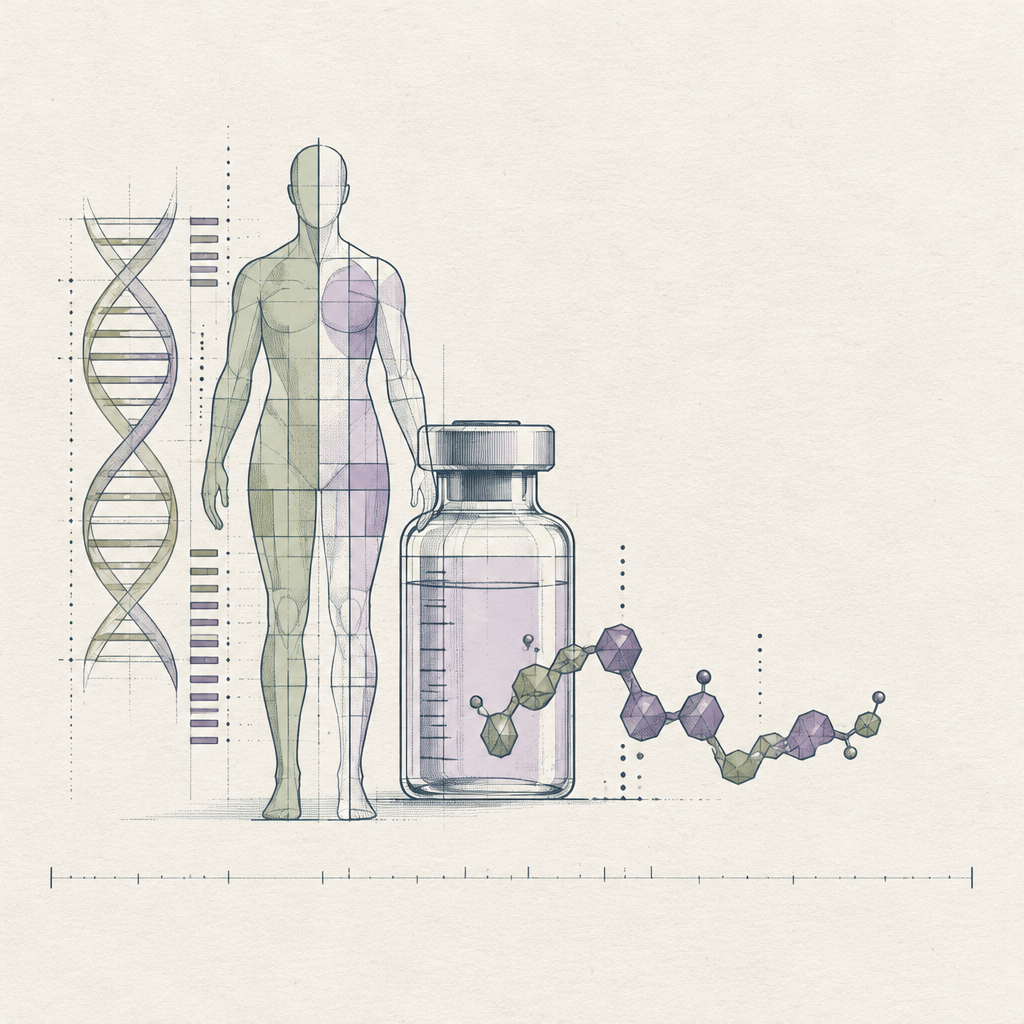
Federal health agencies opened peptide compounding today as Nature Metabolism mapped why GLP1R mutations wipe out semaglutide response in up to 15 percent of patients.
In today's read: 1. GLP-1 non-response gets a genetic basis · 2. Regulators ease pressure on clinical peptides · 3. Sleep clearance mechanics expose vascular aging · 4. Barrier breakdown supplants psychiatric models
1. GLP-1 non-response gets a genetic basis
Loss-of-function variants in the GLP1R gene blunt semaglutide sensitivity, while dual-agonists preserve weight loss by activating the GIP pathway. Adherence cannot fix that.
Payers will face immediate pressure to authorize higher-cost dual agonists without demanding failed step therapy on semaglutide first. Diagnostic labs will package GLP1R screening panels directly for telehealth prescribers.
Evidence from today:
- Rare GLP1R gene variants blunt semaglutide weight loss but spare tirzepatide — Nature Metabolism — Nature Metabolism published genetic sequencing data showing that rare loss-of-function variants in the GLP1R gene significantly reduce weight loss on semaglutide, while patients taking dual-agonist tirzepatide respond normally. The study clarifies why roughly 10% to 15% of patients experience weak appetite suppression on single-receptor GLP-1 drugs. It offers prescribers a clear biological rationale for moving non-responders directly to dual GLP-1 and GIP therapies.
- GLP-1 receptor mutations blunt Ozempic but spare tirzepatide results — Nature Metabolism — A new study in Nature Metabolism reveals why some patients fail to drop weight on semaglutide: rare mutations in the GLP-1 receptor slash drug sensitivity. But when individuals carrying these GLP1R variants take dual-agonist tirzepatide instead, weight loss stays completely intact. For non-responders paying upwards of $900 monthly, genetics explains what willpower never could.
2. Regulators ease pressure on clinical peptides
The Department of Health and Human Services cleared compounding pharmacies to prepare select peptides like BPC-157, while the FDA proposed rules clearing NAC for supplements. Federal regulators are yielding ground after aggressive enforcement drove patient demand into grey-market chemical supply chains.
Functional medicine and longevity clinics recover reliable margin on cash-pay recovery protocols (without steering patients toward off-label research suppliers). Compounding operations will expand production capacity immediately to capture backlogged demand.
Evidence from today:
- FDA proposes rule officially clearing NAC for dietary supplements — Nutrition Insight — The FDA issued a proposed rule that formally allows N-acetyl-L-cysteine (NAC) in dietary supplements, ending years of legal and retail limbo. The amino acid derivative is a direct precursor to glutathione, the body's primary intracellular antioxidant defense. The move clears retailers and supplement brands to formulate and sell it without regulatory threat.
- HHS clears compounding pharmacies to produce select wellness peptides — Endpoints News — The Department of Health and Human Services is allowing compounding pharmacies to resume preparing select wellness peptides. Following an FDA crackdown that restricted compounds like BPC-157, the move reopens a regulated pipeline for longevity and functional health clinics. It gives patients supervised clinical access for tissue recovery without resorting to gray-market research suppliers.
3. Sleep clearance mechanics expose vascular aging
Cerebrospinal fluid waves during slow-wave sleep rely on arterial elasticity to flush metabolic waste through the glymphatic network. Stiffened vessels in aging adults dampen these mechanical pulses, cutting nightly clearance of neurotoxic proteins.
Consumer sleep wearables will need to track hemodynamic pulsatility rather than relying strictly on accelerometer-based sleep stages. Therapeutics targeting arterial compliance now have a measurable neuroprotective endpoint.
Evidence from today:
- Aging brains show weaker spinal fluid waves during deep sleep — Nature Aging — A study published in Nature Aging found that slow pulses of blood and cerebrospinal fluid that wash metabolic waste out during sleep decline sharply with age. Researchers tracked hemodynamic rhythms alongside fluid movement across young and older adults, mapping how the brain rinse cycle slows down over decades. It gives us a measurable physical mechanism connecting fragmented sleep to neurodegenerative decline.
- Nature Aging study finds slow-wave sleep fluid flow stalls with age — Nature Aging — A study published in Nature Aging demonstrates that aging dampens rhythmic cerebrospinal fluid pulses during slow-wave sleep. Researchers tracked how declining vascular elasticity weakens the mechanical push required to clear metabolic waste overnight. The finding links cardiovascular stiffness directly to nightly brain clearance deficits.
4. Barrier breakdown supplants psychiatric models
Circulating cytokines pass through concurrent breaches in the gut lining and blood-brain barrier to trigger neuroinflammation, while genomic data from 600,000 individuals isolates chronic pain pathology in central neural circuits. Stress signaling breaks down well before clinical symptoms appear.
Clinics treating chronic pain and depression will reallocate budgets away from peripheral nerve blocks and standard SSRIs toward barrier repair and neuroplastic protocols. Payers will face emerging reimbursement codes for systemic barrier testing.
Evidence from today:
- Gut and Brain Barrier Breakdown Directly Drives Inflammatory Depression — Brain, Behavior, and Immunity — Researchers led by Dr. Tiffany Ho mapped how simultaneous leaks in the intestinal lining and the blood-brain barrier fuel inflammatory depression. Chronic peripheral inflammation slips past compromised filters, letting circulating cytokines disrupt neurochemistry. The findings prioritize physical barrier repair over standard serotonin reuptake inhibitors for treatment-resistant low mood.
- Largest Chronic Pain Gene Study Pinpoints Central Nervous System Origins — The New York Times - Health — A landmark genomic study analyzing DNA from over 600,000 individuals identified key genetic markers for chronic pain, locating their primary activity in the central nervous system rather than peripheral tissues. The findings tie persistent pain vulnerability directly to brain circuits regulating mood, sensory processing, and sleep architecture.
- Low-Dose Dexamethasone Tests Reveal How Cortisol Feedback Predicts Depression — Psychoneuroendocrinology — Researchers in the Rotterdam Study tracked how morning cortisol responds to a 0.25-milligram dose of dexamethasone to map glucocorticoid sensitivity and depression risk. Lead author Nadrah Shafik found that impaired hormonal braking systems show up well before clinical mood episodes emerge. It gives clinicians a biological signal for when stress systems stop self-regulating.
Also moved today
- Noom Launches a Wearable to Track GLP-1 Patients — Athletech News — Noom launched a wearable device for enterprise employers to monitor movement habits before approving continued GLP-1 insurance coverage.
- Direct-to-consumer microbiome tests face reliability questions as home testing surges — Nature News — A Nature investigation documented wide reproducibility gaps across commercial direct-to-consumer microbiome tests, exposing the lack of clinical validation behind $300 stool kits.
- NSCA Updates Female Strength Training Guidelines for First Time in 37 Years — Athletech News — The NSCA updated its female resistance training guidelines for the first time in 37 years, officially replacing light-weight recommendations with progressive overload protocols.
- Estrogen Therapy Shows Real Promise for Postpartum Depression in New Meta-Analysis — Psychoneuroendocrinology — A meta-analysis in Psychoneuroendocrinology linked estrogen therapy to significant reductions in postpartum depression, framing the condition as acute hormone withdrawal.
- Cognito 40 Hz Light Therapy Slows Early Alzheimer's Decline — IEEE Spectrum Biomedical — Cognito Therapeutics Phase 2 data showed daily 40-hertz sensory stimulation slowed functional decline by 80% in early Alzheimer's patients who maintained daily compliance.
- Kohler launches Dekoda toilet sensor to track gut health passively — Dezeen - Health & Wellness — Kohler introduced the Dekoda toilet sensor to scan stool consistency and gut transit passively, bypassing manual logging apps entirely.
- Higher essential amino acid intake cuts all-cause mortality across 161,000 adults — GeroScience — Data across 161,420 adults in GeroScience linked broad essential amino acid intake to a 16% drop in all-cause mortality over 14 years.
- Researchers track chronic burnout in hair through endocannabinoid signals — Psychoneuroendocrinology — Researchers in Psychoneuroendocrinology mapped endocannabinoid exhaustion in hair samples, giving clinicians a reliable biological marker for chronic occupational burnout.
New this week in wellness goods
- Noom Launches a Wearable to Track GLP-1 Patients — US — Noom rolled out a proprietary wearable device for enterprise employers managing rising GLP-1 medication costs. The tracker monitors daily step counts, heart rate, and movement patterns to verify lifestyle changes alongside semaglutide prescriptions. It aims to help corporate health plans decide which workers keep their drug coverage.
- Kohler launches Dekoda toilet sensor to track gut health passively — Global — Kohler unveiled Dekoda, an optical health sensor that clips onto standard toilet rims to track hydration, gut motility, and stool consistency automatically. The device eliminates manual stool logging by scanning waste patterns directly to flag digestive issues. It turns the porcelain bowl into an ambient daily screening tool without requiring messy collection kits.
Signal map
Global: 28 · Europe: 6 · North America: 3 · Africa: 1 · Oceania: 1
What I'd watch next
I expect compounding pharmacies to flood clinic pipelines before the FDA finishes drafting formal guidance. I used to think payers would resist dual-agonist GLP-1 pricing, but genetic non-response data makes the higher tier unavoidable.
Where this fits at Kokorology
I built our coaching protocols around biology that does not depend on compounding pharmacies; the Nervous System Journal gives teams a steady behavioral baseline when prescriptions stall.