Daily read · 18:00
Active Neuromodulation Outpaces Biomarker Precision in Longevity and Sleep
Consumer sleep technology and neurodegeneration prevention are shifting toward active stimulation and immune priming, while commercial longevity diagnostics struggle with biomarker reliability.
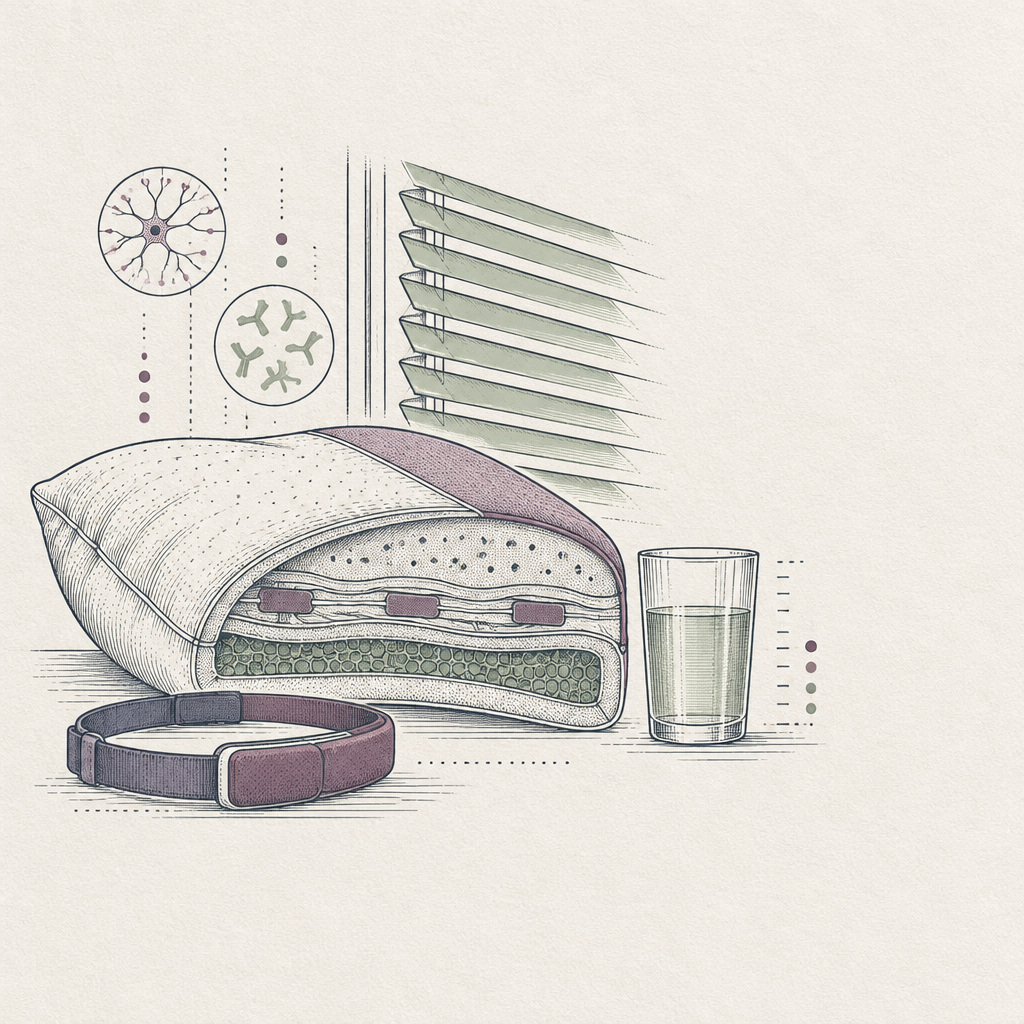
Consumer sleep technology and neurodegeneration prevention are shifting toward active stimulation and immune priming, while commercial longevity diagnostics struggle with biomarker reliability.
In today's read: 1. Active neurotech replaces passive sleep tracking · 2. Dementia prevention pivots to peripheral immune priming · 3. Commercial longevity clocks hit calibration limits
1. Active neurotech replaces passive sleep tracking
Acoustic pink noise pulses and low-intensity ultrasound stimulate slow-wave oscillations and subcortical sleep centers. That shifts sleep tech from logging HRV drops to triggering glymphatic waste clearance and cutting time to REM sleep.
Expect legacy consumer sleep trackers to lose pricing power unless they integrate closed-loop neurostimulation. Clinical sleep labs face competition from consumer hardware delivering targeted slow-wave and REM interventions at home.
Evidence from today:
- MIT Study Shows Pink Noise Pulses Clear Brain Waste During Sleep — ScienceDaily - Mind & Brain — MIT researchers found that delivering timed pulses of gentle pink noise during slow-wave sleep strengthens cerebrospinal fluid waves that flush metabolic waste from the brain. The acoustic stimulation synchronizes slow oscillations without disturbing rest, offering a non-invasive lever against neurodegenerative protein buildup. It turns sleep audio from passive masking into targeted neurological recovery.
- Wearable ultrasound patch cuts time to REM sleep by 43 minutes — ScienceDaily - Mind & Brain — University of Texas researchers developed a wearable patch using low-intensity ultrasound to stimulate deep brain regions during sleep. In lab trials, participants entered REM sleep 43 minutes faster and stayed in the stage 16 minutes longer on average.
2. Dementia prevention pivots to peripheral immune priming
High-dose antigen exposure primes innate immune surveillance while circadian movement consistency lowers plasma p-tau217 and GFAP. Both mechanisms bypass localized amyloid targeting by altering systemic inflammation and peripheral metabolic cues.
Payers and preventive clinics will favor inexpensive existing vaccines and actigraphy protocols over high-cost monoclonal antibody infusions. Biomarker tracking will move upstream to monitor baseline inflammation before clinical neurodegeneration sets in.
Evidence from today:
- High-Dose Flu Vaccines Linked to 55% Lower Alzheimer's Risk — ScienceAlert — A large cohort study found older adults receiving high-dose flu shots saw up to a 55% reduction in Alzheimer's risk compared to standard formulations. The finding points to immune priming rather than simple viral defense as a lever against neurodegeneration. It offers an accessible, existing tool for cognitive health.
- Consistent Daily Movement Timing Predicts Lower Alzheimer's Blood Biomarkers — GeroScience — A study of 164 adults aged 50 to 89 published in GeroScience found that when you move matters as much as how much you move for brain aging. Researchers used seven-day wrist actigraphy alongside plasma biomarkers like p-tau217 and GFAP, discovering that regular 24-hour activity patterns track with lower neurodegeneration markers regardless of total step volume.
3. Commercial longevity clocks hit calibration limits
First-generation DNA methylation algorithms diverge widely across age cohorts, while acute surgical inflammation leaves 30-day neurofilament light signatures that skew biological age readouts. Epigenetic scores capture temporary immune stress rather than steady-state cellular decline.
Direct-to-consumer longevity clinics relying on single-timepoint epigenetic age scores risk severe customer churn as test results contradict each other. Premium diagnostics will shift toward longitudinal plasma protein panels that isolate neuronal injury from systemic inflammation.
Evidence from today:
- Study maps 30-day brain injury protein signature after elective surgery — GeroScience — Researchers in GeroScience tracked 447 plasma proteins in 616 older adults undergoing elective surgery and memory evaluations. Systemic inflammation surged on day one, but by day 30, blood markers shifted to persistent neuronal injury proteins like neurofilament light that predicted four-year cognitive decline.
- Epigenetic clocks give wildly conflicting biological ages across different generations — GeroScience — Researchers analyzing DNA methylation data from the UK Household Longitudinal Study found substantial discrepancies between first, second, and third-generation epigenetic clocks. First-generation tools like Horvath consistently overestimated age in younger adults and underestimated it in older participants. The choice of algorithm completely changes the biological age number you get back.
Also moved today
- One in three generative AI users turn to chatbots for mental health — Healio - Psychiatry & Mental Health — A third of generative AI users rely on chatbots for mental health support, proving that consumer demand for instant triage has outpaced the capacity and pricing of traditional outpatient therapy.
- Engineers Build Foot-Stiffening Socks That Reduce Walking Energy Cost — ScienceAlert — Engineers built foot-compressing socks that reduce walking energy expenditure by four percent, validating low-cost passive mechanics over bulky motorized exoskeletons for mobility recovery.
- UK Bans 1,400 Supplement Ads Over Autism and ADHD Claims — Vitafoods Insights — The UK Advertising Standards Authority pulled nearly 1,400 supplement ads targeting neurodivergence, signaling tighter enforcement against unsubstantiated gut-brain and vitamin claims.
- Review of 82 Studies Pinpoints Skiing and Snowboarding Injury Differences — Outside Online — An 82-study review documented distinct trauma profiles between skiers and snowboarders, pushing winter sports conditioning toward sport-specific joint load management rather than generic leg training.
- WHO Issues Split Guidelines on Childhood and Adolescent Obesity Management — Apotheken Umschau — The WHO split its pediatric obesity guidelines into separate tracks for early childhood habits and adolescent medical care, clearing regulatory room for earlier clinical screening and GLP-1 adoption.
Signal map
Global: 6 · North America: 2 · Oceania: 2 · Europe: 1
What I'd watch next
Watch for FDA enforcement guidance on consumer ultrasound patches claiming neurological sleep modifications. In the UK, track whether supplement brands pivot from neurodivergence claims to generic cognitive fatigue messaging to evade ad bans.
Where this fits at Kokorology
Hardware can stimulate slow waves, but state regulation still starts with noticing where your baseline sits before you go to bed. I use the Nervous System Journal to track how daytime stress load dictates evening recovery.