Daily read · 18:00
Early Diagnostics and Hard State Shifts Redefine Clinical Boundaries
Blood testing predicted Alzheimer's risk a full decade before symptoms while consumer sleep hardware integrated clinical respiratory screening for 936 million undiagnosed adults.
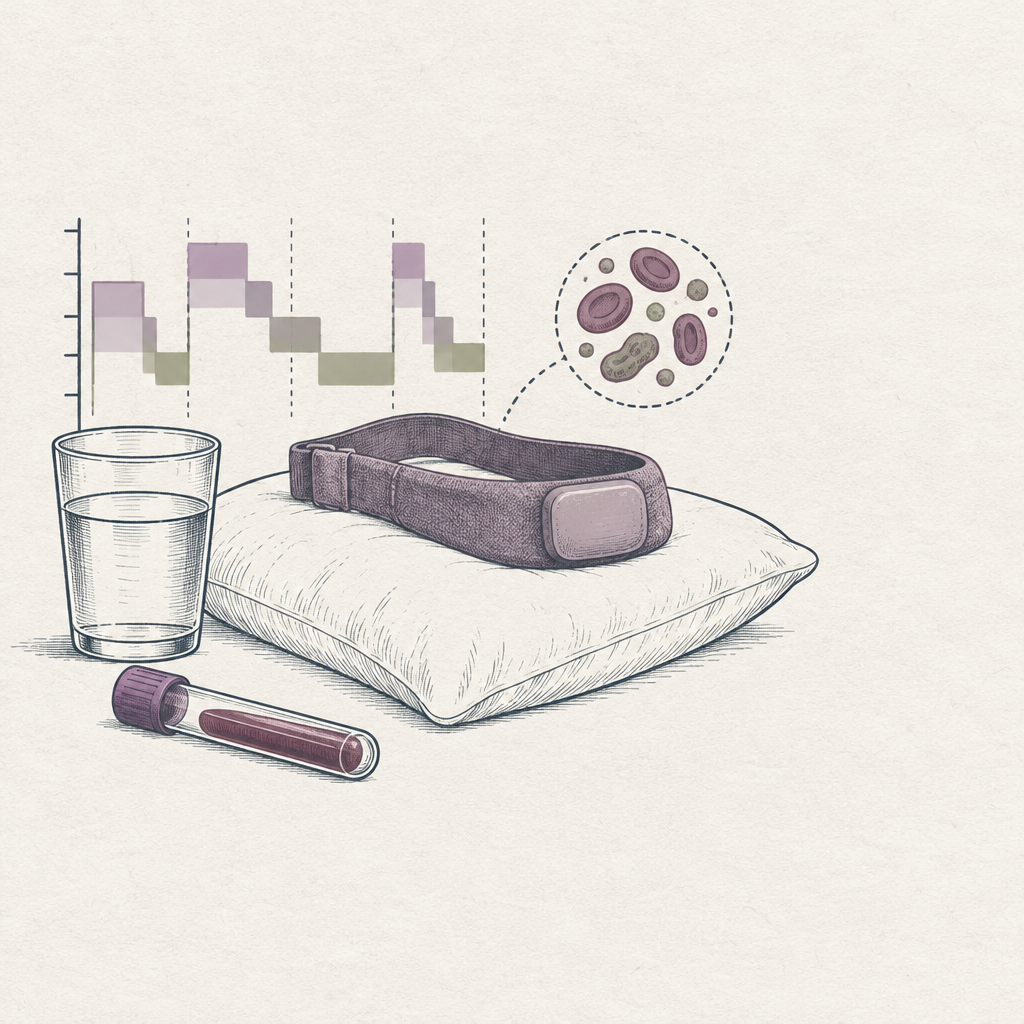
Blood testing predicted Alzheimer's risk a full decade before symptoms while consumer sleep hardware integrated clinical respiratory screening for 936 million undiagnosed adults.
In today's read: 1. Alzheimer's screening moves a decade earlier · 2. Smart mattresses pivot to clinical diagnostics · 3. State shifts replace cognitive symptom management
1. Alzheimer's screening moves a decade earlier
Blood panels can now predict cognitive decline ten years prior to clinical symptoms, while post-mortem tissue ties early estrogen-only HRT to reduced neuropathology. The diagnostic focus is moving from late-stage behavioral observation to biological tissue markers measurable during midlife.
Watch clinical trial recruitment accelerate as pharmaceutical pipelines target presymptomatic intervention windows. Neurologists win earlier diagnostic leverage, while private insurers face immediate pressure to reimburse preventative biomarker panels and hormone regimens.
Evidence from today:
- Estrogen-only HRT linked to fewer Alzheimer signs in brain tissue — PsyPost — A large analysis combining clinical records with post-mortem brain tissue data found that women who used estrogen-only hormone replacement therapy had significantly lower markers of Alzheimer's pathology. The link was strongest in women who initiated treatment around the onset of menopause. It provides rare physical tissue evidence in a debate often clouded by contradictory observational questionnaires.
- Blood test predicts Alzheimer's cognitive decline a decade early — ScienceDaily - Mind & Brain — A major international study showed a blood test can detect Alzheimer's-related cognitive decline up to ten years before symptoms appear. Highest-risk individuals in the trial faced a 38% chance of impairment within five years and 78% within ten. The finding gives clinicians and patients a massive runway to intervene before irreversible damage sets in.
2. Smart mattresses pivot to clinical diagnostics
Eight Sleep connected its hardware directly to ResMed's sleep apnea screening and automated cooling to counter vasomotor hot flashes. Sleep tracking is dropping generic recovery scores to capture billable respiratory pathology and measurable endocrine disruptions.
Watch consumer sleep tech pursue formal FDA clearance pathways and medical device tie-ups. Hardware makers that unlock insurance reimbursement models win, while trackers that stop at passive data logging face margin compression.
Evidence from today:
- Eight Sleep Partners With ResMed to Target Undiagnosed Sleep Apnea — Eight Sleep Blog — Eight Sleep has partnered with medical device maker ResMed to integrate clinical sleep-disordered breathing assessments into its smart mattress ecosystem. The collaboration targets roughly 936 million adults worldwide affected by sleep apnea, the vast majority of whom have no formal diagnosis. It links nightly biometric monitoring directly to clinical respiratory screening.
- Eight Sleep Launches Menopause Mode to Counter Night Sweats — Eight Sleep Blog — Eight Sleep launched Menopause Mode, an adaptive temperature feature for its Pod smart mattress system designed to counter nocturnal hot flashes. The release follows company data showing postmenopausal women lose over 1.5 hours of sleep weekly compared to premenopausal peers. The software automatically lowers bed temperature in real time to stop vasomotor spikes from waking users.
3. State shifts replace cognitive symptom management
Sleep onset requires an objective prefrontal drop in glutamate, while depressive symptoms responded in trials to evolutionary reframing as biological energy conservation. Both developments treat acute distress and insomnia as hard neurochemical state locks rather than cognitive errors.
Digital therapeutics and clinical protocols will target physiological and metabolic downshifts ahead of talk therapy journaling. Interventions addressing autonomic baseline regulation win on patient retention over cognitive reframing apps.
Evidence from today:
- Brain Glutamate Must Drop Before You Can Fall Asleep — Journal of Neuroscience — A new Journal of Neuroscience study tracking 20 adults with real-time magnetic resonance spectroscopy found that falling asleep requires a sharp drop in prefrontal glutamate and glutamine. When sleep was disrupted by an unfamiliar environment, this chemical downshift failed to happen, keeping sleep-onset latency high.
- Evolutionary framing of depression eased symptoms in a pilot trial — ScienceAlert — Researchers tested an evolutionary psychoeducation intervention on adults with mild to moderate depression, recording measurable drops in symptom severity over four weeks. The trial framed social grief and low mood as ancient biological threat responses designed to conserve energy rather than internal malfunctions. Reframing the slump helped participants halt rumination loops faster than traditional symptom monitoring.
Also moved today
- Therabody launches LED light devices for muscle tension and hair growth — BeautyMatter — Therabody expanded into targeted red light therapy for hair growth and muscle recovery, pushing the massage gun brand into clinical photobiomodulation hardware.
- GLP-1 Friendly Drink Launches Jump 190 Percent as Taste Shifts — FoodNavigator Europe — Product launches tailored for GLP-1 users climbed 190 percent this year as altered satiety and dulled sugar response force beverage brands to reformulate.
New this week in wellness goods
- Therabody launches LED light devices for muscle tension and hair growth — Global — Therabody expanded beyond percussion massage with new targeted LED light therapy hardware, including a red-light device for muscle recovery and an LED cap for hair growth. The launch moves the brand squarely into photobiomodulation for home recovery and follicle health.
- Eight Sleep Launches Menopause Mode to Counter Night Sweats — global — Eight Sleep launched Menopause Mode, an adaptive temperature feature for its Pod smart mattress system designed to counter nocturnal hot flashes. The release follows company data showing postmenopausal women lose over 1.5 hours of sleep weekly compared to premenopausal peers. The software automatically lowers bed temperature in real time to stop vasomotor spikes from waking users.
Signal map
North America: 3 · Global: 3 · Europe: 1 · Oceania: 1
What I'd watch next
Watch whether food and beverage incumbents announce reformulated product lines to stem volume loss from GLP-1 adoption. Expect clinical diagnostic partnerships to become central to hardware makers on upcoming earnings calls.
Where this fits at Kokorology
When prefrontal glutamate and autonomic state dictate recovery, waiting for subjective exhaustion to tell you you're depleted is already too late. I built the Nervous System Journal around daily capacity tracking so you catch physiological state locks before they derail sleep.