Daily read · 18:00
The nervous system takes center stage, and so does real science.
Today's moves show the market finally connecting health to the nervous system, while industry pushes back on both digital distraction and unsubstantiated claims.
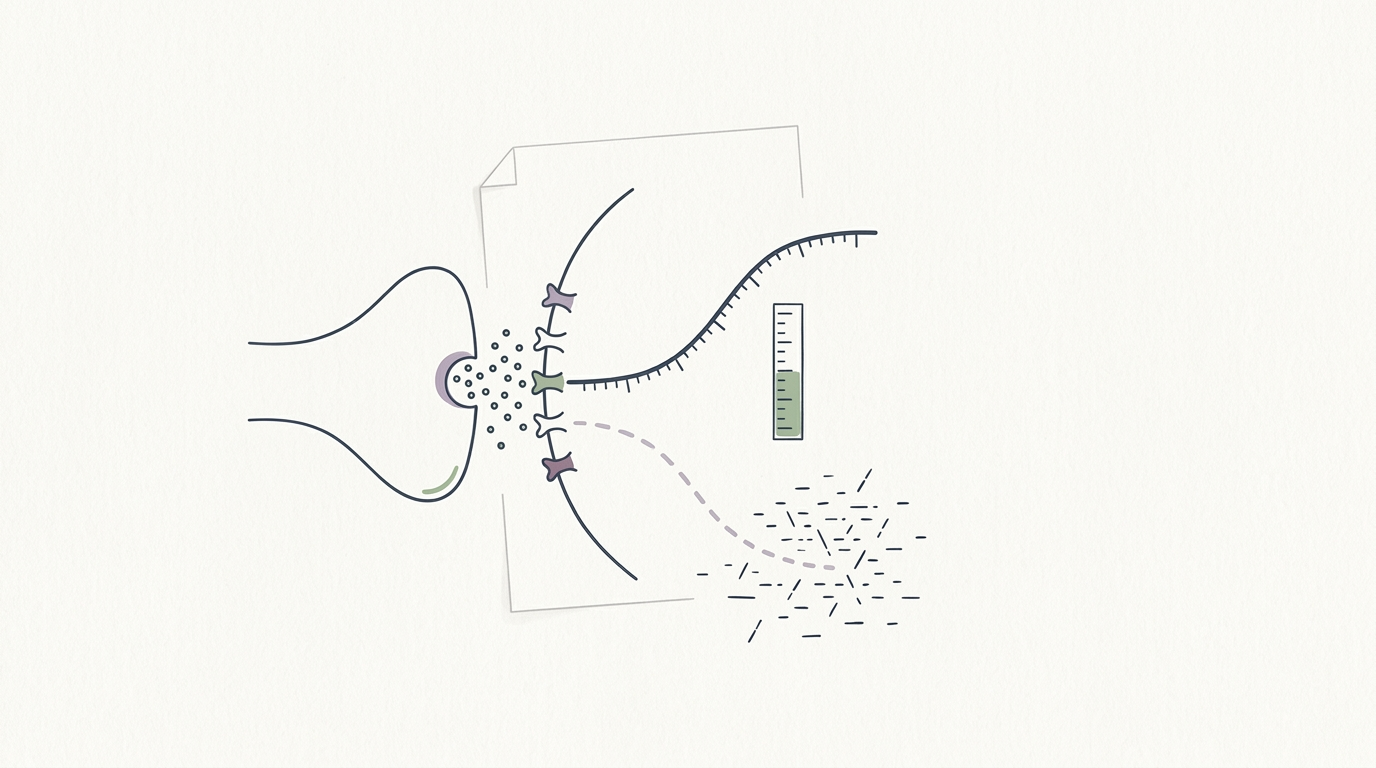
Today's moves show the market finally connecting health to the nervous system, while industry pushes back on both digital distraction and unsubstantiated claims.
In today's read: 1. Nervous System as the Master Regulator · 2. Longevity's Biotech Bet · 3. Policy Collision: Digital Health vs. Real Health
1. Nervous System as the Master Regulator
More research directly links brain activity, sleep patterns, and chronic stress to long-term health outcomes, showing the nervous system isn't just a symptom, it's the core. It influences everything from cardiac function to dementia risk. Chronic stress damages heart muscle; sleep waves predict disease; digital overstimulation is a policy problem.
Smart money follows the nervous system. Expect new diagnostics and interventions that measure and modulate states, not just symptoms. Devices will move beyond activity tracking to true nervous system readouts. Policy makers are starting to care about nervous system load.
Evidence from today:
- Sleep's hidden brain waves predict future health issues — Nature News — New research published in Nature identifies specific sleep-wave patterns that forecast future health problems like dementia and heart disease years in advance. Scientists are now looking to develop non-invasive tech to monitor these signals. It means doctors could get early warnings for serious illness just by looking at how you sleep.
- Chronic stress and social factors damage the heart — Deutsches Ärzteblatt — New research from Germany shows how chronic stress, worsened by lifestyle and socioeconomic factors, drives inflammation that damages heart muscle over time. Genetic predispositions play a role in how sensitive individuals are to these stressors. It's a clearer picture of how external pressure literally wears down the body.
- Declining book reading impacts cognition, says Nature News — Nature News — A Nature News report questions if the global decline in deep book reading affects rational thinking, linking sustained focus to cognitive function. It explores how fragmented digital consumption might reshape our brains. This signals a shift in how our brains process information and its potential downstream effects on attention and critical thought.
- Germany calls for national strategy on smartphone addiction — Deutsches Ärzteblatt — Germany's professional medical association, the Deutsches Ärzteblatt, says problematic smartphone use is a growing mental health issue. They're pushing for a national strategy on media addiction prevention, even suggesting AI could help. The goal is to make people more aware of how their digital habits mess with their brains.
2. Longevity's Biotech Bet
The longevity market isn't just supplements and lifestyle anymore. Deep biotech is moving from concept to early-stage human trials, targeting fundamental aging mechanisms. Gene therapies for eye conditions, beta-cell replacement for diabetes, and graphene brain implants for Parkinson's are examples. This signals a shift towards 'curing' aging at a cellular level.
This is where the big R&D money goes. Look for more Phase 1 and 2 trial announcements and strategic partnerships between academic centers and biotech firms. Early wins here will shape which parts of the 'longevity' umbrella actually get FDA pathways and insurance reimbursement. The focus is on specific disease reversal, not just slowing down time.
Evidence from today:
- Experimental glaucoma treatment shows promise in small trial — Longevity Technology — Life Biosciences just released early Phase 1 data for ER-100, an experimental gene therapy for open-angle glaucoma, in three adults. The treatment, which involves an intravitreal injection plus oral doxycycline, was well-tolerated over 56 days. It's meant to induce OSK gene expression to slow optic nerve damage.
- Avaí Bio, Austrianova, San Raffaele partner on diabetes beta-cell research — Longevity Technology — Avaí Bio, Austrianova, and Ospedale San Raffaele have launched a joint research program to develop encapsulated beta-cell replacement for insulin-dependent diabetes. The goal is to explore a new way to help the body regulate blood sugar, potentially reducing the need for external insulin. This collaboration brings together biotech and clinical research on a critical metabolic pathway.
3. Policy Collision: Digital Health vs. Real Health
Governments and medical bodies are finally seeing the downstream effects of digital overuse and AI dependence. From Greece banning social media for under-15s to German doctors warning about AI 'deskilling' and smartphone addiction, there's a growing recognition that digital tools have significant, often negative, health costs. Policy makers are moving to mitigate these harms.
This creates friction for pure-play digital health companies. Regulations will tighten around screen time, data use, and AI's role in clinical decisions. Watch for new guidelines on digital detox and 'digital hygiene' from official bodies. User demand for real-world solutions will grow as digital fatigue sets in.
Evidence from today:
- Greece bans social media for under-15s starting 2027 — Deutsches Ärzteblatt — Greece announced a plan to ban social media access for children under 15, making it one of the first EU countries to do so. The new policy, aimed at protecting youth, is set to take effect on January 1, 2027.
- AI in healthcare risks 'deskilling' doctors, say experts — Healio - Psychiatry & Mental Health — Experts in psychiatry and mental health warn that over-reliance on AI for clinical diagnoses and decision-making could erode doctors' core skills. The concern is that extensive AI augmentation could lead to a 'deskilling' phenomenon, impacting patient care, especially during complex or emergency situations. The article draws a parallel to pilots relying too heavily on autopilot systems.
- Germany calls for national strategy on smartphone addiction — Deutsches Ärzteblatt — Germany's professional medical association, the Deutsches Ärzteblatt, says problematic smartphone use is a growing mental health issue. They're pushing for a national strategy on media addiction prevention, even suggesting AI could help. The goal is to make people more aware of how their digital habits mess with their brains.
Also moved today
- Study maps menopause onset to a specific 12-month period — Nature Medicine RSS — Menopause isn't a gradual fade, but a sharp 12-month physiological drop, meaning interventions must be timed precisely.
- Long COVID linked to mouth and lung microbiome differences — Inside Precision Medicine — Long COVID severity links to specific mouth and lung microbiome differences, offering new targets for treatment.
- Big money moves into trusted supplement brands — New Hope Network (Natural Products Expo) — Big money is buying up established supplement brands, signaling market consolidation and increased marketing spend for 'trusted' names.
- Anchovy shortages threaten omega-3 supply, not just price — Nutritional Outlook — Anchovy shortages will hit omega-3 supply hard, driving up prices and forcing supplement brands to reformulate.
- Gut health claims often lack science for sleep, stress benefits — Vitafoods Insights — Many gut health claims for sleep and stress lack strong scientific backing, pointing to a gap between consumer demand and validated science.
- Restore, Niagen Bioscience launch Longevity Month — Longevity Technology — Restore Hyper Wellness and Niagen Bioscience are pushing 'Longevity Month,' moving the healthspan conversation further into the mainstream consumer market.
New this week in wellness goods
- Google launches Fitbit Edge between Pixel Watch 5 and Fitbit Air — global — Google's new Fitbit Edge wearable sits between their high-end Pixel Watch 5 and the entry-level Fitbit Air. It's not a full smartwatch but offers more health tracking than the basic model. This device targets users who want advanced health metrics without the complexity or cost of a premium smartwatch.
Signal map
North America: 10 · Europe: 10 · Global: 8 · Nordics: 2
What I'd watch next
I'm watching how wearables like Fitbit Edge influence clinical trials – do they create new data streams faster than they create noise? Also, keep an eye on how regulators respond to the social media ban in Greece; it sets a precedent.
Where this fits at Kokorology
The nervous system is the central command. Understanding your nervous system state, not just guessing, is the starting point for any real change. Grab a Nervous System Journal to map your own signals.