Daily read · 18:00
Climate Stressors Hit Bodies and Grids
Today's news shows climate impacts stressing both human physiology and critical infrastructure, forcing market players to adapt fast.
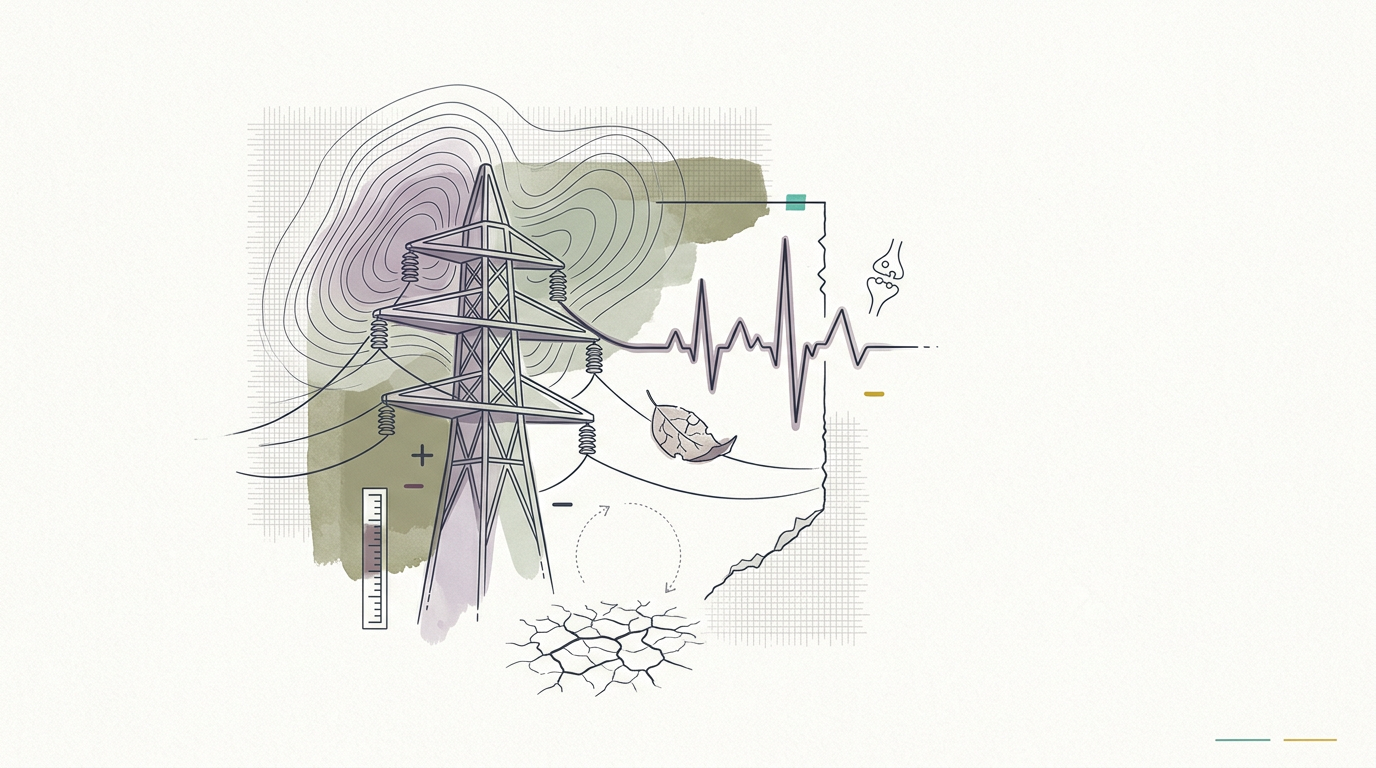
Today's news shows climate impacts stressing both human physiology and critical infrastructure, forcing market players to adapt fast.
In today's read: 1. Climate's direct hit on nervous systems · 2. The connected body: hidden systemic links · 3. Personalized movement and recovery gains traction · 4. AI shortens the consumer path to purchase
1. Climate's direct hit on nervous systems
Extreme heat and environmental disruption push the body's allostatic load, increasing cortisol and reducing vagal tone. This manifests as heightened mental strain and physical vulnerability.
Expect rising demand for mental health support, sleep aids, and recovery solutions as climate change becomes a direct physiological burden. Look for innovation in cooling tech and stress reduction.
Evidence from today:
- Europe's heatwaves stress power grids and human bodies — New Scientist — Record high temperatures and low water levels across Europe are forcing nuclear reactors offline, creating energy shortages and pushing prices up. This happens just as millions turn on their air conditioning, raising the risk of blackouts. It's a double hit to nervous systems already struggling with extreme heat.
- Australia braces for bird flu's public health impact — Croakey Health Media — Australian community groups are calling for more support as a bird flu outbreak raises concerns about the nation's public health response. The outbreak is expected to have widespread consequences beyond animal health, impacting human immunity and mental health.
2. The connected body: hidden systemic links
Inflammation and nervous system dysregulation are not isolated. New research continues to link seemingly disparate conditions, showing common underlying mechanisms like gut health and stress responses.
This pushes for multi-modal treatment strategies. Expect more integrative care models and products that address systemic issues, not just surface symptoms. Dermatologists might need to talk to pain specialists.
Evidence from today:
- Rosacea Linked to 7x Higher Fibromyalgia Rates in New Study — Mindbodygreen — A new controlled study in Skin Research and Technology found that nearly 7 in 10 people with rosacea also met the criteria for fibromyalgia. This research suggests a surprising overlap between two conditions often considered distinct, pointing to shared underlying mechanisms beyond skin deep. Dr. Fatmagul Seremet, the lead author, highlights the systemic nature of these connections.
- Birth order might impact health, new study suggests — Mindbodygreen — A recent study in BMC Medicine with over 60,000 participants found that first-born children might have a higher risk of conditions like diabetes, obesity, and heart disease. Researchers from the University of Auckland linked birth order to subtle metabolic differences, suggesting that while parents are adapting, the first-born gets the initial stress load. It's a reminder that even early life experiences can shape your long-term health trajectory.
3. Personalized movement and recovery gains traction
Understanding the specific physiological demands of different activities, whether a squat or a sprint, allows for targeted interventions. This optimizes performance and minimizes injury by respecting biomechanics and oxidative stress limits.
This means more specialized fitness programs and recovery products. Generalized advice gets phased out for data-driven, nuanced approaches that maximize training efficiency and muscle repair, driving retention for smart brands.
Evidence from today:
- Study finds stretching type depends on workout goal — Mindbodygreen — A new study in the Journal of Sports Sciences looked at how different stretching methods impact muscle performance and flexibility. Researchers found that static stretching is best for boosting flexibility, but dynamic stretching works better for improving power and jump height before a workout. The takeaway is to match your warm-up to what you're actually trying to achieve in your session.
- Squat tweak could reduce lower back stress — Mindbodygreen — Mindbodygreen reports on a simple squat adjustment: by widening your stance and pointing your toes out slightly, you can reduce spinal compression. This helps take pressure off your lower back, making the movement more comfortable and sustainable.
- Vitamin C and Glutathione May Supercharge Recovery — Mindbodygreen — New research suggests that taking vitamin C and glutathione together offers superior exercise recovery benefits compared to either antioxidant alone. Both are key for fighting oxidative stress and inflammation after tough workouts. Think less muscle soreness and faster bounce-back time.
4. AI shortens the consumer path to purchase
AI-powered discovery and recommendation engines reduce the friction in decision-making, accelerating consumer conversion. This changes the unit economics for brands by demanding instant trust and clear value propositions.
Brands that lean into AI for product matching and simplified user experience will capture market share. Those relying on long-form content and extended discovery will see their funnels leak. Think fast, clear value.
Evidence from today:
- AI is already shortening the shopping funnel for wellness brands — The New Consumer — New data shows AI-driven search and recommendations are shrinking the online shopping journey, leading to faster conversions. People are making purchase decisions quicker when AI is involved in their discovery process. This means brands need to rethink how they grab attention and build trust, fast.
- Macrobite app helps track macros with AI image recognition — Product Hunt — Health & Fitness — A new app, Macrobite, uses AI to log meals from photos, aiming to simplify macro tracking. It helps users hit precise protein, carb, and fat targets without manual input. The goal is to streamline nutrition for better energy and body composition.
Also moved today
- Colored LED lights reduce insect attraction by 98% — Videnskab.dk (Health) — Colored LED lights cut insect attraction by 98% in Germany, pointing to simple fixes for light pollution and ecosystem health, which in turn impacts human nervous systems.
- It takes two weeks to reset kids' holiday sleep schedules — Videnskab.dk (Health) — It takes two weeks to reset kids' holiday sleep schedules, showing the rigidity of circadian rhythms and the stress on parents trying to manage them.
- US News announces 2026-2027 Best Hospitals list — Healio - Psychiatry & Mental Health — U.S. News released its 2026-2027 Best Hospitals list, continuing the trend of rankings shaping patient perception and hospital market strategy around 'superior outcomes'.
- Sweat440 franchisee group expands rapidly in South Florida — Athletech News — Sweat440's rapid expansion in South Florida signals strong consumer demand for efficient, structured HIIT, optimizing time and perceived fitness gains.
New this week in wellness goods
- Macrobite app helps track macros with AI image recognition — global — A new app, Macrobite, uses AI to log meals from photos, aiming to simplify macro tracking. It helps users hit precise protein, carb, and fat targets without manual input. The goal is to streamline nutrition for better energy and body composition.
Signal map
North America: 6 · Global: 4 · Nordics: 2 · Oceania: 1
What I'd watch next
Keep an eye on how health systems adapt to climate-driven stressors on both patients and infrastructure. Also, watch for the next wave of AI tools that claim to simplify complex health routines.
Where this fits at Kokorology
These market patterns often reflect deeper physiological needs, and understanding how your body registers stress is key. The Nervous System Journal helps you map your own allostatic load, turning observation into actionable insight.