Daily read · 18:00
Longevity's New Look: Less Grind, More Gut, With Big Pharma Buying In
Today's health trends push back against 'hustle' culture, highlighting slow, sustainable practices for longevity and mental health, while major players make big bets on biotech and policy shifts.
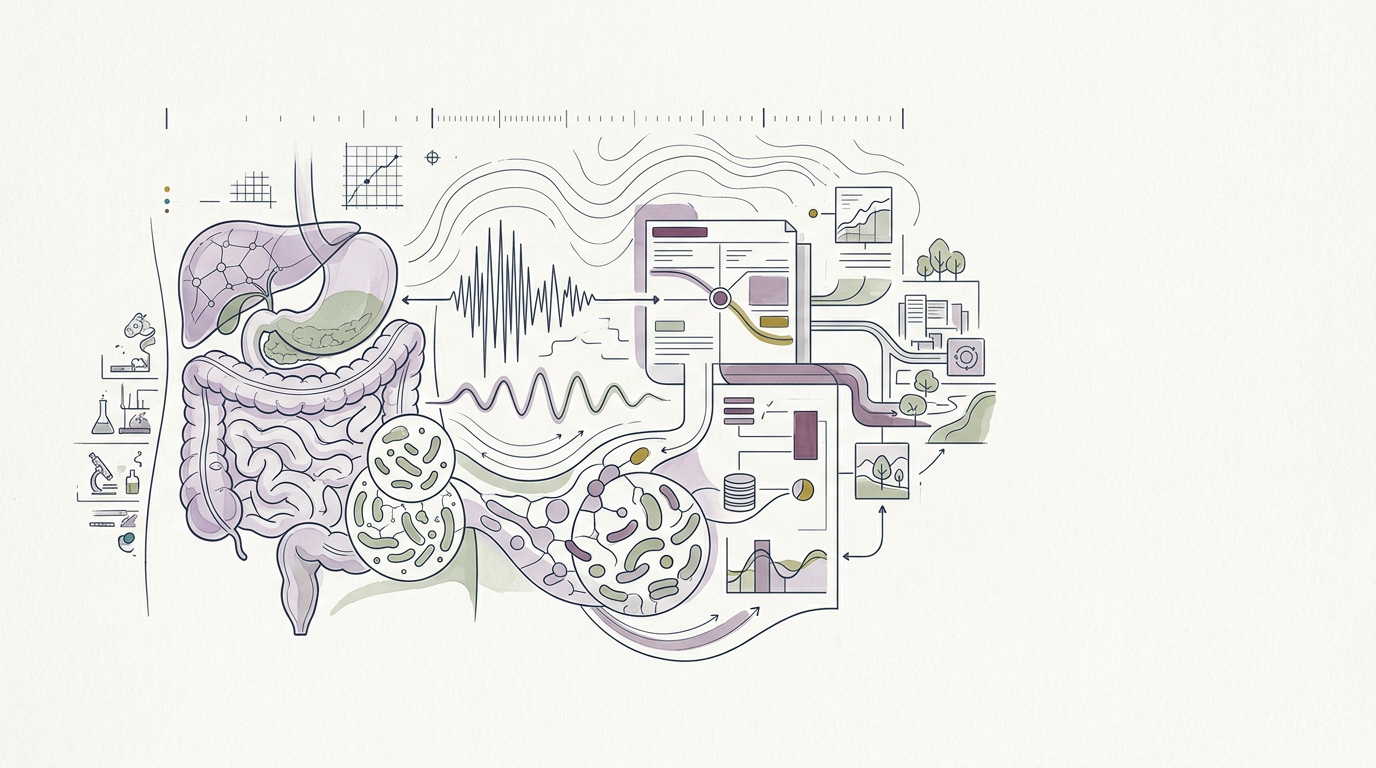
Today's health trends push back against 'hustle' culture, highlighting slow, sustainable practices for longevity and mental health, while major players make big bets on biotech and policy shifts.
1. Less Grind, More Long-Term Gain
The body responds to consistent, moderate input better than heroics. This means sustained physical activity and conscious recovery reduce systemic inflammation and cortisol, extending healthspan. Overshooting training thresholds can lead to diminishing returns and injury.
You don't need to brutalize yourself to see results. Smart recovery, moderate strength, and reducing impact are becoming central to lasting fitness journeys. Watch for more products and services promoting sustainable effort over peak performance.
Evidence from today:
- Two Hours of Weekly Strength Training Boosts Longevity — A 30-year study reveals that lifting weights for 90 to 120 minutes each week significantly lowers mortality risk. Beyond that two-hour mark, the benefits plateau, suggesting less is more if you're chasing longevity. This isn't about peak performance, it's about health span.
- Hoka's Clifton 11 prioritizes 'smooth' over speed for runners — Hoka's latest Clifton 11 running shoe is touting 'smooth' as the new 'fast,' emphasizing comfort and an unhurried cadence over trying to PR every run. This release signals a shift towards reducing impact and joint stress for a more sustainable running practice. It's for anyone looking to make running feel less like a grind and more like flow.
- Protein + Strength Training: The Muscle Longevity Combo — Mindbodygreen highlighted a simple yet potent recipe for maintaining muscle mass with age: consistent strength training paired with adequate protein intake. This isn't groundbreaking news, but it's a critical reminder for anyone looking to mitigate age-related muscle loss and sustain physical function.
2. The Gut: Central Command for Everything Else
The gut microbiome directly influences digestion, nutrient absorption, immunity, and even neurotransmitter production. Dysbiosis, caused by poor diet, creates a metabolic fingerprint that predisposes to chronic disease, while key nutrients like fiber support a healthy gut-brain axis, influencing sleep and mood.
Paying attention to your gut health is no longer a niche concern. It's a fundamental lever for overall health, from calorie absorption to sleep quality and disease prevention. Expect more products and diets to focus explicitly on microbiome support.
Evidence from today:
- New model estimates how gut microbes change calorie absorption — Researchers at the University of Gothenburg developed a new model to estimate how much gut microbes affect the number of calories the body actually absorbs. This is the first model of its kind, offering a new way to understand individual metabolic differences in nutrient uptake.
- Ultra-processed foods leave metabolic fingerprint on gut health — A new study out of Stanford led by Dr. Justin Sonnenburg found that ultra-processed foods (UPFs) don't just change gut bacteria—they leave a lasting metabolic signature on the body. This signature impacts how genes related to insulin resistance and obesity are expressed, even after short-term exposure.
- Frequent Ultra-Processed Food Intake Linked to Increased Cancer Risk — A new meta-analysis of over 9.8 million individuals found a direct link between high consumption of ultra-processed foods (UPFs) and a significantly increased risk of developing cancer, particularly ovarian and brain cancers. Eating more UPFs was associated with higher rates of heart disease and early death, alongside 32 other negative health outcomes. This research, published in BMJ, consolidates evidence from 45 pooled meta-analyses, offering a strong signal for dietary guidelines.
- Fiber is more than a gut MVP, it's a sleep aid — Forget digestion, a new article suggests fiber's real superpower might be better sleep. Eating enough insoluble and soluble fiber supports deep, restorative sleep. It's about feeding your gut bugs right, which then send chill signals to your brain.
3. Mental Health Moves into Mainstream Biotech
The brain's neurochemistry and genetic predispositions are increasingly understood as direct targets for pharmacological intervention, moving beyond traditional psychiatric models. Large-scale investments in psychedelics and AI for genetic correlations signal a market belief in biomechanical solutions for mental wellbeing.
Mental health is no longer solely the domain of talk therapy. Biotech is making serious plays to address conditions like depression at a cellular and genetic level. Watch for more pharmaceutical pipelines to include novel neuro-therapeutics, potentially reshaping access and treatment paradigms.
Evidence from today:
- Eli Lilly buys psychedelics biotech AtaiBeckley for $2.8B — Eli Lilly is acquiring AtaiBeckley, a biotech focused on psychedelic therapies, for $2.8 billion up front. This move significantly expands Lilly's neuroscience pipeline, specifically targeting mental health conditions. It signals a major pharmaceutical player betting big on psychedelics for depression and other disorders.
- New AI identifies genetic links in diverse health records — Researchers at the Max Planck Institute of Psychiatry developed a new AI called "GeneMachine" that uses Bayesian modeling to uncover genetic associations within electronic health records (EHRs). The system analyzed data from 300,000 individuals, identifying novel genetic markers for conditions like depression and metabolic syndrome by linking diagnoses and treatments over time. This approach allows for deeper insights into how genes influence health trajectories, even with incomplete data.
- Off-grid living helps vets with PTSD in New Mexico — Army veteran Ryan Timmermans started a self-sufficient community in Northern New Mexico where former soldiers with PTSD can live away from the grid. Timmermans believes this simple lifestyle is more therapeutic than traditional government-provided care. The goal is to help veterans manage their PTSD symptoms through a return to fundamental living.
4. Policy and Payers Drive Health Tech Adoption
Medicare's willingness to re-evaluate payment models for AI and remote monitoring, coupled with a push for data centralization, reduces the friction for adopting new health technologies. This shifts unit economics for providers and makes tech-enabled care more accessible, potentially expanding patient reach and improving outcomes by removing cost as a barrier.
If Medicare decides to pay for it, the rest of the healthcare system often follows. Expect a faster ramp-up of AI tools and remote monitoring devices in clinical practice. This means better access to data-driven health insights, but also new questions about data privacy and equitable access.
Evidence from today:
- Medicare floats new payment models for clinical AI, remote monitoring — Medicare (CMS) proposes changes to how it pays for clinical AI and remote patient monitoring services. This could mean easier access to AI-driven diagnostics and virtual care for chronic conditions, altering how doctors integrate tech into patient management and how insurers evaluate claims.
- CMS to standardize payment for clinical software and AI — The Centers for Medicare & Medicaid Services (CMS) plans to introduce a new payment structure for clinical software and AI that prioritizes patient outcomes. This move signals a push towards accountability for digital health tools in a market often criticized for its lack of clear performance metrics. The goal is to move beyond mere adoption and link reimbursement directly to tangible health improvements.
- Node Health launches app to centralize all your lab results — Node Health launched a new app that pools all your lab work – blood, genetics, wearables – into one spot. It's built to give you a single view of your biomarkers, helping you track changes over time and understand your body's data better.
Also moved today
- Fitness Connection Pours $10M Into Texas Club Upgrades (Athletech News) — Fitness Connection is investing $10M in Texas club upgrades, signaling that even value gyms need premium recovery and strength options to attract and retain members.
- Defense Sec. Hegseth wants annual testosterone screenings for service members (STAT News) — Defense Secretary Hegseth wants annual testosterone screenings for service members, highlighting a growing public and military focus on hormone health for readiness and mental wellbeing.
- NBJ Summit 2026 brings biohacking leaders (New Hope Network (Natural Products Expo)) — NBJ Summit 2026 will feature biohacking leaders, confirming that the industry sees continued growth in personalized health optimization through technology and data.
- Investors bet on protein in CPG snacks, pasta, and kids' food (New Hope Network (Natural Products Expo)) — Investors are keen on protein in CPG snacks and kids' food, showing a shift from supplement aisles to mainstream groceries as consumers prioritize metabolic health and satiety.
- US Congress debates making Daylight Saving Time permanent (STAT News) — Congress is debating making Daylight Saving Time permanent, a policy decision that significantly impacts public health due to its effects on circadian rhythms, sleep, and mental health.
- Merck's oral PCSK9 drug gets FDA approval to lower cholesterol (STAT News) — Merck's new oral PCSK9 drug is FDA-approved for cholesterol, meaning a potent cardiovascular drug class will now be available in pill form, improving patient access and adherence.
- VC firm shifts from prestige skincare to longevity tech (Beauty Independent) — VC firm Cutting Horse is shifting investments from prestige skincare to longevity tech, seeing more potential in measurable health outcomes than aspirational beauty.
- Missouri bill could tax doctor visits and medicine, changing health costs (KFF Health News) — A Missouri bill could tax doctor visits and medicine, which would raise healthcare costs and disproportionately impact those needing regular medical care.
- Experts say creatine-tumor study headline overstated risks (SupplySide Supplement Journal) — Experts clarified that creatine's cancer headlines were overblown, reminding us to be cautious of correlation-not-causation studies when evaluating supplement safety.
- Hyrox Expands Global Race Calendar Amid Massive Growth (Athletech News) — Hyrox is expanding its global race calendar due to massive growth, showing a clear consumer demand for accessible strength-endurance hybrid fitness events.
What I'd watch next
Keep an eye on policy decisions around health tech reimbursement. Medicare's moves impact the entire industry. Also, look for more clarity on how GLP-1 drugs might impact broader health policy and consumer spending.