news
CRISPR-Cas System Regulates Antiviral Defenses in Bacteria
New research in *Nature* by lead author Maayan Salomon and team (sample size not specified in snippet, but implied by 'Bacteria') found the CRISPR-Cas system controls bacteria's defenses against viruses. This goes beyond CRISPR's usual gene-editing role, showing it helps bacteria arm themselves against phage attacks. It effectively means bacteria can modulate their immune response based on direct viral threat signals.
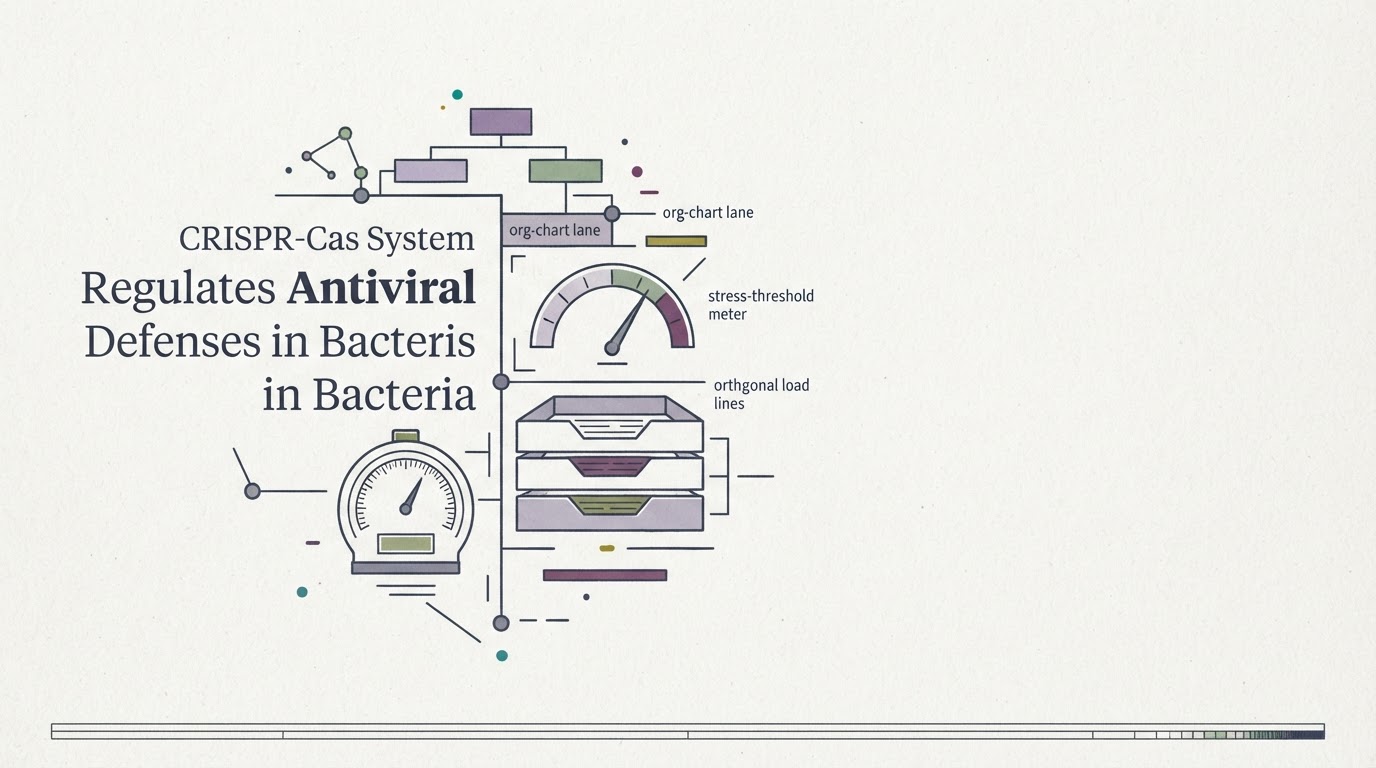
New research in Nature by lead author Maayan Salomon and team (sample size not specified in snippet, but implied by 'Bacteria') found the CRISPR-Cas system controls bacteria's defenses against viruses. This goes beyond CRISPR's usual gene-editing role, showing it helps bacteria arm themselves against phage attacks. It effectively means bacteria can modulate their immune response based on direct viral threat signals.
The architecture take
So, CRISPR isn't just a genetic scissor; it's also a tiny, bacterial immune system manager. This new work highlights how this cellular watchdog directly dials up or down the expression of anti-phage defense genes. Think of it as a finely tuned internal thermostat for bacterial immunity, reacting to real-time viral threats. This changes how we understand microbial ecosystems – specifically, how bacteria survive phage attacks, and more broadly, how ancient immune systems function. For humans, understanding these fundamental biological controls could offer new angles on how our own body's defenses are regulated at a cellular level, potentially informing future biotech strategies for battling infections or fine-tuning our own immune responses. It's a reminder that even the smallest life forms have sophisticated ways of maintaining balance. What else are we missing about cellular self-regulation?