news
CRISPR Base Editing Cuts ANGPTL3 to Permanently Lower Blood Lipids
Researchers published data in Nature demonstrating that a single in vivo CRISPR base-editing infusion knocked out ANGPTL3 in the liver. The treatment drove persistent drops in blood triglycerides and LDL cholesterol without double-stranded DNA breaks. It points toward a future where lifelong cardiovascular risk is addressed once instead of managed daily.
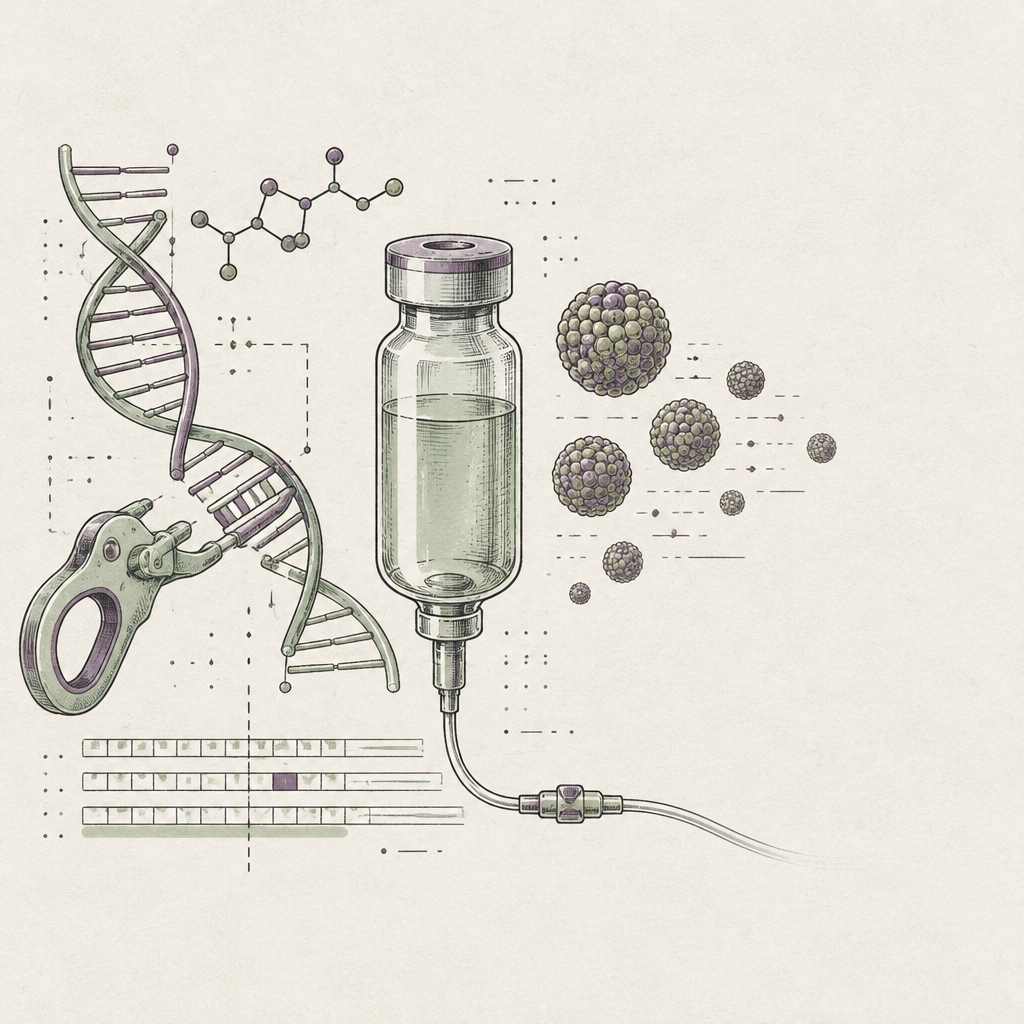
Researchers published data in Nature demonstrating that a single in vivo CRISPR base-editing infusion knocked out ANGPTL3 in the liver. The treatment drove persistent drops in blood triglycerides and LDL cholesterol without double-stranded DNA breaks. It points toward a future where lifelong cardiovascular risk is addressed once instead of managed daily.
The architecture take
Taking a statin every night for forty years will look absurd to our kids. The paper in Nature targets ANGPTL3, a liver gene that regulates how your body clears triglycerides and circulating cholesterol. When you turn that gene off with a precise base edit, lipid clearance runs on high without touching the surrounding DNA. I spent years assuming preventative cardiology would stay tethered to daily habit tracking and pill organizers. I was wrong about where the ceiling was. Statins lower LDL, but they do very little for stubborn remnant cholesterol or baseline vascular inflammation. A single infusion that reprograms hepatic lipid metabolism removes the human compliance problem entirely. When you take away missed doses and pharmacy refills, cardiovascular prevention shifts from personal discipline into a set medical baseline. The early trials focus on high-risk genetic hyperlipidemia. Once safety clears, longevity clinics will push this into mainstream preventative care.