news
Concussion's invisible toll: Families fight for recognition
A qualitative study in Frontiers in Sports & Active Living highlights the unseen burden on families managing long-term sport-related head injuries. Researchers interviewed 10 family members, revealing persistent struggles for recognition, the intense labor of securing care, and the system's role in exacerbating long-term harm. It's a look at how concussion doesn't just affect the player, but everyone around them.
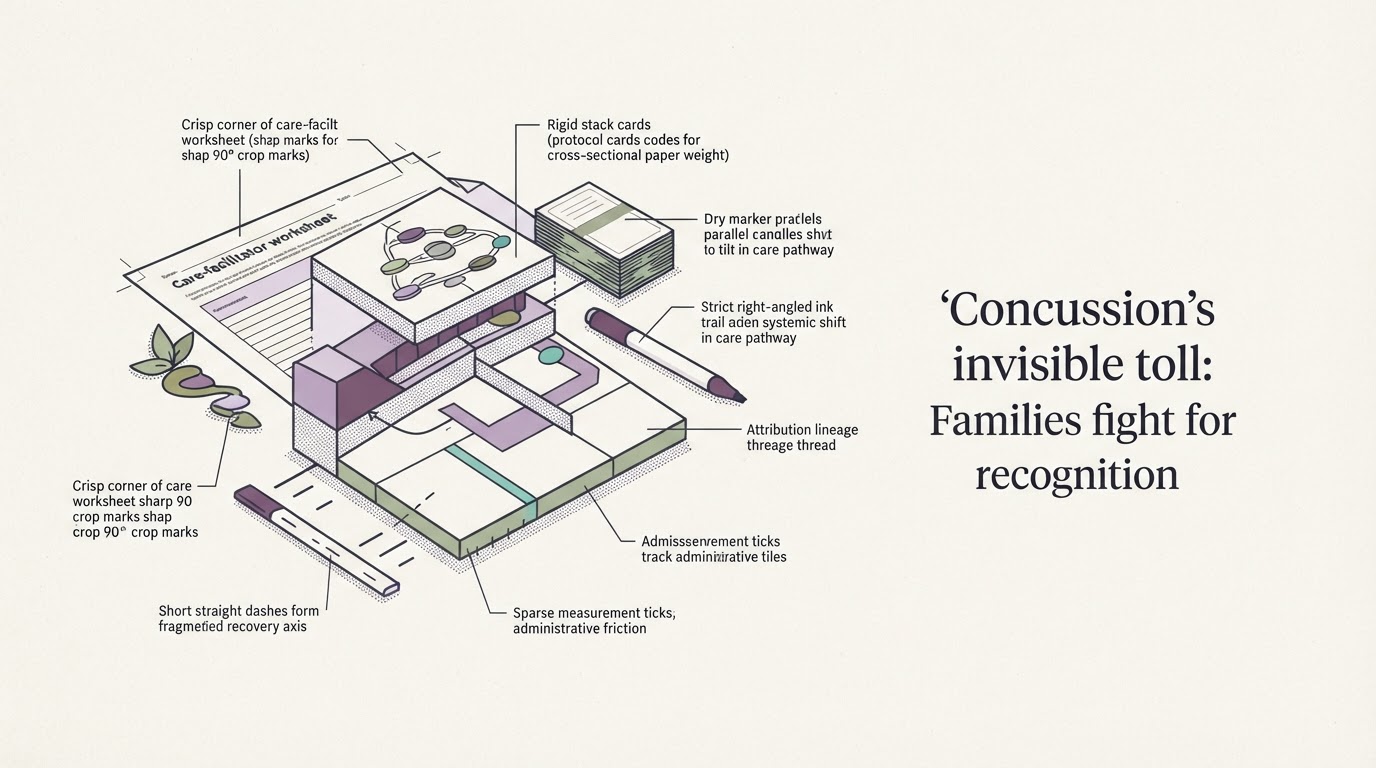
A qualitative study in Frontiers in Sports & Active Living highlights the unseen burden on families managing long-term sport-related head injuries. Researchers interviewed 10 family members, revealing persistent struggles for recognition, the intense labor of securing care, and the system's role in exacerbating long-term harm. It's a look at how concussion doesn't just affect the player, but everyone around them.
The architecture take
I read this and thought about all the 'return-to-play' protocols that just don't account for the reality of head trauma. This study, led by Dr. Lindsay Shaw, isn't about the hit itself, it's about the decades of fallout, especially the silent mental load on families. They're describing an 'invisible injury' that fragments care systems, forcing families into constant advocacy. It's not just brain function that's impacted, but the entire nervous system's capacity to regulate under chronic stress. This kind of sustained emotional and cognitive load on caregivers can mimic the symptoms of burnout and even impact their own long-term health. The real takeaway is that injury doesn't stop at the individual; the ripples spread, and our systems are totally failing to catch them.