news
Compressive running socks stiffen midfoot mechanics to save muscle energy
Biomechanics researchers engineered compressive socks that mechanically stiffen the arch and midfoot during stride push-off, trimming metabolic expenditure in runners. By locking soft tissue in place, the textile returns elastic energy during late-stage mileage. It offers endurance athletes a way to stave off calf exhaustion without relying solely on thick super-shoe foams.
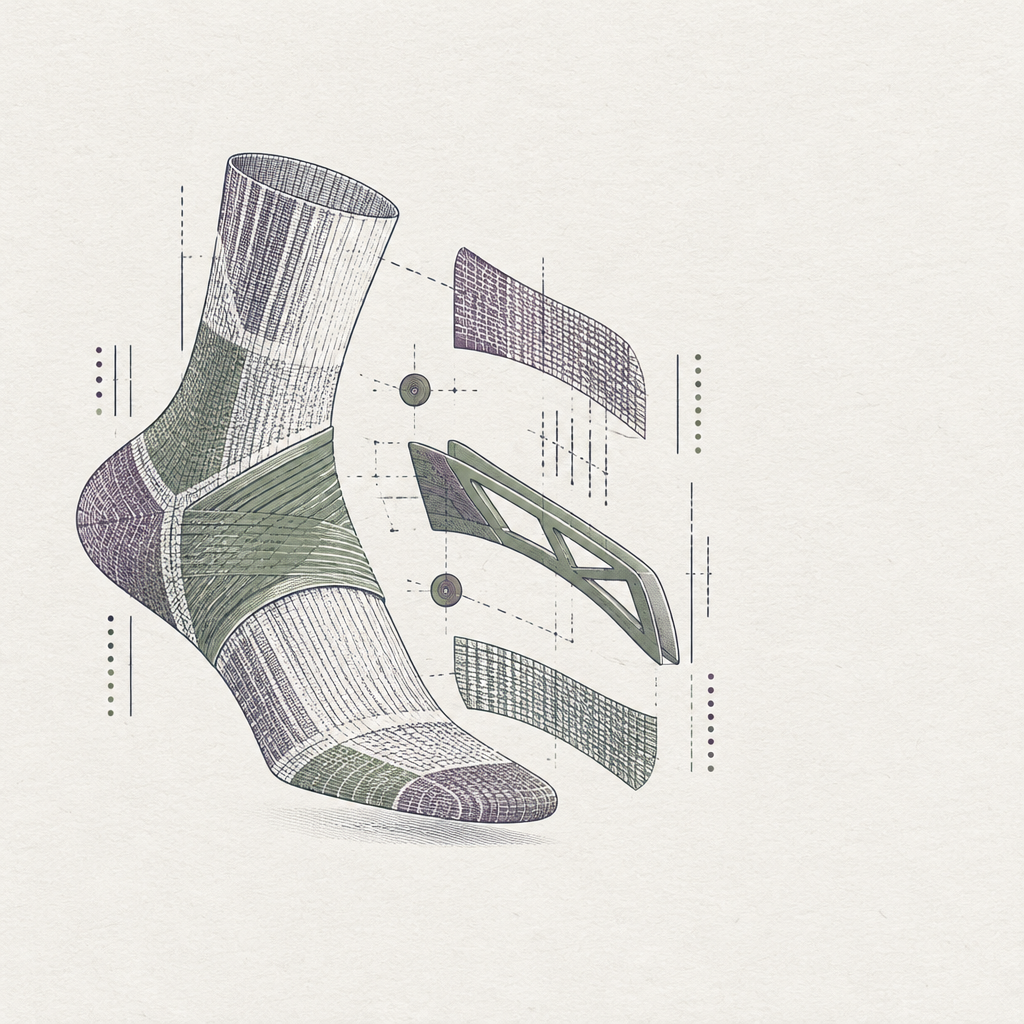
Biomechanics researchers engineered compressive socks that mechanically stiffen the arch and midfoot during stride push-off, trimming metabolic expenditure in runners. By locking soft tissue in place, the textile returns elastic energy during late-stage mileage. It offers endurance athletes a way to stave off calf exhaustion without relying solely on thick super-shoe foams.
The architecture take
I spent years rolling my eyes at compression gear because most of it is just tight polyester sold with medical adjectives. I was wrong to write off the physics entirely. Then I watched the lab data on how much kinetic energy the human arch bleeds on footstrikes past mile eighteen. When the small intrinsic muscles of the foot tire out, the arch flattens slightly, the plantar fascia overextends, and your calves burn through glycogen trying to stabilize you. Wrapping the midfoot with targeted mechanical tension mimics the natural windlass mechanism, holding joints rigid right at toe-off. That leaves the Achilles tendon to do what it actually evolved to do: snap back like a clean spring without frying your central nervous system from late-race muscular fatigue. The shoe industry spent a decade obsessing over massive foam stacks to save runner legs. Putting that mechanical assist directly against the skin makes far more sense, assuming your feet tolerate the squeeze.