news
Cold plunges within two hours of bed disrupt athlete sleep
A review published in Sports Medicine synthesized physiological evidence on post-workout thermal protocols and nocturnal sleep. Researchers found that cold water immersion less than 2 hours before bedtime impairs sleep by blunting the distal-to-proximal skin temperature gradient. Conversely, evening heat exposure such as saunas or hot baths consistently reduced sleep onset latency.
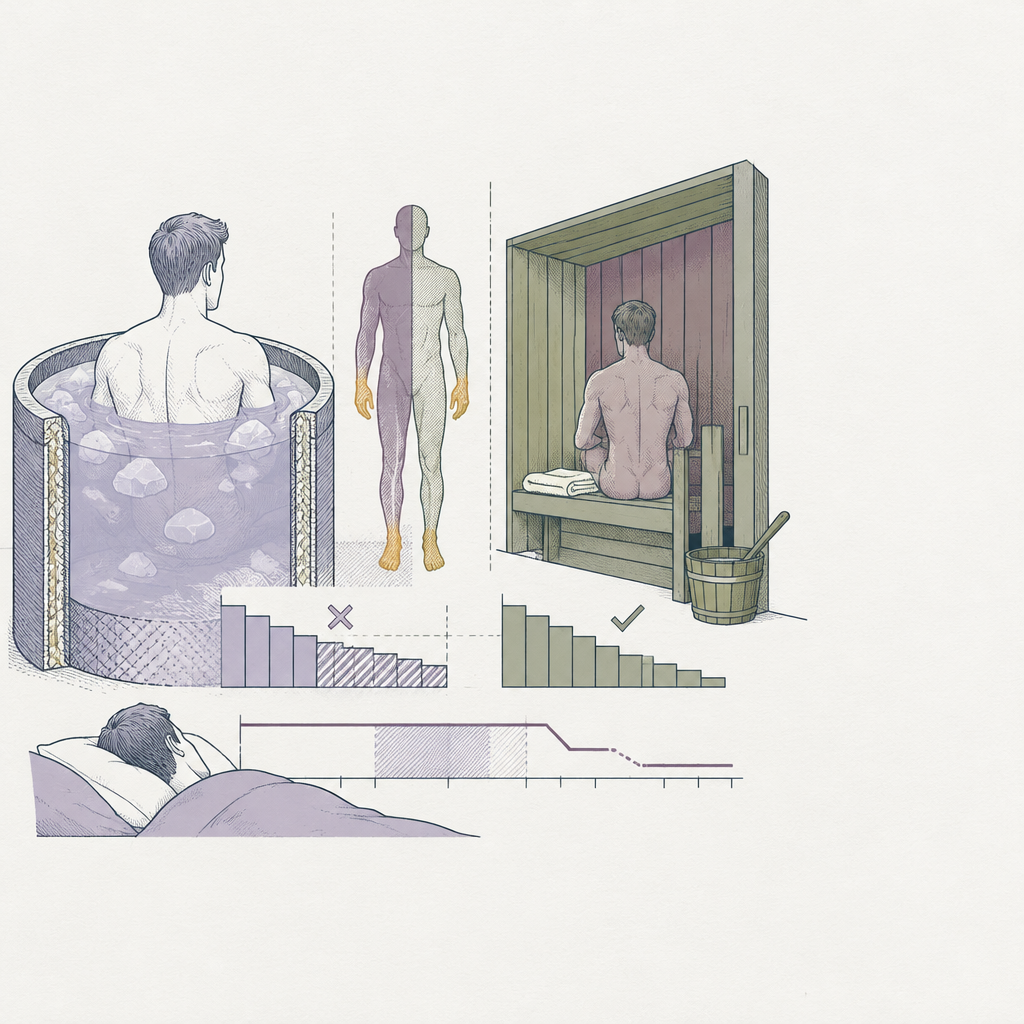
A review published in Sports Medicine synthesized physiological evidence on post-workout thermal protocols and nocturnal sleep. Researchers found that cold water immersion less than 2 hours before bedtime impairs sleep by blunting the distal-to-proximal skin temperature gradient. Conversely, evening heat exposure such as saunas or hot baths consistently reduced sleep onset latency.
The architecture take
I used to think an 8:30 PM ice bath was the ultimate discipline flex. I was wrong, and my 2:00 AM ceiling staring was predictable biology. To fall asleep, core body temperature has to drop by about one degree Celsius. Your body dumps that heat by opening peripheral blood vessels in your hands and feet (the distal-to-proximal temperature gradient). When you jump into 10°C water right after an evening workout, peripheral vasoconstriction slams those exits shut. Heat stays trapped inside. Your nervous system stays on high alert, and sleep onset latency stretches out. I swapped the late-night ice tub for twenty minutes in a dry sauna at 80°C instead. Passive heat causes rapid vasodilation. Once you step out, heat dumps fast, mimicking the natural circadian downshift. Timing beats intensity. Keep the cold plunge before 4:00 PM and save the heat for your evening routine.