news
CEOs must lead AI governance in hospitals, not delegate it
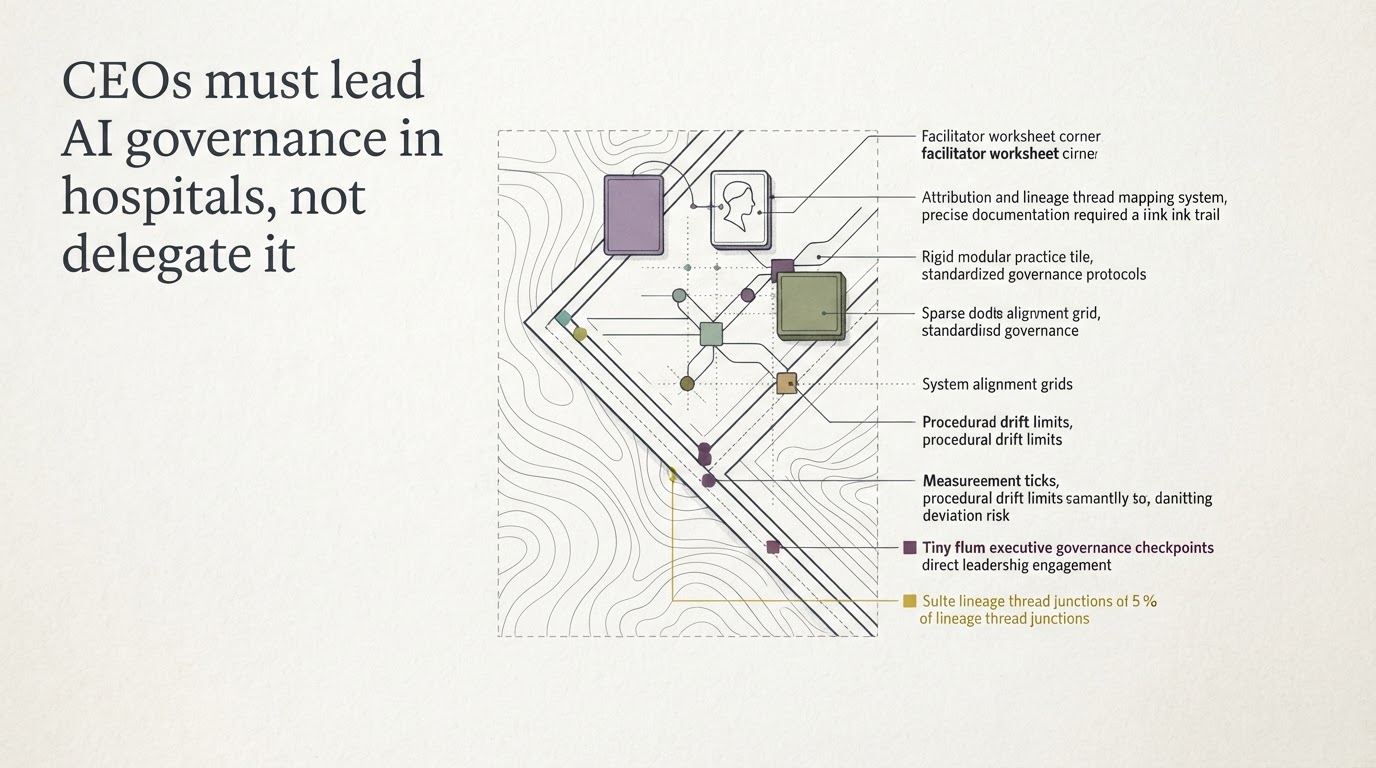
STAT Health Tech authors Peter Pronovost, Justin Norden, and Kedar Mate argue that hospital CEOs need to prioritize AI governance directly. They say it's not a task for quarterly tech committee meetings but a daily executive responsibility. The piece flags drifting AI systems in healthcare, potentially impacting diagnostics and patient care.
STAT Health Tech authors Peter Pronovost, Justin Norden, and Kedar Mate argue that hospital CEOs need to prioritize AI governance directly. They say it's not a task for quarterly tech committee meetings but a daily executive responsibility. The piece flags drifting AI systems in healthcare, potentially impacting diagnostics and patient care.
The architecture take
The AI conversation is always about how smart the tech is, but this take hits different: who's actually holding the leash? If hospital AI drifts, that means diagnoses could drift, treatment protocols could drift, and ultimately, patient outcomes could drift. That's a direct hit on the nervous system, literally and figuratively, for anyone seeking care. When the people at the top aren't personally vested in these systems, you get a black box with high stakes — impacting everything from mental health diagnoses to surgical precision. This is less about cool new features and more about preventing catastrophic errors, which, surprise, affects everyone with a body. I'm watching for the first major lawsuit that pins an AI error on C-suite negligence. Then things get real.