news
Blood pressure cuffs before hard training blunt muscle damage and soreness
A systematic review of 13 trials in Sports Medicine evaluated ischemic preconditioning applied right before high-intensity exercise. Repeating brief cycles of limb occlusion cut post-workout muscle soreness and protected vascular function compared to normal warmups. The catch is protocol tolerance, because cutting off limb circulation for five minutes hurts.
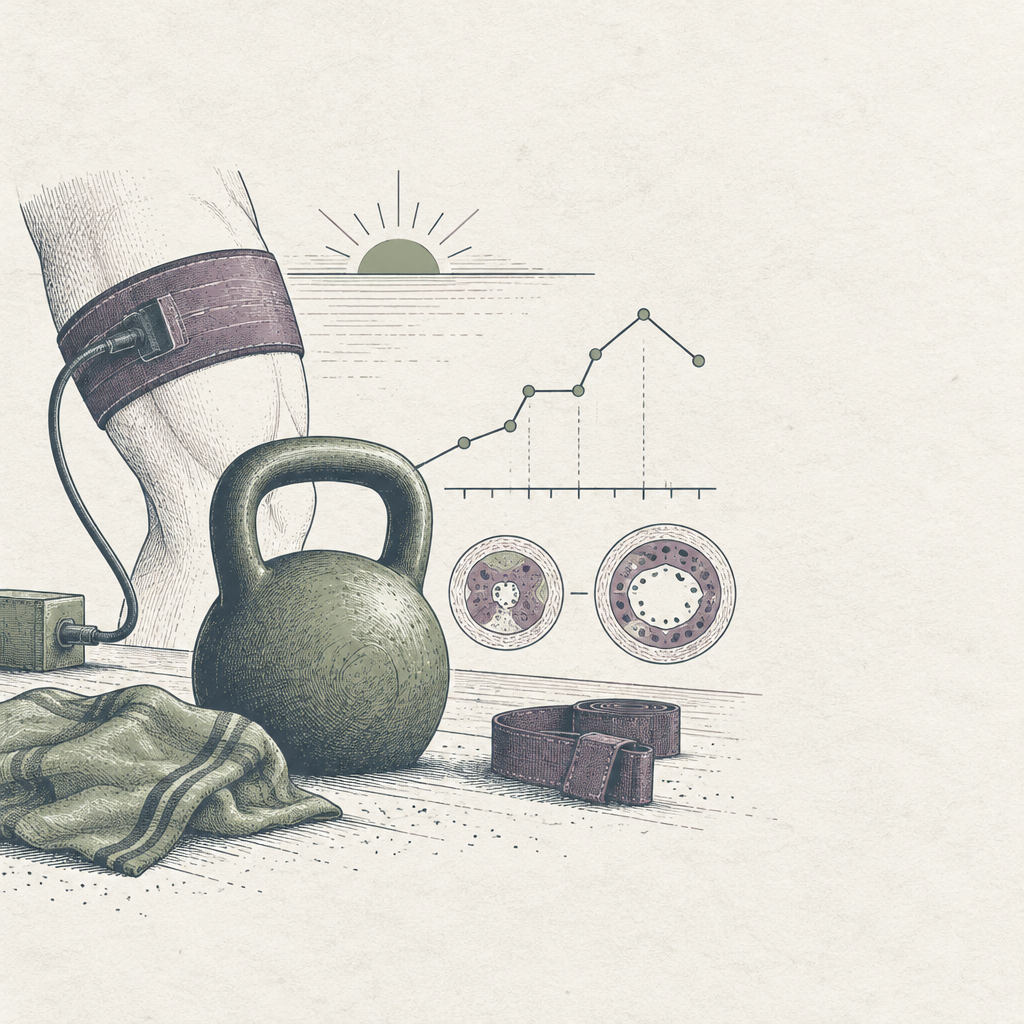
A systematic review of 13 trials in Sports Medicine evaluated ischemic preconditioning applied right before high-intensity exercise. Repeating brief cycles of limb occlusion cut post-workout muscle soreness and protected vascular function compared to normal warmups. The catch is protocol tolerance, because cutting off limb circulation for five minutes hurts.
The architecture take
I used to think ischemic preconditioning was just another masochistic fad for track cyclists looking for half a watt. Putting a tourniquet on your thigh and inflating it past systolic pressure four times sounds miserable, mostly because it is. But this meta-analysis of 13 trials shows the vascular signal is real. By triggering brief, controlled bouts of oxygen deprivation before heavy lifting or sprints, you force mitochondria and endothelial cells into defensive mode early. Nitric oxide output climbs, local inflammation drops, and the delayed muscle soreness that usually cripples your quads 48 hours later stays surprisingly quiet. My own attempts with manual cuffs left me bruised and irritable on a Tuesday morning, so I quit after two weeks. If commercial recovery centers can automate the cycles without bruising thighs, gyms will sell it by summer. Until then, standard warmup sets remain vastly more dignified.