news
Antibody Signatures Predict Inflammatory Bowel Disease Ten Years Early
Researchers identified distinct circulating antibody patterns that flag inflammatory bowel disease risk up to 10 years before symptoms start. The serum markers also forecast disease severity for Crohn's and ulcerative colitis long before gut tissue damage appears. It shifts chronic gut disorders from reactive flare management into early immune detection.
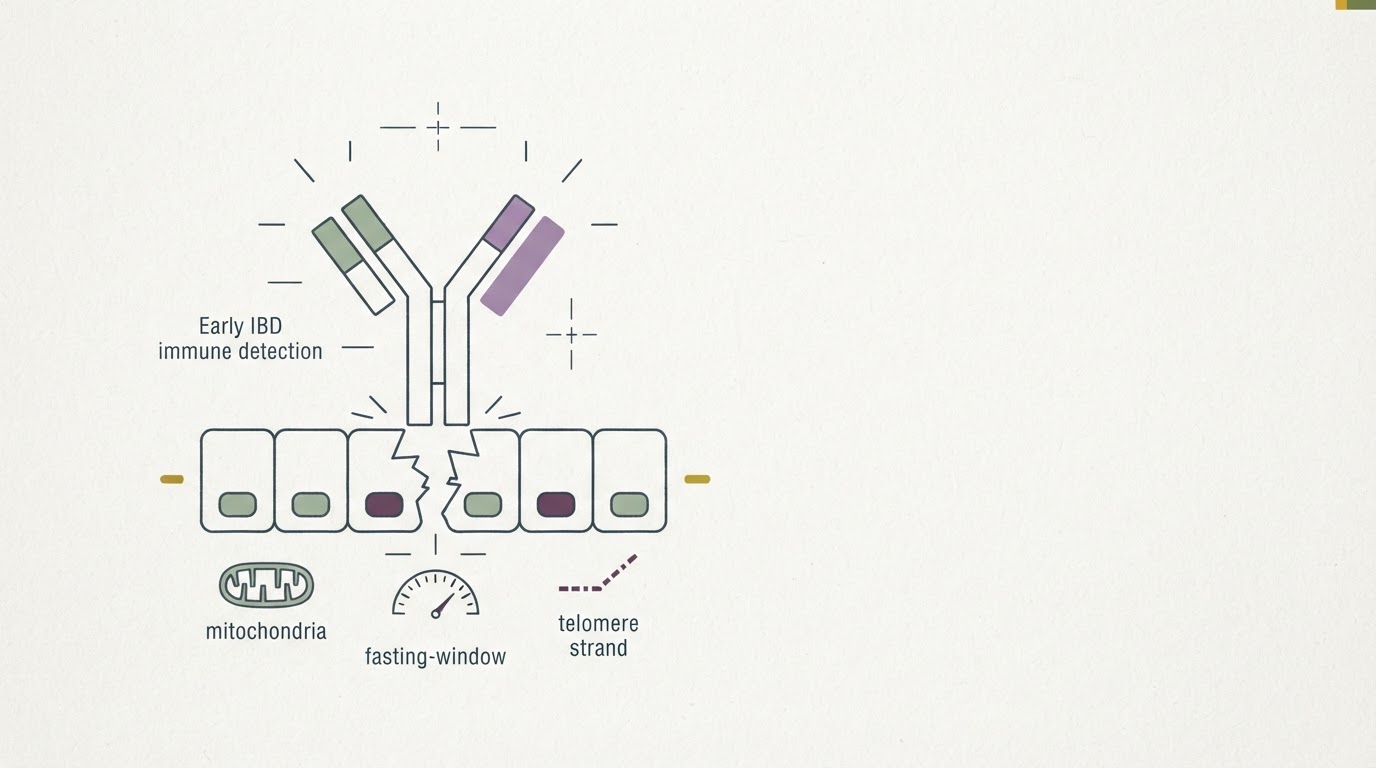
Researchers identified distinct circulating antibody patterns that flag inflammatory bowel disease risk up to 10 years before symptoms start. The serum markers also forecast disease severity for Crohn's and ulcerative colitis long before gut tissue damage appears. It shifts chronic gut disorders from reactive flare management into early immune detection.
The architecture take
I used to think gut destruction happened fast, triggered by an acute bug or a sudden awful month of stress. This data humbles that view completely. Your immune system starts drafting anti-microbial and auto-reactive antibodies a full decade before a gastroenterologist ever slides an endoscope down to confirm Crohn's or colitis. Long before overt mucosal ulcers form, the barrier between mucosal immune cells and luminal bacteria has been quietly fraying, training B cells to mount an offensive against gut tissue. When a biomarker flags ten years out, the question shifts from how to calm a burning flare to how we preserve barrier integrity and tone down baseline systemic inflammation before tissue changes become permanent. I expect direct-to-consumer longevity panels to license these antibody arrays within two years. Catching subclinical autoimmunity in your thirties beats scrambling for biologic infusions in your forties.