news
AI in healthcare: MIT explores future superintelligence
MIT Technology Review laid out what artificial superintelligence could look like in healthcare. Instead of disjointed AI agents, imagine a truly coordinated system that could revolutionize diagnosis, treatment, and patient care. This peek into the future suggests a deep impact on overall health management.
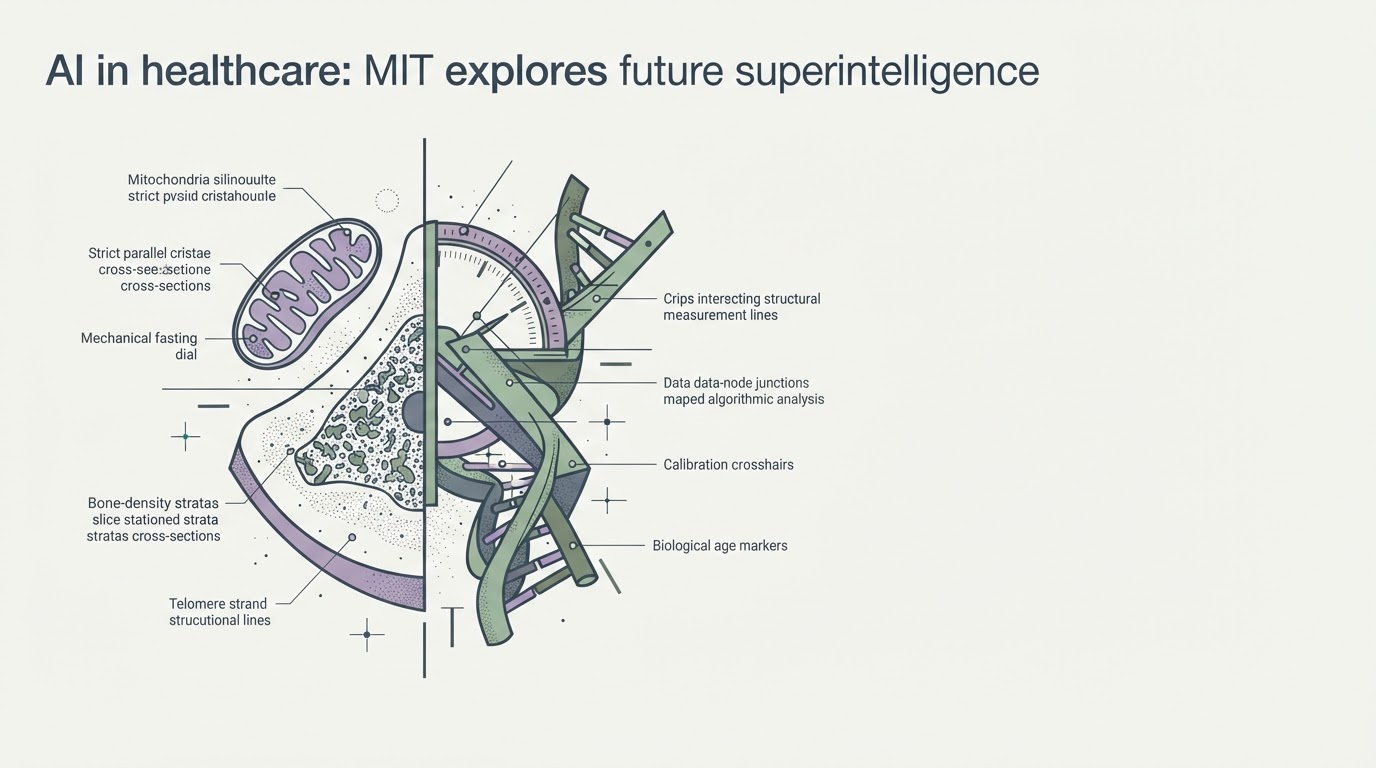
MIT Technology Review laid out what artificial superintelligence could look like in healthcare. Instead of disjointed AI agents, imagine a truly coordinated system that could revolutionize diagnosis, treatment, and patient care. This peek into the future suggests a deep impact on overall health management.
The architecture take
Okay, MIT's talking 'artificial superintelligence' in healthcare, and my nervous system just did a little jump. The idea of truly coordinated AI, not just separate bots doing separate tasks, changes everything. We're thinking beyond 'AI helps schedule appointments' to 'AI diagnoses latent autoimmune conditions no human ever saw coming' in milliseconds. This isn't just about efficiency; it's about pushing past the limits of human perception and cognitive load in medicine. Imagine a system where all your biomarkers, genetic data, lifestyle choices, and symptoms are constantly cross-referenced against global medical literature, not by a doctor with finite time and memory, but by a cohesive, self-improving super-agent. The upside for precision medicine, early detection, and individualized nervous system regulation is massive. The catch? We're still grappling with basic AI ethics, let alone building something with unified objectives that won't decide we'd all be better off without coffee. But if it means catching the biological age markers decades before they become chronic issues? I'm watching.