Nervous System
When Estrogen Bottoms Out, You Lose Your Primary Neurological Shock Absorber
Estradiol stabilises mast cells, dampens microglia, and supports GABA and vagal tone. When it crashes — premenstrually, perimenopausally, post-partum — the same sensory input lands harder. Here is the mechanism, and t…
When Estrogen Bottoms Out, You Lose Your Primary Neurological Shock Absorber
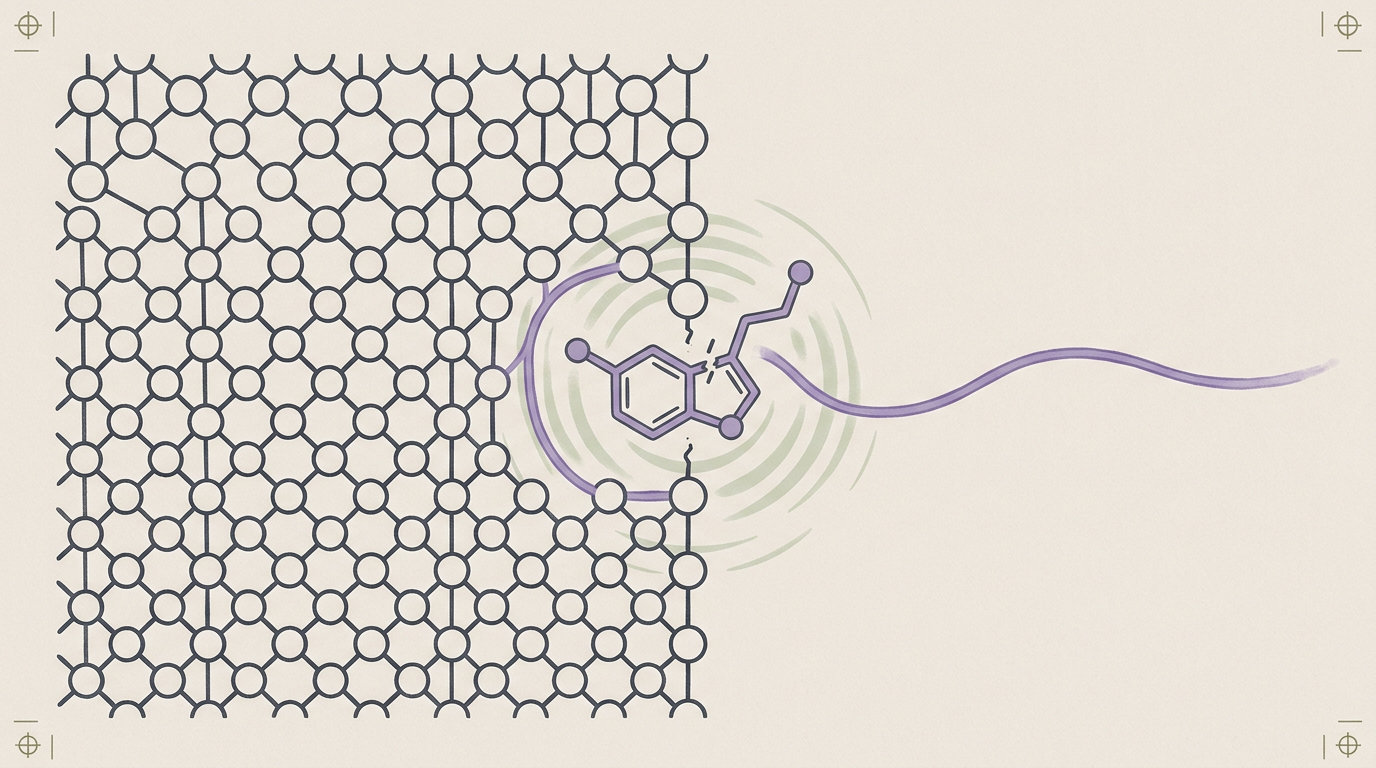
The prevailing wisdom is that hormonal mood swings are a personal failing. You're too sensitive, too irritable, not resilient enough — a problem to be solved with more yoga, a gratitude journal, or perhaps a stern talking-to. This is nonsense. When your primary estrogen, estradiol, bottoms out, you haven't lost your temper; you've lost your most potent neurological shock absorber. The noise from the kitchen is objectively louder. The tag on your shirt is genuinely more irritating. Your nervous system is simply reporting the facts from the ground, unbuffered.
Common Questions
Why do I get so irritable before my period or in perimenopause?
It’s not you, it’s your wiring. The sharp drop in estrogen makes your entire nervous system more reactive. It lowers your threshold for sensory input and stress, so the same stimuli that were manageable a week ago now feel overwhelming. This isn't a mood; it's a state of heightened neurological sensitivity.
What does estrogen have to do with my brain?
Estradiol isn't just a reproductive hormone; it's a master regulator in the brain. It helps produce calming neurotransmitters, suppresses inflammation, and supports the primary braking system of your entire body, the vagus nerve. When it disappears, these neuroprotective systems have to function without their key supervisor.
Is "cycle syncing" my life actually going to help?
Yes, but not for the reasons you see on Instagram. The point isn't to unlock some secret feminine power or perfectly align your calendar to the moon. It's about strategic damage control. You're anticipating a predictable, temporary drop in your system's capacity and wisely choosing to lower the demands you place on it.
The Architecture of a Meltdown
Everyone loves to talk about cortisol, the notorious "stress hormone." The trouble is, cortisol has a boss. Several, actually. And one of the most important supervisors in the chain of command is estrogen. Your HPA axis — the stress-response loop running from your brain to your adrenal glands — is exquisitely sensitive to estradiol. Estrogen helps keep this system in check, preventing it from overreacting to minor threats. When estrogen takes a vacation (premenstrually, post-partum, perimenopausally), the HPA axis is left unsupervised. The result? The same minor annoyance that you’d normally shrug off now triggers a five-alarm fire. Your body isn’t overreacting; its emergency brake is simply less responsive. This isn't a mindset problem that can be fixed with affirmations. It requires working with the design of your nervous system regulation architecture, not against it.
Your Brain on Fire (Slightly)
Let's get nerdier. Your brain has its own resident immune cells, called microglia. Think of them as the brain's combination janitor and security guard. In a healthy, balanced state, they quietly clean up metabolic debris. But when provoked, they become inflammatory, releasing molecules that create a low-grade state of "neuroinflammation." This is the cellular state behind brain fog, fatigue, and that feeling of sluggish dread. One of estradiol's main jobs is to keep the microglia calm and in janitorial mode. When estradiol plummets, it's like the security guards get a memo that there might be a threat. They become hypervigilant and trigger-happy, contributing to that feeling that your brain is wading through mud. The solution isn't to push through the fog; it's to lower the inflammatory burden on the system so the microglia can stand down. Sometimes that looks less like a power smoothie and more like canceling a meeting and taking a nap.
The Mast Cell Connection
If microglia are the brain's security guards, mast cells are the body's drama queens. These immune cells are embedded everywhere, especially in your gut, skin, and near nerve endings. They are bags of inflammatory molecules like histamine, just waiting for a reason to degranulate (a technical term for "explode"). Estradiol is a powerful mast cell stabilizer. It keeps the bags tied shut. Progesterone can be, too, but its effects are more complicated. When estrogen crashes, the mast cells lose one of their primary inhibitors. Suddenly, things that didn't bother you before—a certain food, the perfume of a passerby, the tag on your sweater—can be enough to make them burst. This is why you might feel itchy, bloated, or suddenly congested, and why your tolerance for, well, everything goes down the drain. It’s not in your head. It’s in your cells. You can track these physical symptoms in the Kokorology Journal to see the pattern for yourself.
That feeling of premenstrual or perimenopausal rage isn't a character flaw. It's a distress signal from an unbuffered nervous system.
The GABA Assist
GABA (gamma-aminobutyric acid) is your brain's primary "off" switch. It's the neurotransmitter of calm, the one that tells your neurons to quiet down. Think of it as the molecule of "everything is fine." Many anti-anxiety medications work by increasing the effect of GABA. Here's the part they don't put in the pamphlet: estrogen helps your brain synthesize and use GABA effectively. When estrogen levels are robust, so is your supply of this natural brake fluid. When estrogen levels fall off a cliff, your GABA system can't keep up. The "on" signals in your brain start to outnumber the "off" signals. This is the neurochemical root of that free-floating anxiety, the inability to settle, the ceiling-staring at 3 a.m. One of the most direct ways to support this system is through the vagus nerve, which can trigger the release of calming neurotransmitters. A simple cold-water Anchor can do more for your GABA levels in 60 seconds than an hour of trying to "just relax."
What to do this week
You can't change your hormonal fluctuations, but you can change the environment they happen in. The goal is to lower the total load on the system when you know your natural shock absorbers are offline.
- Schedule a Deload Week. Look at your calendar. Identify the 5-7 days when you know you'll be in a low-estrogen phase (the week before your period, or if you're in perimenopause, just pay attention to your body's signals). Proactively clear your schedule of non-essential social events, high-stakes meetings, and HIIT classes. This isn't weakness; it's strategic management of your biological resources.
- Swap Intensity for Duration. Instead of a 30-minute high-intensity workout that jacks up cortisol, opt for a 45-minute walk. The goal isn't to burn calories; it's to activate your glymphatic system (the brain's waste clearance crew that runs during light cardio and sleep) without adding stress hormones to an already-taxed system.
- Eat for a Boring Blood Sugar Curve. In your low-estrogen week, prioritize protein, fat, and fiber at every meal. Avoid the blood sugar rollercoaster that comes from refined carbs and sugar eaten alone. A spike and crash in glucose is another stressor your body has to manage. Stable blood sugar is a non-negotiable foundation for a stable nervous system.
- Go on a Sensory Diet. The volume on the world is turned up. Turn it down intentionally. Use noise-canceling headphones. Wear your softest clothes. Dim the lights an hour before bed. Say no to the loud restaurant. Reducing sensory input is a direct way to reduce the load on your nervous system. Try one of our 60-second Hacks for a quick sensory reset.
Where this fits in the Kokorology system
This isn't a one-off issue; it's a predictable pattern of dysregulation that reveals the underlying state of your nervous system architecture. Managing these fluctuations is a core skill we teach inside the Kokorology Reset, where we spend 7 days rebuilding the foundations of your regulatory capacity so you can handle these predictable troughs with more grace and less collateral damage.
Closing
The goal isn't to eliminate these hormonal shifts. The work is to build a system so resilient that it can absorb them without falling apart. The work is to stop blaming your personality for what is happening in your physiology. You're not broken; your brakes are just temporarily offline.
- Start with our 7-day guided program to rebuild your foundation inside the Kokorology Reset.
- Practice the fundamental skills of nervous system regulation in our foundational course, Regulation (L1).
- Get the free guide to the 5 states of your nervous system and learn to identify your own state in real time.
TL;DR
The mood swings, irritability, and brain fog that come with low estrogen—premenstrually, perimenopausally, or post-partum—are not a personal weakness. They are a physiological event. Estradiol is a key neurological shock absorber that suppresses inflammation, calms the stress-response axis, and supports calming neurotransmitters. When it drops, your nervous system becomes more sensitive and reactive. The solution isn't to try harder; it's to strategically reduce the load on your system until its natural buffering capacity comes back online.
Sources
- Brann, D. W., et al. (2007). Neurotrophic and neuroprotective actions of estrogen: basic mechanisms and clinical implications. Steroids.
- Mosconi, L., et al. (2021). The role of sex hormones in brain and cognitive health in men and women. The Journal of Prevention of Alzheimer's Disease.
- Zeng, Y., et al. (2022). Mast cell-neuron crosstalk in health and disease. Developmental cell.
- Amin, Z., et al. (2021). Neuroprotective role of estrogen and its receptors in the management of neurodegeneration. Reviews in the Neurosciences.
- Herzberg, M. P., et al. (2017). 17β-Estradiol, a key modulator of HPA axis, pain, and inflammation. Journal of Endocrinology.