Nervous System
When Estrogen Bottoms Out, You Lose Your Primary Neurological Shock Absorber
Estradiol stabilises mast cells, dampens microglia, and supports GABA and vagal tone. When it crashes — premenstrually, perimenopausally, post-partum — the same sensory input lands harder. Here is the mechanism, and t…
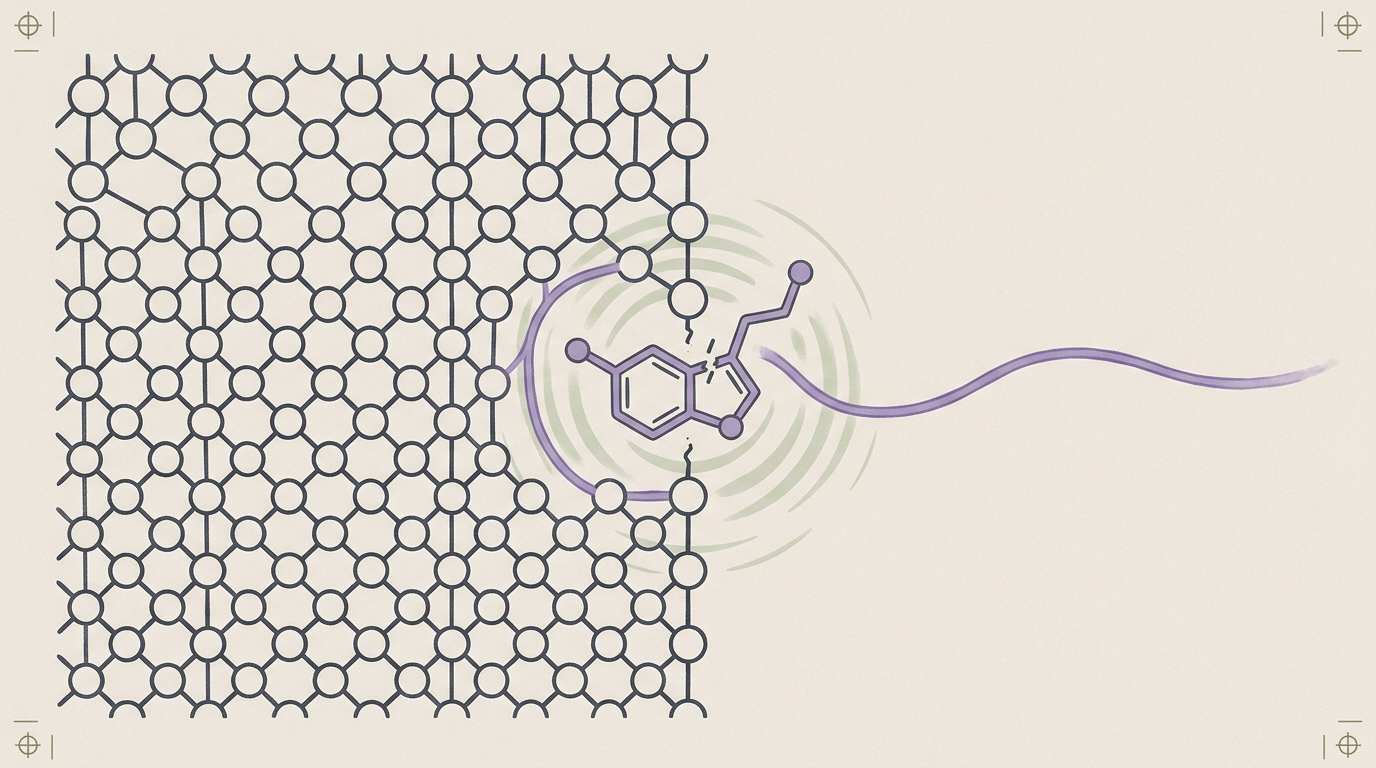
The supplement aisle wants to sell you hormone balancing as a personality-improvement project. Drink this adaptogenic tea, do some light stretching, and you'll politely tolerate your inbox again. I don't buy it. Estradiol operates as the structural shock absorber for your entire central nervous system. When it plummets, your capacity to buffer ordinary sensory input goes with it.
You already know what this drop feels like before you look at a calendar. It's the sudden, jarring volume of the kitchen lights. It's the 3pm jaw clench that won't release, or the tag on your sweater suddenly feeling like sandpaper. You end up tired but wired at 11:47pm, scrolling through nothing because you're exhausted but can't rest. People google anxious for no reason or brain fog after eating, assuming they need another time-management tool. The reality is your nervous system is reporting the exact same daily loads, but the acoustic paneling has been stripped from the walls.
Common Questions
Why do I get so irritable before my period or in perimenopause?
The sharp drop in estrogen physically alters your wiring. It lowers your threshold for sensory input and stress. The everyday stimuli that were manageable a week ago now trigger an immediate autonomic threat response.
What does estrogen have to do with my brain?
Estradiol functions as a master regulator in the brain. It suppresses inflammation, supports the braking systems of the vagus nerve, and drives the production of calming neurotransmitters. When it drops, these neuroprotective systems run without their supervisor.
Is cycle syncing actually going to help?
Strategic pacing works, but not because you're opening a secret feminine power. You're anticipating a predictable drop in your system's regulatory capacity and wisely choosing to lower the physical and cognitive demands you place on it.
The unsupervised stress loop
I used to think I just lacked discipline during certain weeks of the month. I'd try to force my way through the same heavy lifting and back-to-back meetings, convinced I just needed to focus harder. Cortisol gets all the press in optimization culture, but cortisol reports to a chain of command. Your HPA axis—the stress-response loop running from your brain down to your adrenal glands—is exquisitely sensitive to estradiol.
Estrogen keeps this threat-detection machinery in check. When estradiol takes a vacation premenstrually or during perimenopause, the HPA axis is left unsupervised. The inbox has never once been impressed by your heart rate, but your adrenal glands respond to a late email like an imminent physical threat.
The brain's trigger-happy security team
Let's look at the actual cellular machinery. Your brain houses resident immune cells called microglia. In a regulated state, they act as quiet janitors, sweeping up metabolic debris while you sleep. Estradiol dictates this calm state.
When estrogen levels crash, the microglia behave like security guards who just received a threat memo. They become inflammatory and hypervigilant, dumping molecules that create localized neuroinflammation. That's the literal, physical mechanism behind the heavy, sluggish dread of brain fog. The fatigue is an immune response. I've stopped recommending extra caffeine for this phase years ago; pouring espresso on an inflammatory fire just burns the house down faster.
The histamine bags
If microglia are the brain's security guards, mast cells are the systemic alarm bells. These immune cells are embedded in your gut, your skin, and right alongside your nerve endings. They are essentially microscopic bags of histamine waiting for a reason to degranulate, which is the clinical term for exploding.
Estradiol serves as a powerful mast cell stabilizer that keeps those bags tied shut. When it vanishes, your tolerance for normal inputs plummets. A loud restaurant, a perfumed passerby, or a standard lunch suddenly triggers congestion, itching, or bloating. I track these specific sensory sensitivities with clients in the Kokorology Journal because they represent the clearest early warning signs that the system's buffering capacity is offline.
Running low on brake fluid
GABA is the primary inhibitory neurotransmitter in your brain. It is the chemical signal for calm, actively telling your neurons to quiet down. Estrogen physically helps your brain synthesize and use GABA. Robust estrogen means a steady supply of natural brake fluid. When those hormone levels fall off a cliff, the GABA system stalls, and the excitatory signals in your brain start outnumbering the inhibitory ones.
The volume of the world hasn't changed. Your capacity to muffle it has.
This biological deficit is the neurological root of that free-floating, ceiling-staring midnight panic.
What to do this week
- Lower the total load. Identify the five days your estrogen will be lowest. Proactively clear your schedule of non-essential social events and high-stakes decisions. Treat this as infrastructure management.
- Swap intensity for clearance. Skip the 45-minute high-intensity interval class that floods your system with cortisol. Walk instead. Light, rhythmic movement activates the glymphatic system, clearing out the metabolic waste from those hypervigilant microglia without demanding more from your adrenal glands.
- Flatten the blood sugar curve. Eat protein early and prioritize fat and fiber. A glucose spike and crash operates as a massive physiological stressor for an already unsupported HPA axis. Stable blood sugar establishes a mandatory foundation for nervous system regulation.
- Initiate a sensory diet. Turn the lights down an hour early. Wear the softer shirt. Use noise-canceling headphones in the house. Try one of the 60-second Hacks to actively pull the parking brake on your sensory intake.
Where this fits in the Kokorology system
The predictable drop in regulatory capacity is exactly why Kokorology map out nervous system states inside the Kokorology Reset. You can't stop the hormonal shift, but you can build a baseline robust enough to absorb the fluctuation.
Closing
Treat this shift as a mechanical change in the weather. Your physiology is running without its primary buffer. Adjust the daily demands accordingly.
- Start with the 7-day guided program to rebuild your baseline inside the Kokorology Reset.
- Work with the specific mechanisms of threat detection in the foundational course, Regulation (L1).
- Sit with this in the free guide to the 5 states of the nervous system.
TL;DR
The irritability and brain fog that accompany a drop in estrogen are physical, neurological events. Estradiol is a structural shock absorber that suppresses neuroinflammation, stabilizes immune responses, and supports calming neurotransmitters. When it plummets, your nervous system loses its primary buffer against ordinary sensory input and stress. The required intervention is to deliberately lower your systemic load and environmental demands until the biological braking system comes back online.
Sources
- Ruehr (2024). Estrogens and human brain networks: a systematic review of neuroimaging studies. Frontiers in Neuroendocrinology.
- Zeng, Y., et al. (2022). Mast cell-neuron crosstalk in health and disease. Developmental cell.
- Herzberg, M. P., et al. (2017). 17β-Estradiol, a key modulator of HPA axis, pain, and inflammation. Journal of Endocrinology.
- Ungurianu (2025). The biological clock influenced by burnout, hormonal dysregulation and circadian misalignment: a systematic review. Clocks & Sleep.