Research
Pilates Guru S Pain Reveals Strong New Form
We all know someone like this. Maybe we are someone like this. The yoga teacher with excruciating back pain, the Pilates guru who can’t sleep because of a searing hip, the personal trainer who lives on painkillers. They
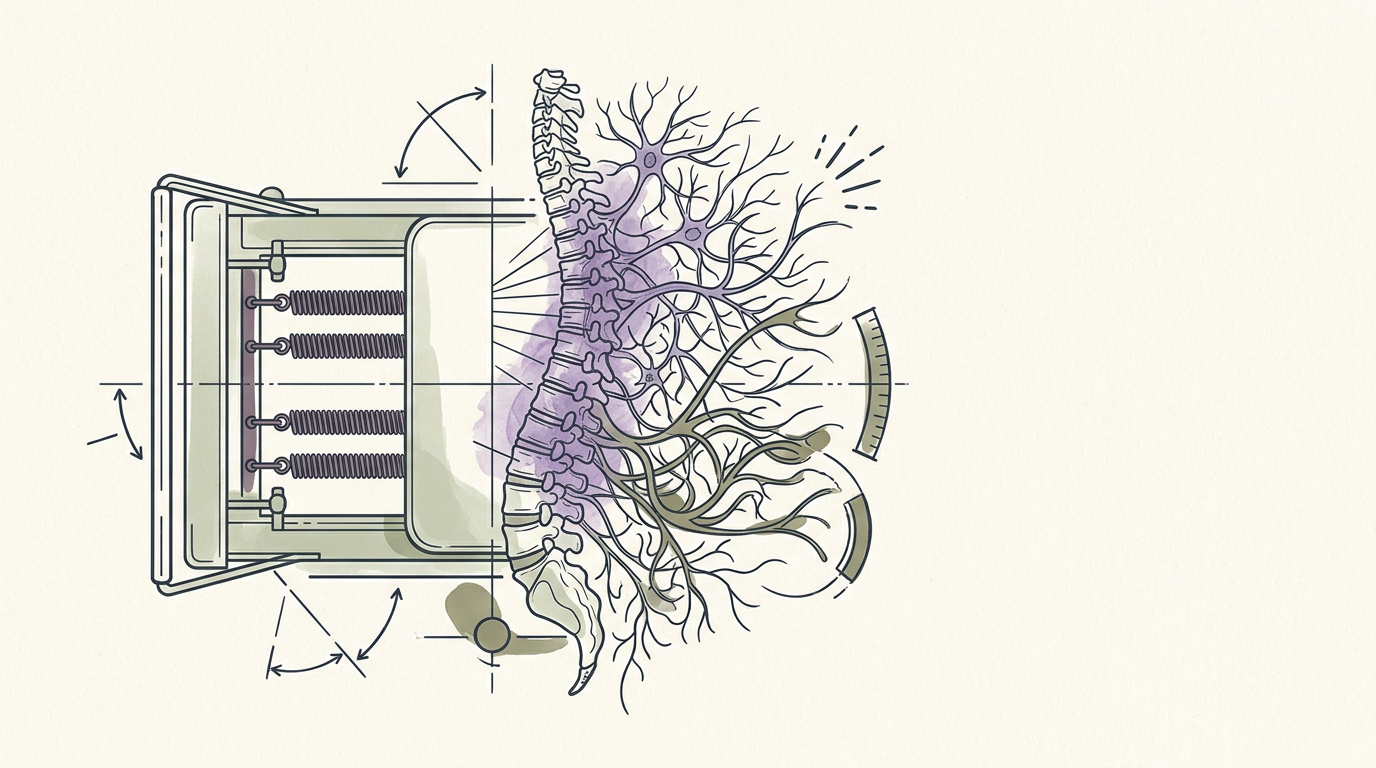
We all know someone like this. Maybe we are someone like this. The yoga teacher with excruciating back pain, the Pilates guru who can’t sleep because of a searing hip, the personal trainer who lives on painkillers. They have perfect form, a core of steel, and more anatomical knowledge than most first-year medical students. Yet they hurt. The standard explanation—that they must have a hidden imbalance or a weak link—is a well-meaning but blunt instrument. The truth is often stranger: their expertise isn't the solution; it's become part of the problem. Many cases of chronic pain aren’t a sign of mechanical failure. They’re a sign of a nervous system that has learned pain too well.
Common Questions
Why do movement experts get chronic pain?
Because chronic pain is often not about muscles and bones. It's about a sensitised central nervous system. Years of high performance, stress, and tuning into body signals can, paradoxically, train the brain to become hypervigilant. The alarm system gets stuck in the 'on' position, interpreting normal sensation as a threat.
What does 'central sensitisation' mean?
Think of it as the brain's volume knob for pain getting stuck on high. Coined by pain scientist Clifford Woolf, it describes a state where the spinal cord and brain become over-responsive to stimuli. A light touch can feel painful, a small ache can feel catastrophic. It's a software problem, not a hardware failure.
Can you fix chronic pain with more exercise?
Not by correcting form, no. In a sensitised system, "fixing" movement can just be another threat signal. The goal isn't to build a stronger core; it's to use gentle, novel, and safe-feeling movement to retrain the brain. You're not fixing a faulty machine; you're calming a startled animal. This is a core tenet of our entire approach to nervous system regulation.
Related anchors: sleep anchor · gut-immune anchor · skin anchor
Pain Isn't a Posture Problem
The first thing we do when something hurts is blame the structure. My back hurts, so my spine must be out of alignment. My knee aches, so my quad must be weak. We treat the body like a badly assembled IKEA bookshelf, convinced that if we could just tighten the right screw, the whole thing would stop wobbling. For acute injury, this model has its uses. For chronic pain, it is a dead end.
Some of the strongest, most biomechanically sound people I know are in constant pain. Their issue isn't a lack of core strength; it's a surplus of threat perception. As neuroscientist Bessel van der Kolk has spent a career showing, the body does indeed keep the score. Chronic stress, trauma, or even the sustained pressure of high-performance can recalibrate your entire nervous system to expect danger. When your system is primed for threat, it will find it—even in the perfectly neutral sensation of your hip joint sitting in its socket.
The Brain's Volume Knob Is Stuck
When pain persists long after an injury should have healed—or shows up with no injury at all—we are often dealing with central sensitisation. This isn't "in your head". It is a very real, measurable change in your spinal cord and brain. Your nervous system, in an effort to protect you, becomes extraordinarily efficient at creating the sensation of pain. It starts to interpret non-painful signals—like pressure, temperature, or the movement of a joint—as dangerous.
Chronic pain isn't a sign your body is broken. It's a sign your alarm system is stuck on.
Imagine your home smoke alarm started going off every time you made toast. The toast isn't the problem, and fanning it with a tea towel won't fix the underlying issue. The problem is the detector's sensitivity. In the same way, rubbing a sore muscle or stretching a "tight" hip offers temporary relief, but it doesn't recalibrate the oversensitive system that's screaming "fire" in the first place. Meaningful work here involves learning to feel safe in your body again, often by tracking its subtle cues inside something like a daily Journal.
A Nerd's Tour of the Overprotective Brain
Let's get specific, because the mechanism matters. The experience of pain is constructed, not just received. A key player in this is the locus coeruleus (your brain's primary source of noradrenaline and a central hub for arousal and vigilance). When you're under chronic stress, the locus coeruleus becomes twitchy and hyper-reactive (Mather, 2020). It starts ringing the alarm bell at the slightest provocation.
This alarm signal floods the rest of the brain, including the insula. Neuroanatomist Bud Craig mapped the insula as the brain's command centre for interoception (your moment-to-moment sense of your body's internal state). A calm locus coeruleus lets the insula read the body's signals neutrally. A hyperactive locus coeruleus makes the insula interpret every twinge and ache as a five-alarm fire. It’s a threat-detection system gone rogue, overriding the part of your brain (the prefrontal cortex) that's supposed to be offering rational oversight. All the logic in the world can't talk your insula down when your locus coeruleus is screaming that you're in danger. If this sounds interesting, we go much deeper into the architecture in the Kokorology Library.
Movement as a Conversation, Not a Correction
So what does our Pilates guru do? They can't just "do more Pilates". Pushing into painful movements only confirms the brain's belief that movement is dangerous. Instead, the path out is to use movement as a form of dialogue with the nervous system. The goal is to provide it with novel, gentle, and undeniably safe sensory information.
This looks less like a powerful "Hundred" and more like slowly rolling a soft ball under your foot, feeling the texture and pressure without judgement. It's about exploring tiny, curious movements far away from the site of the pain. According to recent research, this kind of graded sensory and motor exploration can help remap the brain's representation of the body and down-regulate threat perception. You aren't trying to "release" a muscle; you are trying to convince your brain that sensation can just be sensation, not a prelude to injury. A whole category of our Hacks are built on this principle.
The Allostatic Load of Being an Expert
Finally, we have to look beyond the movement itself. The guru with perfect form is also a business owner, a brand, and a human being navigating a stressful world. This is where the work of Bruce McEwen on allostatic load becomes critical. McEwen defined allostatic load as the cumulative "wear and tear" on the body from chronic stress.
Every deadline, every difficult client, every night of poor sleep contributes to this load. It dysregulates your HPA axis (the central stress response system), increases inflammation, and, crucially, lowers the threshold at which your nervous system will generate pain. The guru's pain isn't a failure of their physical conditioning. It's often the logical endpoint of a body carrying an enormous, invisible load. Their nervous system is simply too taxed to manage one more thing. Rebuilding here isn't about more planks; it's about a serious and structured plan for cortisol repair.
What to do this week
- Stop Blaming a Body Part. For one week, forbid yourself from saying "my bad back" or "my dodgy knee". Instead, practice saying, "My nervous system is sending me a strong signal of pain around my back." Language shifts the frame from a broken object to a sensitive system.
- Practice Sensory Soothing. Instead of stretching the part that hurts, give it non-threatening sensory input. Stroke the skin with a soft brush. Apply gentle warmth with a hot water bottle. The goal is not to "fix," but to provide proof of safety.
- Explore Micromovements. Find a movement you can do that is 100% pain-free, even if it's just wiggling your toes or gently nodding your head. Do it for one minute, several times a day. You are updating your brain's map with data points of safety.
- Track Your Stress Load. Use a Journal to note the correlation between high-stress days and high-pain days. Don't try to solve it. Just notice the pattern. Awareness precedes control.
TL;DR
Chronic pain, especially in people with excellent physical conditioning, is often not a mechanical problem but a nervous system one. A state called "central sensitisation" can turn the brain's pain volume knob way up, making it over-interpret normal sensations as threats. This is driven by high allostatic load (the wear-and-tear of chronic stress) and a hypervigilant threat detection system (Sapolsky, 2017; McEwen, 2019). The way out isn't correcting posture, but using gentle, safe-feeling movement and sensory input to retrain the brain and prove that the body is a safe place to be.
Where this fits in the Kokorology system
This entire frame—from pain as a threat signal to movement as a safety signal—is a direct application of the Nervous System Regulation pillar. For a structured approach to lowering the stress that sensitises the system in the first place, the protocol inside the Cortisol Repair Anchor is the most targeted place to begin.
Closing
The shift from seeing your body as a machine to be fixed to seeing it as a system to be regulated is profound. It moves the focus from hunting for the broken part to changing the conditions under which the entire system operates. If your pain feels persistent and stuck, it can be a lonely place. The work is not about trying harder; it's about learning a different way to listen.
- Start with the foundations in Regulation L1, our foundational course on nervous system architecture.
- Practice it daily inside the Kokorology Journal to map your own patterns.
- Begin with a simple framework in our free guide to the nervous system.
Sources
- Craig, A. D. (Bud). (2002). How do you feel? Interoception: the sense of the internal state of the body. Nature Reviews Neuroscience.
- Mather, M., & Thayer, J. F. (2020). The Locus Coeruleus: A Hub for Arousal and Regulation of Emotion and Cognition. Neuroscience & Biobehavioral Reviews. (Note: while Mather's work is extensive, this conceptual link is supported by her wider body of research on the LC, arousal and aging).
- McEwen, B. S. (2019). The concept of allostatic load. Stress.
- van der Kolk, B. A. (2014). The Body Keeps the Score: Brain, Mind, and Body in the Healing of Trauma.
- Woolf, C. J. (2011). Central sensitization: implications for the diagnosis and treatment of pain. Pain.